
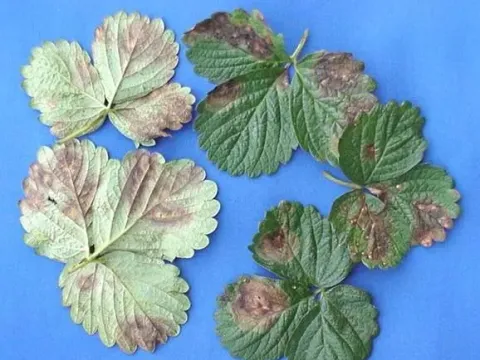
Gnomonia leaf spot
Gnomonia
Gnomonia is a genus of ascomycete fungi that acts as a pathogen for a wide range of plants, including fruit trees, berry bushes, and ornamentals. The most common species include Gnomonia erythrostoma.
What the section contains
Gnomonia leaf spot
The fungus overwinters primarily as mycelium or perithecia in fallen, infected leaves and on dead twigs. This allows the pathogen to remain present in the field even after the growing season concludes.
When environmental conditions become favorable in spring, the fungus releases ascospores. These spores are dispersed by rain splashing and wind, landing on susceptible young plant tissues.
The infection process involves the penetration of the cuticle by the fungus germ tubes. Once inside, the pathogen establishes itself within the plant's inter-cellular spaces, absorbing nutrients and damaging cell structures.
Following initial infection, the fungus produces secondary spores (conidia) in pycnidia, which facilitate rapid spread and multiple infection cycles throughout the vegetation period.
Initial symptoms are usually characterized by small, pale-brown spots on the leaves. Over time, these spots expand, often developing a darker, well-defined border.
In certain species, such as cherry, the foliage may wither but fail to drop immediately, remaining attached to the branches throughout the winter as "mummified" leaves.
Lesions on stems and petioles appear as sunken, necrotic areas or longitudinal cracks in the bark, which can impede the transport of water and nutrients to the distal parts of the plant.
Tiny black structures, which are the fruiting bodies (perithecia or pycnidia) of the fungus, appear as small dots within the dead tissue of the spots or on infected bark.
Fruits that become infected exhibit depressed, dark lesions. This damage leads to fruit deformity, premature ripening, and increased susceptibility to secondary rot infections.
The development of Gnomonia is highly dependent on humidity. Extended periods of rain, especially during the early stages of plant growth, provide the moisture necessary for spore germination.
Optimal temperatures for the fungus typically range from 15°C to 22°C. These conditions accelerate the metabolism of the pathogen and promote rapid lesion growth.
Poor orchard management, such as a lack of thinning or improper pruning, increases the density of the canopy, which traps moisture and reduces airflow around the leaves.
Poorly drained soil or excessive irrigation contributes to a microclimate conducive to the survival and multiplication of the fungal spores near the ground level.
Stress factors, such as nutrient deficiencies or pest infestations, reduce the plant's inherent resistance, making it much easier for the fungus to establish an infection.
Severe infection leads to early leaf senescence and defoliation, which limits the photosynthetic capacity of the plant and reduces the production of carbohydrates for winter storage.
The pathogen causes twig blight, where branch tips die back, necessitating extensive corrective pruning and reducing the potential crop load for the following season.
The disease reduces the commercial value of the crop by damaging the appearance of fruits and decreasing their shelf life, leading to significant economic losses.
In chronic cases, the plant's health degrades progressively, increasing its vulnerability to frost damage and other opportunistic pathogens, eventually causing plant death.
Managing the disease requires frequent application of plant protection products and increased labor for sanitation, increasing the total costs of agricultural production.
Effective sanitation is the cornerstone of control. Removing and destroying all fallen leaves and infected plant debris in the autumn significantly reduces the primary inoculum source.
Cultural practices such as pruning to improve air circulation within the canopy help keep leaves dry, which hinders the successful germination of fungal spores.
Chemical control involving copper-based fungicides applied during the dormant season and at key growth stages can provide an effective barrier against primary infection.
Regular monitoring of the plantation is essential for early detection. Timely removal of individual infected shoots can help stop the localized spread of the disease.
- Implementing balanced fertilization to support plant vigor.
- Planting resistant or tolerant cultivars where possible.
- Using fungicidal sprays during the pre-bloom and post-bloom stages.