
Gloeoporus dichrous
Gloeoporus dichrous
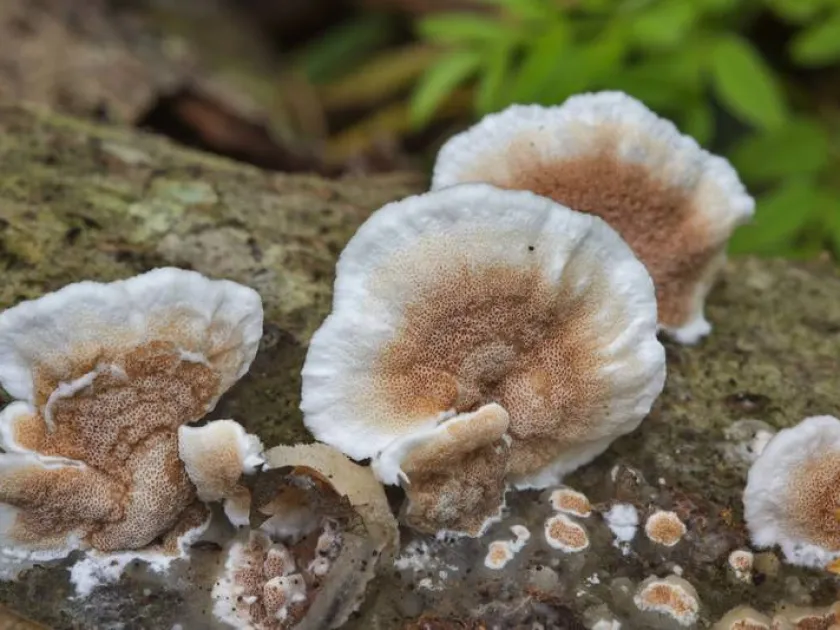
Description
Symptoms
The primary external sign of infection is the development of fruit bodies on the bark or near damaged areas. These structures often grow in clusters, appearing as overlapping shelves.
Infected wood loses its mechanical integrity, becoming soft and taking on a bleached, whitish appearance. Characteristic thin, dark lines or zones often appear, marking the boundaries of fungal activity.
Severe infestations transform the internal wood structure into a fibrous, stringy mass. This degradation significantly weakens the structural stability of the tree trunk or affected limb.
Foliage on infected branches may show signs of yellowing or premature wilt due to the disruption of vascular systems. Overall crown condition usually deteriorates as the pathogen progresses.
- Appearance of gelatinous, shelf-like fruit bodies.
- Whitish discoloration of the wood.
- Fibrous, stringy internal wood texture.
- Presence of dark zone lines within the wood.
Pathogen
Gloeoporus dichrous is a wood-decaying basidiomycete fungus belonging to the Meruliaceae family. While primarily a saprotroph that decomposes dead wood, it can behave as a parasite on weakened living trees.
This pathogen causes white rot, effectively breaking down both lignin and cellulose in the host wood. The fungus produces annual, often imbricate fruit bodies characterized by a distinct gelatinous tube layer that can be peeled away from the surface.
The biological cycle involves the dispersal of basidiospores via air currents. The mycelium penetrates wood tissues through wounds, frost cracks, or mechanical injuries to the bark.
The pathogen possesses high enzymatic activity, allowing it to efficiently degrade woody polymers. This makes it an important decomposer in natural ecosystems, but a serious pest in arboriculture and forestry.
The species is a cosmopolitan organism widespread in temperate regions. Its presence is a strong indicator of advanced decay processes occurring within the trunk or branches of a tree.
Conditions for development
The development of Gloeoporus dichrous is favored by high humidity and moderate temperatures. Optimal growth conditions for the fungus typically align with the climate of temperate forest zones.
Open wounds are critical infection sites. Trees suffering from environmental stress—such as frost damage, drought, or mechanical breakage—are significantly more susceptible to colonization.
Poor ventilation and high moisture retention around the base of the trunk create a conducive microclimate for fungal development. The pathogen can persist for long periods in woody debris.
Spore production is most active during warm, humid periods. The density of forest or orchard stands can facilitate the rapid transfer of spores between adjacent trees, increasing the risk of spread.
Reduced tree vigor due to poor nutrition or overcrowding makes hosts less capable of sealing off wounds, thereby allowing the fungus to establish deep within the heartwood.
Why it matters
The primary harm caused is the degradation of wood quality and loss of mechanical strength. This greatly increases the risk of limb failure or windthrow during storms, posing a safety hazard.
By attacking the conductive tissues, the fungus impairs the tree's ability to transport water and nutrients, leading to chronic decline and eventual death of the affected plant.
In managed landscapes and orchards, the presence of this fungus reduces both productivity and aesthetic value. It also acts as a focal point for further fungal spread to healthy trees.
Because the fungus targets a wide range of broadleaved species, it presents a constant threat to mixed-species plantations. Removal of infected trees entails significant labor and cost.
The hidden nature of the internal rot often makes it difficult to detect the infection in the early stages, often rendering traditional chemical control methods ineffective once visible symptoms appear.
Protection
Proactive management is essential. Regular sanitary pruning should be performed to remove diseased or damaged limbs, which prevents the fungus from gaining a foothold.
All mechanical injuries, pruning cuts, and frost cracks must be treated with appropriate sealants or wound dressings to prevent spore colonization and facilitate healing.
Effective orchard management requires the removal of stumps, fallen logs, and logging residue from the vicinity, as these materials serve as natural reservoirs for the pathogen.
Maintaining high tree vigor through proper fertilization, adequate watering, and optimal spacing is the most effective way to help trees defend themselves against fungal intrusion.
If extensive decay is identified, infected trees should be removed and destroyed, including the root system if possible, to eliminate the source of inoculum and protect the remaining stand.
Discussion
No discussions yet — be the first.