
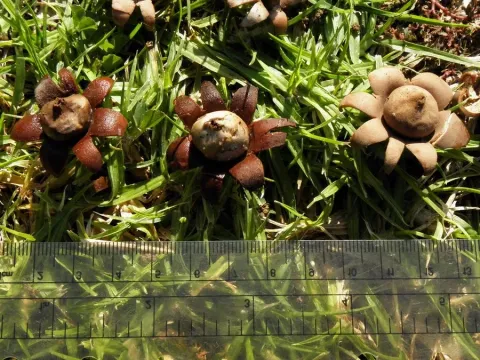
Geastrum floriferum
Geastrum floriferum
Geastrum floriferum is a species of the Geastraceae family, widely known as earthstar fungi due to the star-shaped appearance of its mature fruit bodies.
What the section contains
Geastrum floriferum
In the context of agronomy, it is critical to clarify that this fungus is not a plant disease, a pest, or a pathogen of any kind.
It functions exclusively as a saprotroph, which means it feeds on dead organic matter such as decaying leaves, plant debris, or woody material.
The fungus lacks the physiological mechanisms required to infect living plant tissue, posing zero threat to agricultural crops or ornamental plants.
Its primary biological role involves the decomposition of organic material, which aids in the nutrient cycle and soil structure enhancement.
The growth and fruit body development of Geastrum floriferum require moist, humus-rich soil conditions where organic decay is active.
Shaded areas with minimal direct sunlight and stable microclimates provide the best environment for the mycelium to flourish.
High relative humidity and rainfall significantly stimulate the emergence of fruit bodies, which are typically seen following heavy rains.
Well-structured, porous soils that retain moisture without becoming waterlogged are ideal for the long-term survival of this fungal species.
Because it thrives on debris, fields with managed organic mulching or high levels of plant residues are common habitats for this fungus.
Geastrum floriferum causes no damage to crops and does not act as a parasitic organism that could affect the vitality of a plant.
There is no evidence of this fungus producing toxins that would inhibit plant growth or damage root systems in agricultural settings.
As a saprotroph, it does not compete with plants for water or essential minerals, but rather recycles nutrients that were previously unavailable.
Farmers should not view this fungus as a threat, as it does not appear on any list of economically damaging pests or quarantine organisms.
Its presence is purely an indicator of soil health, reflecting a bioactive environment rich in organic matter and beneficial micro-processes.
No protective measures or chemical interventions are necessary, as Geastrum floriferum does not pose any risk to agricultural output.
The application of fungicides to target this fungus is discouraged, as it disrupts the beneficial soil microbiome without any agronomic benefit.
Adhering to standard best practices, such as proper crop rotation and the balanced application of organic fertilizers, is sufficient for soil management.
Preventive maintenance involves ensuring good soil aeration and avoiding extreme compaction, which keeps the soil ecosystem in balance.
Physical removal of fruit bodies is the only action required if their presence is undesirable for practical field operations.