
Geastrum saccatum
Geastrum saccatum
Description
Symptoms
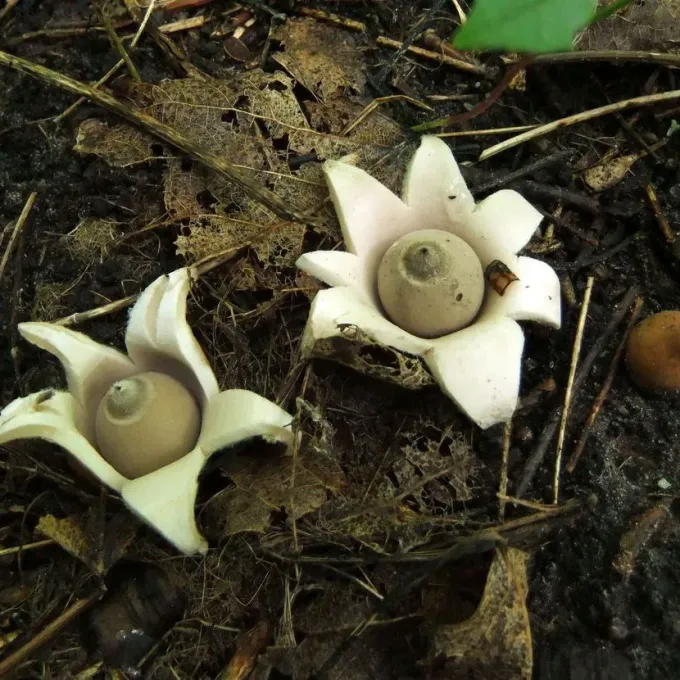
Geastrum saccatum, commonly known as the rounded earthstar, is a distinct fungus characterized by its unique star-like appearance. Its fruiting body begins as a small, spherical object before the outer layer splits into several pointed lobes.
These lobes bend downwards, lifting the central spore sac off the ground. The sac itself has a small, apical opening through which spores are released into the air via raindrops or wind gusts.
The fungus is often found partially buried in soil or hidden under layers of organic mulch. It does not cause wilting, leaf spots, or stem rots on any surrounding vegetation.
In terms of appearance, the fruit body is usually light brown or beige and measures between 2 to 6 centimeters in diameter when fully open.
Gardeners often mistake its presence for a sign of plant disease, but it is actually a visible indicator of a nutrient-rich, healthy garden soil environment.
Pathogen
It is critical to clarify that Geastrum saccatum is not a plant disease or a pathogen. It is a saprophytic fungus that survives solely on decaying organic matter.
Unlike parasitic fungi that invade living tissues using enzymes to breach plant cell walls, Geastrum saccatum lacks these aggressive properties. It cannot attack living crops, flowers, or trees.
This fungus acts as a natural decomposer, playing a vital role in breaking down cellulose and lignin found in fallen leaves, twigs, and mulch.
Its mycelium extends through the soil to absorb nutrients from dead material. It does not penetrate the root systems of living plants and does not interfere with their physiological processes.
Classifying this fungus as a plant disease is factually incorrect and represents a common misunderstanding in basic amateur gardening circles.
Conditions for development
Geastrum saccatum thrives in environments with high moisture levels and an abundance of organic matter. It is most commonly found in shaded areas, such as under tree canopies or in well-mulched gardens.
The fungus requires consistent humidity to produce its fruiting bodies. It is particularly active during periods of frequent rainfall and moderate temperatures.
Soil that remains undisturbed for long periods is ideal for its development, as the mycelium requires a stable substrate to spread and eventually form the star-shaped structures.
The presence of woody debris, compost, or decaying leaves provides the energy source necessary for the fungus to complete its life cycle.
Because it is a natural component of the soil ecosystem, it will naturally appear wherever conditions are suitable for its decomposition process.
Why it matters
Geastrum saccatum causes no harm to agricultural or ornamental plants. It is entirely benign and does not compete for nutrients or water with live vegetation.
It does not secrete any phytotoxic substances and does not transmit viral or bacterial pathogens to the surrounding flora.
The only concern some gardeners have is aesthetic, as the emergence of multiple fruiting bodies can be unexpected in manicured landscapes.
In a professional agricultural setting, this fungus is often welcomed as a sign of organic-rich soil that supports a healthy decomposer community.
There is no economic or agronomic loss associated with the presence of Geastrum saccatum in any type of plant production system.
Protection
No protection measures are necessary as there is no disease to combat. The application of fungicides to treat Geastrum saccatum is counterproductive and harmful to the soil ecosystem.
If the physical presence of the fungus is unwanted for aesthetic reasons, one can simply remove the fruiting bodies by hand. This will not harm the plant or the long-term health of the soil.
To reduce the likelihood of these fungi appearing, one could manage the organic debris in the area, ensuring that mulch is not overly thick or constantly waterlogged.
Maintaining proper drainage and ensuring that the top layer of soil has good aeration can also limit the development of the fungal mycelium.
As a rule of thumb, always verify if a fungus is truly pathogenic before considering any control methods, as indiscriminate fungicide use ruins healthy soil microbiology.
Discussion
No discussions yet — be the first.