
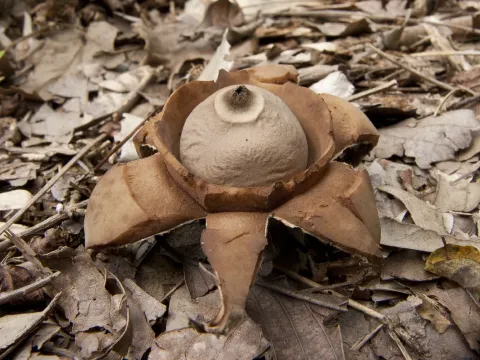
Geastrum triplex
Geastrum triplex
Geastrum triplex (the collared earthstar) is a fungus belonging to the Geastraceae family, often mistakenly identified as a plant disease. In reality, it is a saprotroph rather than a phytopathogen.
What the section contains
Geastrum triplex
This organism lacks the biological mechanism to parasitize living plant tissues; it does not produce toxins and does not infect the vascular system of crops or wild plants.
Its life cycle is closely linked to the decomposition of organic matter, primarily wood and leaf litter. It serves as an important component of the forest ecosystem.
The fungus does not feature mycelial invasion into roots or stems, making it entirely non-threatening to agricultural operations.
Classifying it as a "disease" is a biological error, as the object is a macromycete, not an infectious agent.
The development of fruit bodies occurs in forest environments where high humidity and a significant layer of leaf or pine litter are present.
Optimal conditions include moderate temperatures and shade, characteristic of broadleaf or mixed forests, and occasionally managed parklands.
The fungus prefers loose, humus-rich soils where it actively processes dead organic matter, contributing to soil humification processes.
Spore dispersal occurs via wind when the sporangium matures, causing the outer layer of the envelope to tear and unfold in a star-like shape.
In agricultural settings, it is rarely encountered, appearing only where old rotting wood or neglected areas are present.
Geastrum triplex is absolutely harmless to agricultural crops, fruit trees, and ornamental plants.
It does not cause symptoms such as wilting, chlorosis, or tissue necrosis, as it acts strictly as a decomposer of dead organic material.
Unlike true pathogens, it does not compete with plants for nutrients; instead, it aids in returning essential elements to the soil cycle.
The presence of this fungus in a garden or field indicates a healthy, organic-rich soil condition and requires no corrective action.
Attempts to control this organism with fungicides are senseless and unnecessary, as it causes no economic damage.
Specific protective measures against Geastrum triplex are not required, as it is neither a pest nor a pathogen causing plant diseases.
If the presence of the fungus in an area causes aesthetic concern, it is sufficient to remove the fruit bodies manually by hand.
To prevent the emergence of any saprotrophic fungi, it is recommended to follow standard agricultural practices: timely removal of plant debris and avoiding excessive soil moisture.
Maintaining optimal soil aeration and proper drainage prevents the development of fungal organisms that thrive in damp, stagnant areas.
- Regular weeding and removal of fallen leaves.
- Ensuring adequate sunlight exposure for plots.
- Optimizing irrigation schedules for crops.