
Fusarium wilt of avocado
Fusarium perseae
The first and most noticeable symptom of the disease is the sudden drooping of leaves, which quickly lose their natural turgor. The foliage turns pale green or yellowish and dries out rapidly, although it often remains attached to the branches for an extended period.
What the section contains
Fusarium wilt of avocado
Upon closer examination of the conducting system through cross-sections of stems or roots, one can observe distinct darkening of the vascular tissue. The wood becomes stained brown or dark brownish due to the blockage of vascular bundles by the pathogen's mycelium.
In the early stages, the infection often affects only one side of the tree or specific branches, giving the plant an asymmetrical and stunted appearance. Over time, the necrosis spreads throughout the canopy, leading to a total loss of aesthetic value and viability.
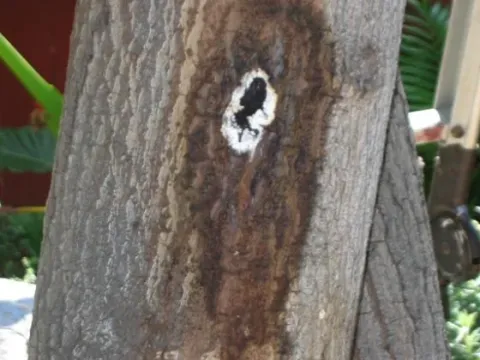
Under high humidity conditions, a faint whitish or pinkish fungal bloom may appear near the root collar, indicating the presence of conidial sporulation. Cracks may develop in the lower part of the trunk, sometimes accompanied by the exudation of plant sap.
As the disease progresses, the root system undergoes decay, becoming soft and emitting an unpleasant odor. This failure in root function prevents the plant from absorbing necessary water and nutrients, ultimately leading to the tree's death.
The causal agent of this disease is the soil-borne micromycete Fusarium perseae, which belongs to the class of imperfect fungi. It is a highly specialized pathogen capable of surviving in the substrate for long periods in the form of chlamydospores.
The fungus primarily enters the plant through damaged areas of the root system, often caused by nematodes, pests, or mechanical injury during transplanting. Once inside the vascular tissue, the pathogen begins to multiply rapidly.
The fungal mycelium colonizes the xylem vessels, physically obstructing the normal flow of water from the roots to the leaves. This creates a state of physiological drought, even when moisture is abundant in the surrounding soil.
In addition to mechanically clogging the vessels, Fusarium perseae releases specific toxins known as fusariotoxins. These metabolic byproducts poison the plant cells and suppress the tree's natural defense mechanisms against the infection.
Pathogen spores are easily spread via irrigation water, contaminated planting material, and soil particles on gardening tools. The high survival rate of the fungus makes it an extremely difficult pathogen to eradicate in intensive orchard environments.
Disease development is heavily favored by waterlogged soil and poor drainage, which create an ideal environment for spore germination. Avocado trees are highly sensitive to excess moisture, making poor drainage a critical risk factor.
The optimal temperature for the aggressive growth of Fusarium perseae mycelium ranges from +20 to +28 degrees Celsius. Under these conditions, the incubation period is significantly shortened, allowing symptoms to manifest rapidly.
Acidic soil conditions also favor the spread of Fusarium fungi. Continuous application of certain mineral fertilizers without monitoring soil pH levels can sometimes trigger disease outbreaks in plant nurseries.
Weakened trees, whether due to improper maintenance, nutrient deficiencies, or environmental stress, are much more susceptible to the infection. Plants subjected to sudden temperature fluctuations lose their immunity and become easier targets for invasion.
The presence of root-damaging insects, such as grubs or nematodes, creates direct entry points for the infection. Therefore, managing soil-dwelling pests is an essential component of any comprehensive prevention strategy.
Fusarium wilt represents a lethal threat to avocado plantations, frequently resulting in the total loss of the tree within a single growing season. The disease is notoriously difficult to cure once it reaches advanced stages.
The primary harm involves the irreversible destruction of the vascular system, which makes it impossible for the tree to transport water and nutrients. Even in cases of partial infection, the tree loses its capacity for fruit production.
On an industrial scale, this disease causes significant economic losses, as it necessitates the removal and destruction of infected trees. Furthermore, the soil remains contaminated for years, preventing the replanting of susceptible crops.
The presence of the pathogen in an orchard limits the use of land for future planting of Lauraceae family members. This often requires the implementation of strict quarantine measures across affected zones.
The infection can spread throughout an entire plantation very quickly if immediate measures to isolate the affected area are not taken. The risk of carrying the fungus via tools creates a constant threat to healthy sections of the orchard.
The first rule of defense is to use only healthy, certified planting material. Sourcing saplings from reputable suppliers minimizes the risk of introducing the pathogen to your property.
It is vital to provide excellent soil drainage to prevent moisture accumulation near the root collar. Regular soil aeration and careful irrigation management are fundamental agronomic practices for controlling Fusarium.
If initial symptoms are detected, infected trees must be removed immediately, including the entire root ball. Leaving symptomatic plants in the field is strictly prohibited, as they act as a continuous source of inoculum.
For disinfecting the soil where infected specimens were removed, professional soil fungicides may be used. Additionally, the application of bio-preparations containing Trichoderma species can help suppress the development of Fusarium perseae.
Balanced plant nutrition, focusing on sufficient potassium and calcium, strengthens cell walls and makes them more resistant to fungal penetration. Regular sanitation of gardening tools after each use is a mandatory safety requirement.