
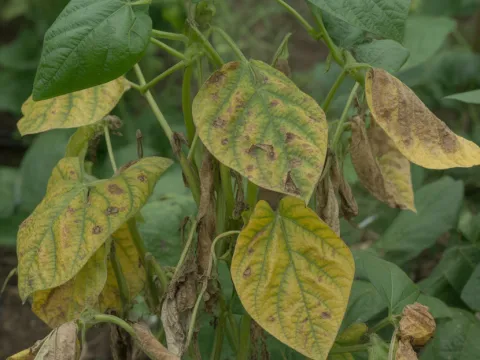
Fusarium wilt of bean
Fusarium phaseoli
Fusarium wilt of bean is caused by the soil-borne fungus Fusarium oxysporum f. phaseoli. This pathogen survives in soil for many years as chlamydospores, remaining viable even in the absence of a host.
What the section contains
Fusarium wilt of bean
The fungus invades the host through the root system, colonizing the vascular tissues. Once inside, the mycelium proliferates and produces toxins that severely impair the plant's hydraulic system.
As the plant's vascular bundles become clogged, the transport of water and mineral nutrients is disrupted, leading to the characteristic symptoms of wilting and subsequent plant collapse.
Fusarium is spread through infested soil, contaminated seeds, and movement of infected plant debris. It can also be transferred by irrigation water and farm equipment during cultivation.
Due to the high genetic diversity of the fungus, different strains can vary in virulence, which poses a significant challenge for plant breeders attempting to develop resistant cultivars.
Early symptoms include yellowing of the lower leaves, which eventually progresses to chlorosis and necrosis. The plant exhibits stunted growth compared to healthy specimens in the same field.
During the day, leaves often wilt, especially in warm weather, but may appear to recover at night. Over time, the wilting becomes permanent, eventually leading to the death of the plant.
Root systems show signs of decay, appearing brown or blackened. Upon cutting the stem longitudinally, one can observe a distinct dark brown discoloration of the vascular tissues.
In humid conditions, a whitish or salmon-pink fungal mass may appear at the base of the stem near the soil line, indicating the production of microconidia and macroconidia.
- Interveinal chlorosis of the foliage.
- Permanent wilting and drooping of leaves.
- Vascular browning inside the stem.
- Premature senescence and leaf abscission.
- Reduced root system and presence of root rot.
The disease development is heavily influenced by soil temperature, with 22°C to 28°C being the optimal range. High soil temperatures generally favor the rapid progression of the infection.
Acidic soils are highly conducive to the pathogen's growth. Proper monitoring and management of soil pH are essential to mitigate the risk of infection in sensitive bean fields.
Poor soil drainage and waterlogging create anaerobic conditions that stress the bean plants and facilitate the penetration of the pathogen into the root tissues.
Physical injuries to the roots caused by mechanical cultivation or soil-dwelling pests like nematodes provide easy entry points for the Fusarium fungus.
Crowded planting patterns and lack of air circulation can increase the local humidity around the base of the plant, which may exacerbate the spread of the disease.
The pathogen causes significant stand reduction due to seedling damping-off and mortality of mature plants, leading to severe economic losses for growers.
Infected plants that survive often produce fewer pods, and the seeds within them are frequently discolored, shriveled, or entirely non-viable, compromising market quality.
The accumulation of mycotoxins in the seeds makes them unsafe for animal feed and unfit for commercial processing, potentially leading to total loss of the harvest.
Soil contamination with Fusarium is long-term, forcing farmers to avoid planting beans or other susceptible legumes on the same plot for extended periods.
Outbreaks can occur rapidly under favorable environmental conditions, making it difficult to control the disease once the symptoms become clearly visible in the field.
Crop rotation is the most critical management strategy, with recommended intervals of at least 4 to 5 years between bean crops to allow pathogen populations in the soil to decline.
The selection and planting of resistant or tolerant bean cultivars provide the most effective and sustainable long-term solution for Fusarium wilt management.
Seed treatment with systemic fungicides is highly recommended to protect germinating seeds and young seedlings during the initial weeks of establishment.
Maintaining optimal soil fertility, including balanced levels of potassium and lime to adjust pH, helps the plants develop stronger resistance to fungal attacks.
Sanitary practices such as prompt removal and destruction of crop residues, as well as cleaning machinery after working in infected areas, help reduce the inoculum levels.