
Fusarium wilt of mango
Fusarium mexicanum
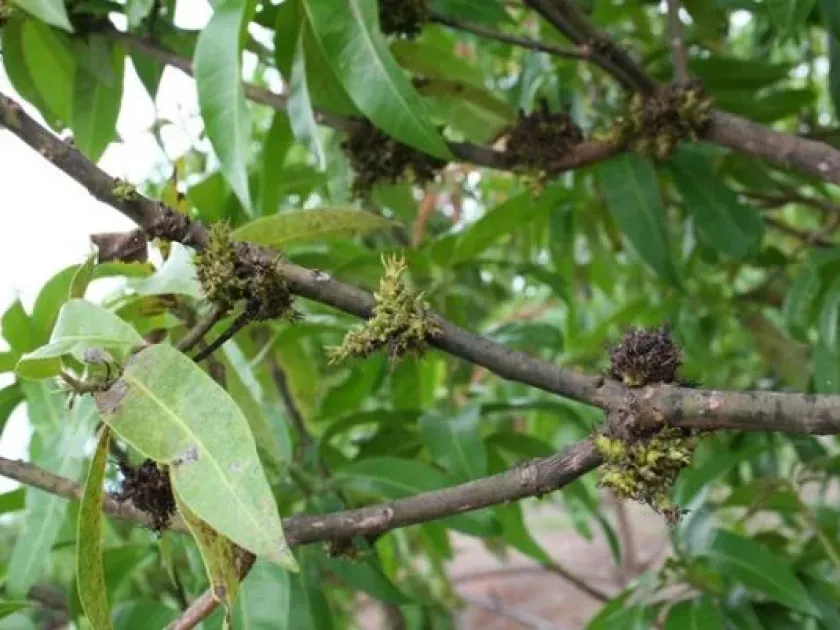
Description
Symptoms
The earliest symptom is the yellowing and wilting of leaves on individual branches, which gradually spreads throughout the tree. Eventually, the entire canopy becomes necrotic.
A distinctive sign is the browning and drying of inflorescences, often referred to as floral malformation or blight. This significantly affects the fruit-bearing potential of the tree.
Longitudinal cracks in the bark may appear, often accompanied by the exudation of sap. When infected branches are cut, a characteristic darkening of the vascular tissue is clearly visible.
- Yellowing and drooping of foliage
- Darkening of vascular bundles in the wood
- Blighting and drying of panicles
- Dieback of twigs and branches
As the disease progresses, the tree loses its vigor and may die within a few months. In some cases, root rot is also present, further stressing the tree.
Pathogen
The disease is caused by the pathogenic fungus Fusarium mexicanum, which is part of the Fusarium fujikuroi species complex. It is a soil-borne pathogen capable of surviving in plant debris for extended periods.
The fungus infects the plant's vascular system, causing the xylem to clog, which prevents the transport of water and nutrients to the canopy. This leads to internal necrosis.
Spores are dispersed primarily through water splash, wind, and contaminated pruning tools. The pathogen is highly virulent and can cause rapid tree decline under favorable conditions.
Molecular identification is the standard method for confirming the presence of this specific species. Morphological characterization alone is often insufficient due to similarities with other Fusarium species.
Genetic diversity within the pathogen population makes it difficult to develop fully resistant varieties, requiring an integrated approach to management in the field.
Conditions for development
Warm temperatures ranging from 25°C to 30°C combined with high humidity create the ideal environment for the rapid growth and spread of the fungus.
Poorly drained soils and excessive irrigation promote the proliferation of the pathogen in the root zone, making trees more susceptible to systemic infection.
Mechanical injuries caused by pruning or harvesting without subsequent sterilization of equipment are common entry points for the pathogen into the tree.
Dense plantation layouts restrict airflow, maintaining a microclimate around the canopy that encourages fungal spore germination during the wet season.
Weakened trees, often stressed by nutrient deficiencies or infestations of wood-boring insects, are significantly more likely to succumb to the infection.
Why it matters
Fusarium wilt is considered one of the most destructive diseases for mango production, leading to the loss of entire orchards if not managed correctly.
Economic impact includes the loss of harvested produce, high costs of disease suppression, and the necessity to remove and replace mature trees, which takes years to recover.
The disease compromises the international trade of mangoes, as countries enforce strict quarantine regulations to prevent the introduction of this pathogen into new regions.
Besides killing the tree, the disease prevents fruit formation, meaning even trees that are not yet dead fail to provide any economic return during the infection phase.
The long-term persistence of the pathogen in the soil complicates replanting efforts, often requiring long fallow periods or chemical soil treatment before new trees can be planted.
Protection
The most crucial management practice is the prompt removal and burning of infected branches or entire trees to reduce the inoculum load in the orchard.
Rigorous sanitation of all pruning tools using disinfectant solutions is essential to prevent the mechanical transmission of the fungus between healthy and infected trees.
Systemic fungicides, particularly those from the triazole group, can be applied to protect healthy trees during the peak infection periods, although efficacy varies.
Integrated pest management focusing on wood-boring insects is vital, as these pests facilitate the entry of fungal spores into the plant's internal tissues.
Selecting tolerant rootstocks and ensuring optimal soil drainage are foundational strategies for long-term protection against the spread of Fusarium wilt.
Discussion
No discussions yet — be the first.