
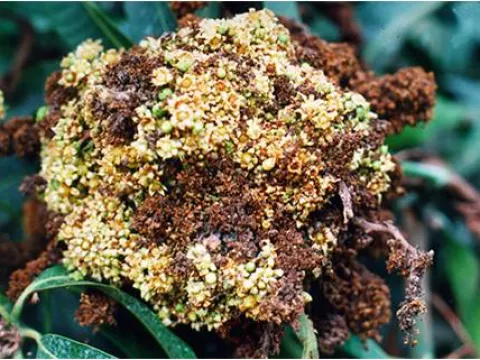
Fusarium wilt of mango
Fusarium mangiferae
The primary symptom is a progressive wilting of the canopy, starting from the shoot tips and moving downwards through the branches.
What the section contains
Fusarium wilt of mango
Leaves on infected trees initially exhibit chlorosis (yellowing), followed by curling, necrosis, and eventual premature leaf drop.
Cross-sections of affected branches and the trunk often reveal a distinct brown or dark discoloration of the vascular tissues, indicating blockage.
In advanced stages, longitudinal cracks appear on the tree bark, which may occasionally exude gum or show fungal mycelium under high humidity.
The root system shows extensive decay and necrosis, leading to a complete shutdown of nutrient and water uptake, eventually killing the tree.
The causative agent of the disease is the fungus Fusarium mangiferae, which is highly specialized and known to colonize mango trees.
This pathogen survives in the soil for extended periods by producing chlamydospores that are resistant to extreme temperature and drought.
The disease spread occurs primarily through infested soil, contaminated tools, or infected nursery stock used for plantation development.
The fungus enters the host through root wounds, pruning cuts, or insect-damaged tissues, subsequently invading the plant's xylem vessels.
The secretion of toxic metabolites by the fungus during its colonization of the host tissue causes the severe physiological stress associated with the wilt.
The development of Fusarium wilt is strongly favored by high ambient temperatures, typically in the range of +25°C to +30°C.
Excessive soil moisture, particularly in poorly drained or waterlogged soils, accelerates the germination of fungal spores in the rhizosphere.
Trees under stress due to poor nutritional status, pest infestations, or mechanical injuries are significantly more susceptible to infection.
Poor orchard sanitation, such as the use of unsterilized pruning shears, acts as a primary vector for the transmission of spores between trees.
Low aeration and high-density planting conditions provide a conducive microenvironment for the rapid proliferation and spread of the fungus.
Fusarium wilt is considered one of the most destructive diseases for mango crops globally, as it is generally systemic and lethal to the tree.
Economic impact includes total loss of yield, the high cost of tree removal, and the inability to replant the area for several years.
The disease undermines orchard productivity and can restrict export potential, leading to significant financial losses for commercial growers.
Because the pathogen can persist in the soil for years, it severely limits the options for land use and forces complex and expensive soil management.
Affected trees decline in health progressively, resulting in stunted growth and a rapid reduction in the commercial value of the orchard.
The most critical control measure is the use of healthy, pathogen-free nursery stock sourced from reputable suppliers.
Strict sanitation protocols must be enforced, including the immediate removal and destruction of infected trees and debris from the orchard.
All pruning tools must be thoroughly disinfected with appropriate chemical agents (such as sodium hypochlorite or alcohol) between each tree.
Biological control using Trichoderma species can be integrated into the soil to outcompete and suppress the growth of Fusarium mangiferae.
- Frequent monitoring of the orchard to detect symptoms at the earliest possible stage.
- Implementation of robust drainage systems to prevent water accumulation.
- Balanced nutrient management to improve the tree's natural defense systems.
- Avoiding mechanical damage to the trunk or roots during regular cultivation.
- Chemical control measures using systemic fungicides to treat identified hot spots.