
Fusarium wilt of eggplant
Fusarium solani-melongenae
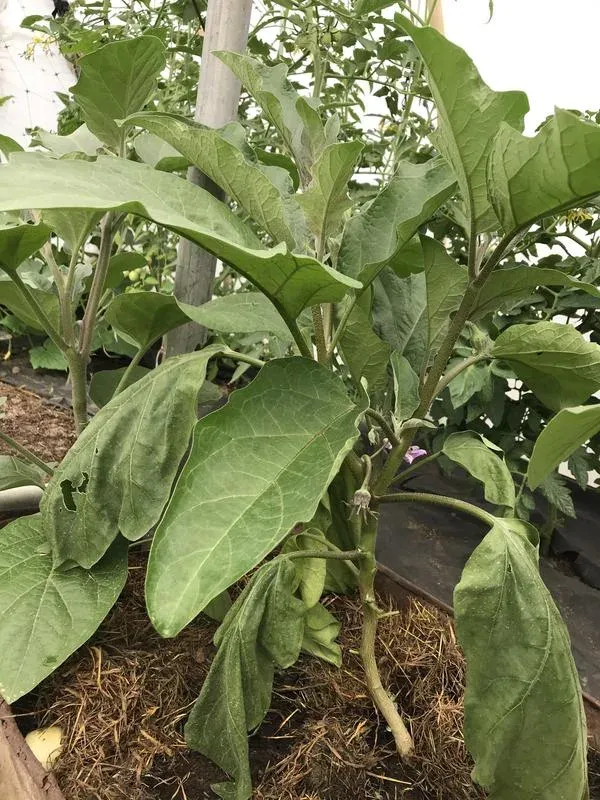
Description
Symptoms
The first external symptom is typically the drooping and wilting of lower leaves, which often recovers during the night but becomes permanent as the infection advances through the plant.
Yellowing (chlorosis) of the leaves begins at the margins and spreads inward, followed by the browning and necrosis of the leaf blades as the water supply to those areas is cut off.
A diagnostic sign can be seen by cutting the stem near the base: the vascular bundles appear as dark brown or reddish-brown streaks, indicating that the xylem vessels are obstructed by fungal growth.
Under high humidity, a light-colored, fluffy mold or mycelium may appear on the lower part of the stem or the crown, representing the reproductive stage of the fungus.
- Wilting of leaves during the hottest hours
- Yellowing and drying of foliage
- Dark brown vascular tissue in the stems
- Stunted growth and poor fruit development
- Total collapse and death of the plant
Pathogen
Fusarium wilt is caused by the soil-borne fungus Fusarium oxysporum f. sp. melongenae. This pathogen thrives in the soil by forming resilient structures known as chlamydospores that can persist for many years.
The fungus infects the eggplant through the root system, entering via natural openings or wounds caused by root-knot nematodes, insects, or during mechanical agricultural operations.
Once inside, the fungal mycelium colonizes the vascular tissues, specifically the xylem, obstructing the flow of water and essential nutrients from the roots to the upper parts of the plant.
The pathogen produces mycotoxins, such as fusaric acid, which contribute to the wilting symptoms by disrupting the plant's metabolic processes and causing vascular necrosis.
This pathogen is highly specialized and host-specific, primarily affecting eggplant, which makes managing it in greenhouses and open fields a persistent challenge for producers.
Conditions for development
Fusarium wilt is favored by warm soil temperatures, with the fungus showing maximum activity between 25°C and 30°C (77°F to 86°F), making mid-summer a peak period for symptoms.
High soil moisture combined with warmth promotes the spread of fungal spores. However, the disease can also stress plants during periods of fluctuating irrigation or drought.
Soil pH plays a critical role in the development of the disease. Acidic soils (pH below 6.5) are significantly more prone to Fusarium outbreaks compared to neutral or slightly alkaline soils.
Poor ventilation in greenhouse environments, which leads to high relative humidity, can facilitate the spread of the pathogen through secondary contamination via water splashes.
Poor soil structure and lack of organic matter reduce the diversity of beneficial soil microbes that would otherwise naturally compete with and suppress the Fusarium population.
Why it matters
Fusarium wilt is a devastating disease that can cause total crop failure, particularly in regions with long, hot summers where environmental conditions perfectly align with the fungus's lifecycle.
The economic impact is high because the disease is systemic and often leads to the death of the plant before it can reach full reproductive potential, severely reducing total marketable yield.
Infested soils become unsuitable for growing other solanaceous crops like peppers, tomatoes, and potatoes for years, requiring expensive and time-consuming soil sterilization or replacement.
Fruit quality is severely impacted; if the plants do not die immediately, the produce often becomes undersized, deformed, and lacking in vitality, significantly lowering the market value.
The difficulty of eradication means that once the pathogen is established, it becomes a permanent liability for the production site, necessitating rigid sanitation protocols.
Protection
Implementing a strict crop rotation of 5 to 7 years is the most reliable long-term strategy, ensuring that solanaceous plants are not grown sequentially in the same plot.
Producers should prioritize using certified disease-free seeds and resistant or tolerant eggplant cultivars, which have been specifically bred to withstand pressure from Fusarium species.
Improving soil health by maintaining a balanced pH through liming and incorporating compost can create a suppressive soil environment that hinders the growth of the pathogen.
Biological control agents, such as Trichoderma harzianum, applied to the roots or soil, can effectively colonize the area around the roots and prevent the fungus from entering the plant.
Promptly removing and destroying infected plants, including the entire root ball, helps to minimize the inoculum level in the soil and prevents further spread to healthy plants.
Discussion
No discussions yet — be the first.