
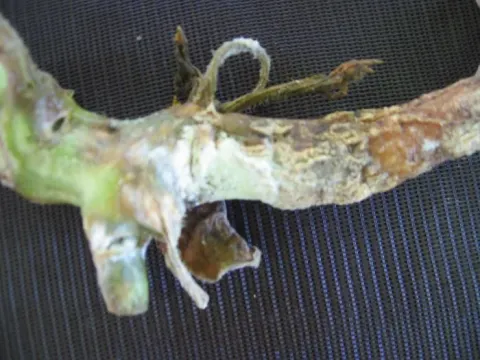
Fusarium wilt of cucurbits
Fusarium cucurbiticola
The causal agent of this devastating disease is the soil-borne fungus Fusarium oxysporum f. sp. cucumerinum (often linked to the broader Fusarium cucurbiticola complex). It is an imperfect fungus that reproduces via microconidia, macroconidia, and chlamydospores.
What the section contains
Fusarium wilt of cucurbits
The pathogen infects the plant through the root system, entering the vascular tissues, specifically the xylem. Once inside, the fungal mycelium colonizes the vessels, interfering with the transport of water and nutrients.
This fungus exhibits a high degree of host specificity, with different forms attacking specific crops such as cucumbers, melons, watermelons, pumpkins, and squashes.
The fungus is highly resilient, capable of surviving in the soil for many years in the form of chlamydospores, making it a persistent threat in intensive cultivation systems.
Besides physical colonization, the fungus secretes phytotoxins that degrade the plant's physiological processes, leading to the characteristic yellowing and necrosis associated with the wilt syndrome.
The first external symptom is often the drooping of leaves during the hottest part of the day, with partial recovery occurring at night. As the disease progresses, the wilting becomes permanent.
A definitive diagnostic sign is the discoloration of the vascular ring. A cross-section of the stem near the crown reveals brownish or dark-red tissue, confirming the presence of the pathogen.
Yellowing of the foliage usually starts with the older, basal leaves. Eventually, the entire plant turns yellow, wilts, and collapses. In humid conditions, a white or pinkish mold may appear at the base of the stem.
- Stunting of the overall plant growth;
- Wilting of leaves, especially under sunlight;
- Browning and decay of the root system;
- Vascular browning clearly visible on stem cross-sections;
- Massive leaf chlorosis followed by rapid death.
In mature plants, the disease can lead to the formation of small, poorly developed fruits that often shrivel before reaching harvest maturity.
Fusarium wilt thrives in warm soil temperatures, generally between 22 °C and 28 °C. High soil moisture is also essential for the germination of fungal spores.
Poor drainage and soil compaction contribute to the rapid spread of the disease. In greenhouse settings, the lack of proper ventilation creates microclimates that favor the pathogen.
Stress factors, such as sudden temperature shifts, nematode damage to roots, or imbalanced fertilization, make plants significantly more susceptible to infection.
Acidic soil conditions (pH 5.0–6.0) have been shown to accelerate the development of Fusarium colonies compared to more alkaline environments.
Continuous cropping of cucurbits without proper rotation is the primary reason for the buildup of the pathogen population in the soil, leading to an increasing disease severity over time.
This disease causes significant economic losses, often resulting in 100% crop failure in heavily infested fields. It remains one of the most challenging diseases for cucurbit growers.
Beyond yield reduction, infected plants produce inferior fruits with poor shelf life and diminished market value, making the produce unsuitable for commercial distribution.
The pathogen spreads through contaminated tools, seeds, and irrigation water, meaning a localized outbreak can quickly become a systemic issue across the entire farm.
Restoring the health of infested soil is difficult and costly, often requiring long-term fallowing or intensive soil disinfestation procedures to reduce the inoculum level.
In industrial production, the presence of Fusarium wilt can lead to the decommissioning of greenhouse facilities due to the extreme persistence of the fungus in structural elements and growing media.
The most effective strategy is the use of disease-resistant cultivars or grafting cucurbits onto resistant rootstocks, which prevents the fungus from colonizing the productive tissues.
Seed treatment using systemic fungicides helps eliminate seed-borne inoculum. This ensures that the seedlings start in a healthy environment and are less vulnerable during the establishment phase.
Strict crop rotation (at least a 5-year break) is necessary to reduce the levels of chlamydospores in the soil. Avoid planting in soils known to have a history of Fusarium outbreaks.
Integrated biological control, including the application of beneficial fungi like Trichoderma harzianum, can effectively antagonize the pathogen and boost plant defense mechanisms.
Good agronomic practices, such as optimizing soil pH, balanced irrigation, and ensuring proper soil aeration, are fundamental to creating an environment hostile to the spread of Fusarium wilt.