
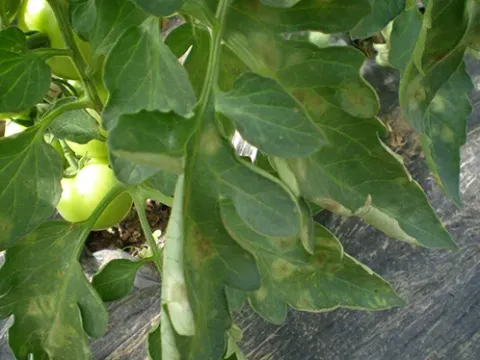
Tomato leaf mold
Fulvia fulva
The disease typically begins on the lower leaves, appearing as pale green or yellowish spots that gradually expand in size and irregular shape.
What the section contains
Tomato leaf mold
On the underside of the leaves, a dense, velvety, olive-brown mat of fungal spores develops, which is a hallmark diagnostic feature of the infection.
As the disease progresses, the leaf tissue turns brown and dries out, causing the foliage to curl and eventually wither and drop from the plant.
In severe outbreaks, the fungus can also infect the blossoms, petioles, and fruits, manifesting as dark, sunken spots that ruin the aesthetic quality.
The infected plants show stunted growth and poor fruit development, which leads to significant yield losses if left untreated during the season.
Tomato leaf mold is caused by the fungus Fulvia fulva, formerly known as Cladosporium fulvum, which thrives in high humidity environments.
The pathogen survives between growing seasons as conidia or mycelium in plant debris, soil, greenhouse structures, and even on the surface of seeds.
Spores are highly resilient and are easily disseminated by wind, water splashes, irrigation equipment, and human contact during pruning or harvesting.
The fungus infects leaves through the stomata and colonizes the intercellular spaces, where it absorbs nutrients and disrupts the plant's photosynthetic capacity.
Due to the high genetic diversity of the fungus, new strains continue to emerge, making it difficult for breeders to develop permanently resistant varieties.
Leaf mold development is heavily dependent on specific climatic conditions, particularly high relative humidity often exceeding 85–90%.
Optimal temperatures for spore germination and mycelial growth range from 20°C to 25°C, making warm and humid greenhouses an ideal breeding ground.
Poor ventilation and overcrowded plant spacing prevent moisture from evaporating, creating stagnant air pockets that favor rapid fungal colonization.
Water condensation on leaf surfaces, occurring during temperature fluctuations between day and night, triggers immediate infection of the foliage.
Overhead irrigation systems that leave the foliage wet for extended periods significantly increase the risk and severity of the disease outbreak.
Tomato leaf mold is economically damaging, as it can reduce total yield by 30% to 50% through the destruction of photosynthetic leaf tissue.
The reduction in leaf area leads to poor fruit set, lower sugar content, and smaller fruit size, which directly affects the market value of the harvest.
Weakened plants become increasingly susceptible to secondary pathogens, including gray mold and various stem rots, leading to complete plant death.
The costs associated with repeated fungicide applications and increased labor for greenhouse sanitization negatively impact the overall farm profitability.
In severe cases, the cosmetic damage to fruits prevents them from meeting the grading standards required for premium fresh produce markets.
Effective control focuses on environmental management to lower humidity and prevent the condensation that facilitates fungal spore germination.
Cultural practices, such as proper pruning and wider spacing, are essential to allow better airflow through the canopy and reduce disease pressure.
- Choose leaf-mold resistant tomato cultivars for planting.
- Ensure strict greenhouse sanitation by removing and burning all crop residues.
- Use drip irrigation to keep the foliage dry throughout the growing cycle.
- Apply recommended fungicides early when the first symptoms are detected.
- Maintain optimal temperatures and use ventilation to keep humidity below 80%.