
Tomato sooty leaf spot
Pseudocercospora fuligena
The causal agent of this disease is the fungus Pseudocercospora fuligena, formerly known as Cercospora fuligena. It is a specialized pathogen affecting Solanaceae crops, primarily tomatoes, commonly found in tropical and temperate regions with high humidity.
What the section contains
Tomato sooty leaf spot
This fungus survives in plant debris, soil, and potentially on seeds. During the growing season, it spreads via conidia dispersed by wind, splashing rain, or irrigation water, making it highly contagious within a greenhouse environment.
The life cycle of the pathogen is strictly dependent on moisture availability on the leaf surface. Once a spore germinates, the mycelium penetrates the leaf tissue through stomata, initiating the colonization process that leads to disease symptoms.
Biological studies indicate that the fungus thrives as a parasite, specifically targeting the leaf tissue to draw nutrients. This disrupts the plant's metabolic processes and drastically reduces the photosynthetic surface area available to the plant.
Understanding the pathogen's biology is crucial for breeders developing resistant tomato cultivars. The dark appearance of the fungal colonies, which gives the disease its common name, is a diagnostic feature of its sporulation on the host.
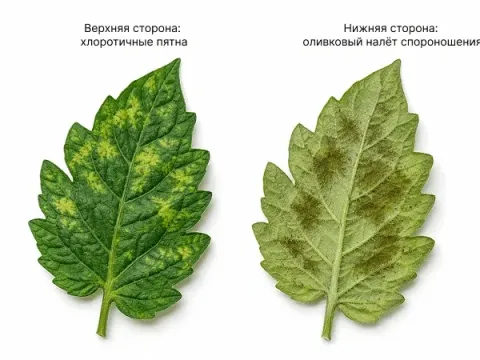
Initial symptoms of sooty leaf spot appear on the lower, older leaves of the tomato plant. Small, chlorotic spots develop on the leaves, which gradually enlarge and turn brown or dark grey, eventually becoming nearly black.
A distinctive sign of the disease is the presence of an olive-black mold on the underside of the leaves. This dark, velvety layer consists of fungal conidia and conidiophores, which are clearly visible under humid conditions.
As the infection progresses, the spots coalesce, covering large sections of the leaf blade. Eventually, the affected leaves turn yellow, wither, and drop prematurely, leaving the lower parts of the plant bare.
While fruit infection is less common than foliar symptoms, severe infestations can affect overall plant health and fruit development. Stems and petioles can also become infected, further hindering the plant's structural integrity and nutrient transport.
- Chlorotic spots on older leaves
- Olive-black fungal mold on the leaf underside
- Progressive necrosis of leaf blades
- Premature leaf abscission
- Stunted growth of the tomato plant
The development of sooty leaf spot is highly favored by high humidity levels, often exceeding 80%. Optimal temperatures for fungal development and sporulation range between 22°C and 28°C (72°F – 82°F).
Dense plant canopies that lack proper air circulation create a microclimate prone to pathogen development. Greenhouse environments are particularly susceptible to outbreaks if ventilation is inadequate, leading to stagnant air.
Frequent rainfall or persistent dew during warm nights creates the perfect conditions for spore germination. In plastic tunnels, water condensation on the leaves serves as a primary driver for the rapid spread of the disease.
Poor agricultural practices, such as overhead irrigation that wets the foliage, contribute significantly to the disease cycle. Furthermore, excessive nitrogen fertilization can make the plant tissues more succulent and susceptible to fungal invasion.
Extended periods of stable, warm weather allow the pathogen to complete multiple infection cycles in a single season. This can lead to epiphytotic levels of disease in commercial tomato fields if not managed promptly.
The primary damage caused by sooty leaf spot is a significant reduction in photosynthetic capacity. The loss of foliage directly results in lower yields, as the plant can no longer produce enough energy to support fruit development.
Premature leaf loss exposes the fruit to direct sunlight, causing sunscald. This drastically reduces the marketability of the tomatoes and makes them prone to further physiological disorders and secondary rot infections.
In professional greenhouse settings, unchecked sooty leaf spot can lead to yield losses of up to 30-50%. The disease necessitates increased chemical interventions, which raises production costs and complicates integrated pest management programs.
Affected plants are physiologically weakened, making them more susceptible to other biotic and abiotic stresses. The fruit quality, including size, weight, and flavor, is often compromised due to the lack of assimilates reaching the developing fruit.
Additionally, the accumulation of fungal inoculum in the greenhouse poses a risk to subsequent crops. Cleaning and disinfecting the structure and soil is essential, adding to the long-term economic burden of managing the disease.
The foundation of control lies in strict sanitation, including the removal and destruction of all plant debris after harvest. Deep plowing and soil disinfection in greenhouses help reduce the baseline spore load for the next cycle.
Effective prevention involves maintaining optimal humidity levels through controlled ventilation and using drip irrigation to keep the foliage dry. Air circulation is vital to prevent the establishment of the favorable microclimate the fungus requires.
Fungicidal treatments, such as copper-based compounds or systemic triazoles, are effective when applied preventively or at the earliest onset of symptoms. Always follow the registered label instructions for dosage and application frequency.
Selecting resistant or tolerant tomato hybrids is the most sustainable long-term solution. Many modern breeding programs focus on integrating resistance to Pseudocercospora into commercial varieties to minimize chemical reliance.
Pruning the lower leaves and maintaining proper plant spacing ensures better air movement throughout the crop. Spatial isolation from other Solanaceous crops can also help prevent the introduction of the fungus from external sources.