

Description
Symptoms
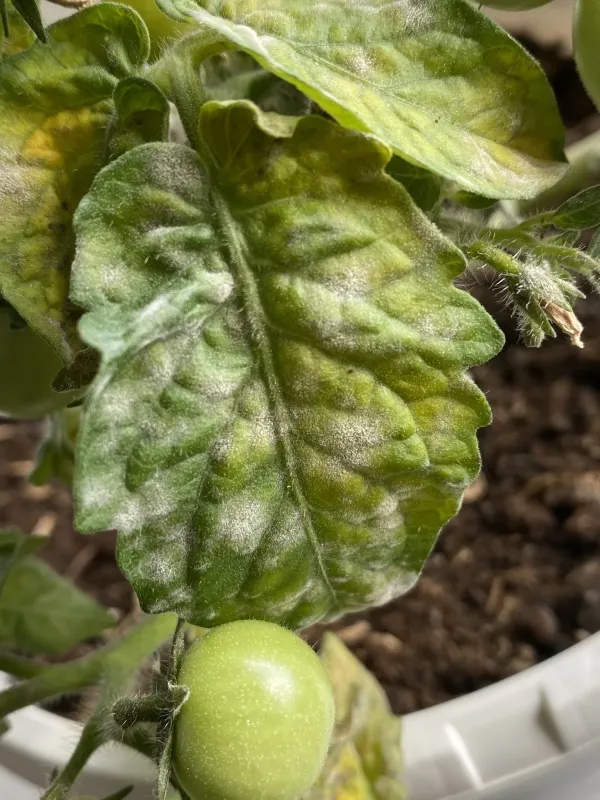
The first sign of infection is the appearance of small, white or grayish dusty spots on the leaves. These patches resemble talcum powder or flour dusted onto the foliage, which is characteristic of the disease.
As the infection progresses, these spots expand rapidly and coalesce, eventually covering entire leaves, petioles, and young stems. This layer significantly inhibits photosynthesis and stunts the overall development of the plant.
Affected tissues eventually turn yellow, then brown, and necrotic. This leads to premature leaf senescence, curling, and defoliation, which severely stresses the tomato plant and reduces its vigor.
Unlike some other fungal infections, the white mycelium can be wiped off the leaf surface with a finger; however, the underlying leaf tissue usually shows clear signs of chlorosis or cell death.
- White powdery mycelium on the upper leaf surface.
- Yellowing and chlorosis of foliage.
- Leaf curling and premature death.
- General plant stunting and growth inhibition.
Pathogen
The causal agent of this disease is the obligate fungal parasite Oidium neolycopersici. It is a microscopic pathogen that colonizes the surface of plant tissues, absorbing nutrients via specialized structures known as haustoria.
It belongs to the Ascomycota phylum. Its life cycle is dominated by asexual reproduction, producing chains of conidia that are easily dispersed by air currents, facilitating rapid spread across fields or greenhouses.
This pathogen specializes in the Solanaceae family. While it is widely known as tomato powdery mildew, it also affects various other plants in the same family, making crop management complex.
Primary inoculum sources include crop debris, weeds, and infected greenhouse transplants. In protected environments, the fungus can survive year-round if proper sanitation protocols are not strictly followed.
The biology of Oidium neolycopersici is unique because it does not require free water or high humidity for spore germination, allowing it to thrive even in relatively dry and stagnant environments.
Conditions for development
The pathogen thrives in moderate temperatures, typically ranging from +18°C to +25°C. These temperatures are very common in greenhouse environments during the spring and summer months.
Relative humidity between 60% and 80% is optimal for rapid spore production and infection. However, the fungus can continue to spread even in lower humidity if there is poor air circulation.
Inadequate ventilation in greenhouses creates a stagnant microclimate that promotes the accumulation of spores and accelerates disease progression. Dense plant spacing also contributes to high infection rates.
Plant stress, such as significant temperature fluctuations between day and night, increases susceptibility. Furthermore, nutritional imbalances—particularly excess nitrogen—can weaken the plant's natural defenses.
Improper irrigation practices that lead to water stress or inconsistent moisture levels can trigger disease outbreaks, especially during the fruit-setting stage when the plant is most vulnerable.
Why it matters
The primary damage is the significant reduction of photosynthetic leaf area, which leads to lower fruit sugar content, smaller fruit size, and overall reduced yield potential for the tomato plants.
Heavy infestations result in premature ripening and poor fruit quality. If left untreated, the disease can cause yield losses ranging from 30% to over 80%, depending on the timing of the infection.
Infected plants are weaker and more prone to secondary infections by other opportunistic fungi, such as gray mold (Botrytis), which can further destroy the fruit and foliage.
The cost of chemical intervention, including specialized fungicides and labor, significantly increases the cost of production and impacts the profitability of the commercial tomato operation.
The aesthetic value of the fruit is also compromised, as weakened plants often produce deformed, underdeveloped, or discolored tomatoes that fail to meet market standards for quality.
Protection
Strict sanitation is the foundation of management. Removing all crop debris, weeds, and potential host plants after the season is vital to reduce the carry-over of the inoculum in the soil or structure.
Improving greenhouse ventilation and maintaining proper plant spacing are essential. Pruning lower leaves helps improve airflow and reduces the risk of creating moist, stagnant pockets where the fungus thrives.
Chemical control involves the use of sulfur-based fungicides or systemic options such as triazoles or strobilurins. Applications should begin at the first sign of symptoms for maximum effectiveness.
Rotating fungicides with different modes of action is critical to preventing the development of resistance in Oidium neolycopersici, ensuring that chemical tools remain effective for future seasons.
Biological control agents, such as specific strains of Bacillus subtilis or the fungal hyperparasite Ampelomyces quisqualis, can be used to suppress mycelial growth in an eco-friendly manner.
Content graph
Connections · Tomato powdery mildew
Most often together:
Marketplace
Products · 1
Community
Discussion
No discussions yet — be the first.