
Tomato leaf mold
Fulvia
The causal agent of tomato leaf mold is the fungus Passalora fulva (syn. Fulvia fulva or Cladosporium fulvum). It is a specialized pathogen that primarily targets plants within the Solanaceae family, with tomatoes being the most susceptible host.
What the section contains
Tomato leaf mold
The fungus survives as conidia or sclerotia in plant debris, soil, and greenhouse structures. These spores are highly resistant to adverse conditions, allowing the pathogen to persist from one season to the next.
Transmission occurs through airborne conidia, water splashes, and physical contact via tools or workers' clothing. Once the spores land on a leaf, they require high humidity to germinate and penetrate the leaf tissue through the stomata.
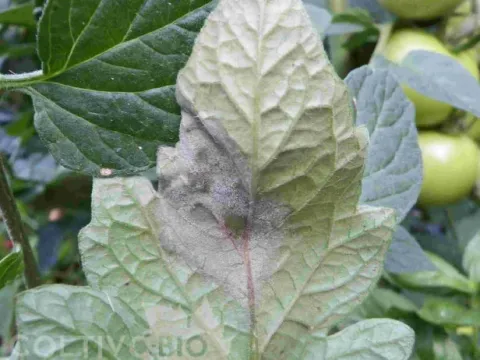
The life cycle involves the colonization of the intercellular spaces of the leaf, followed by the emergence of new spores through the leaf stomata. This creates the characteristic fuzzy patches on the underside of the leaves.
The pathogen is known for its ability to produce many distinct physiological races, which complicates breeding efforts as new strains of the fungus emerge and overcome plant resistance.
The first symptoms typically appear on the lower, older leaves of the tomato plant. Initially, small pale yellow or greenish spots manifest on the upper surface of the leaf.
As the disease progresses, these spots expand, turn yellow to brown, and a distinctive olive-brown to grayish velvety mold develops on the underside of the leaf directly beneath the spots.
In severe cases, the spots coalesce, causing the leaf tissue to die, curl up, and drop prematurely. The infection systematically moves upwards through the plant, potentially causing severe defoliation.
While the disease primarily affects foliage, under extremely humid conditions, it can occasionally spread to blossoms and stems, leading to poor fruit set or flower drop.
The plant appears stunted and weakened due to the loss of its photosynthetic machinery. If the canopy is heavily infected, the fruits may become undersized and fail to reach maturity.
The development of tomato leaf mold is strictly dependent on high relative humidity, typically above 80–85%. This makes it a major concern in greenhouse-grown tomatoes where ventilation is often restricted.
Warm temperatures ranging from 20°C to 25°C (68°F–77°F) are ideal for the rapid sporulation and infection cycle of the fungus.
Poor airflow, stagnant air inside the greenhouse, and condensation on leaf surfaces are the primary environmental drivers that trigger an outbreak.
Dense planting patterns reduce air circulation around the plants, maintaining a moist microclimate around the lower foliage that is highly favorable for the pathogen.
Poor sanitation practices, such as leaving old plant debris in the greenhouse after harvest, provide the necessary inoculum source for the next crop cycle.
Tomato leaf mold is economically significant due to its ability to cause severe defoliation. A reduction in leaf area directly impairs the plant's ability to produce energy, leading to lower fruit yields.
Beyond quantity, the quality of the fruit is compromised, as leaves are essential for transporting carbohydrates to the developing fruit, resulting in smaller, less flavorful tomatoes.
Producers face financial losses due to both reduced harvests and the increased operational costs associated with chemical disease management and labor for leaf pruning.
A weakened plant with severe leaf mold is more susceptible to secondary infections, such as gray mold (Botrytis cinerea), which can further destroy the remaining fruit.
In highly intensive farming systems, if the disease is not managed early, the entire crop can become unsalvageable, forcing farmers to remove all vegetation to stop the spread.
The primary control strategy involves environmental management. Keeping the relative humidity below 80% through proper ventilation and the use of drip irrigation helps prevent spore germination.
Cultural practices are critical: pruning the lower leaves improves airflow, while regular removal and destruction of infected foliage reduce the pathogen load in the greenhouse.
Planting resistant tomato varieties is the most sustainable long-term solution. Breeding programs continuously work to incorporate resistance genes to keep pace with new fungal races.
Fungicides, particularly those containing copper or systemic compounds, should be applied as soon as the first symptoms are detected, ensuring full coverage of the lower leaf surfaces.
- Optimize greenhouse ventilation.
- Implement proper spacing for airflow.
- Sanitize greenhouse structures annually.
- Choose resistant cultivars.
- Apply fungicides at early symptoms.