
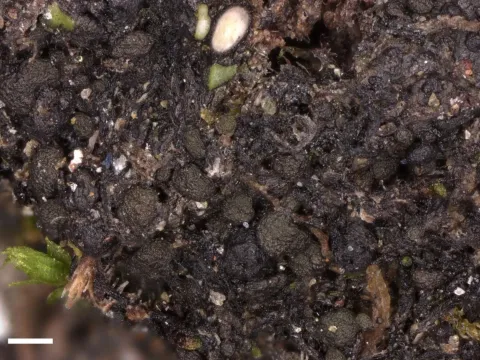
Frigidopyrenia bryospila
Frigidopyrenia bryospila
Frigidopyrenia bryospila is a fungal species belonging to the order Pyrenulales. In scientific literature, it is often identified as a lichenized or lichenicolous fungus, meaning it resides in close association with mosses, algae, or cyanobacteria on various surfaces.
What the section contains
Frigidopyrenia bryospila
Biologically, it is an ascomycete characterized by the formation of perithecia—fruiting bodies that are typically immersed within the substrate. This adaptation allows the fungus to withstand fluctuations in temperature and humidity common in its natural habitats.
This organism is not a primary parasite of commercial agricultural crops. Instead, it typically functions as a component of the epiphytic flora found on tree bark, rocks, or soil, occupying a specific ecological niche alongside bryophytes.
The life cycle of the fungus depends on the production of ascospores, which are dispersed primarily via wind and water splashes. These spores allow the fungus to colonize new substrates when conditions are favorable for germination.
Identification of Frigidopyrenia bryospila requires professional mycological examination. Morphological traits of the perithecia and microscopic features of the spores are essential for distinguishing it from other similar-looking lichenized species.
The development of Frigidopyrenia bryospila is heavily dependent on moisture availability. It thrives in cool, humid environments such as shaded forests or areas with frequent precipitation, which support the growth of its symbiotic moss partners.
The fungus shows a strong preference for stable microclimates. Humidity levels must be consistent to allow for the metabolic activity of the fungus and its associated partners throughout the growing season.
Temperature range is typically cool to moderate. The fungus is well-adapted to high-latitude or high-altitude environments, where it can survive long periods of low metabolic activity during colder months.
Surface moisture, such as dew or rain, is critical for the germination of spores. The substrate must remain moist for long enough to allow the germ tube to establish itself and begin nutrient acquisition.
Significant environmental changes, particularly those that result in decreased humidity or deforestation, lead to a decline in the populations of this fungus as it is highly sensitive to desiccation.
There is no record of Frigidopyrenia bryospila causing economic damage to agricultural crops or commercial forestry. It does not penetrate the living tissues of plants to extract nutrients in a way that causes disease symptoms like wilting or necrosis.
In ornamental gardens or tree nurseries, its presence on bark is generally regarded as cosmetic. It does not pose a threat to the physiological integrity of the host trees, provided the trees are otherwise healthy.
While dense colonization by any epiphytic organism can theoretically trap moisture on the bark surface, there is no evidence suggesting this species acts as a precursor to serious wood-rotting diseases.
Because it is an integral part of specific ecological communities, it is not categorized as a plant pathogen in agricultural legislation or trade regulations. No quarantine measures are required for this organism.
The fungus is effectively harmless to food production and does not necessitate any intervention or monitoring by farmers or plant health professionals.
No chemical control measures are directed against Frigidopyrenia bryospila. The application of fungicides to manage this fungus would be ineffective and ecologically unjustified given its non-pathogenic nature.
Management, if deemed necessary for aesthetic purposes, focuses on improving the growth conditions of the host plant. Pruning to enhance airflow and sunlight penetration significantly reduces the humidity required for fungal growth.
Proper agricultural practices, including balanced fertilization and irrigation, help keep trees robust. Strong trees possess natural defenses that minimize the development of unwanted epiphytic communities on their bark.
Mechanical removal from the bark of ornamental plants is an option if colonization becomes too extensive. Care must be taken to use tools that do not cause wounding, as open wounds can invite true parasitic infections.
Environmental management remains the primary approach. By ensuring that orchards and parks are well-ventilated, the moisture levels can be kept below the threshold required for this fungus to thrive.