
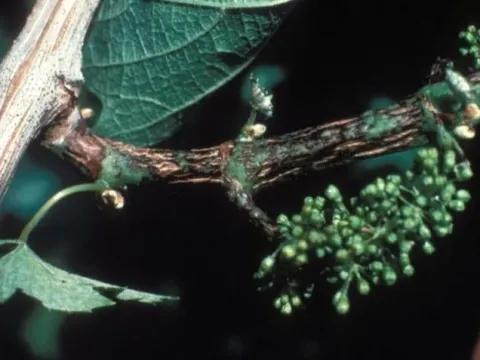
Euepixylon udum
Euepixylon udum
The causal agent of this disease is the fungus Euepixylon udum, which belongs to the Ascomycota division. This microorganism is a specialized xylotroph capable of degrading the essential components of wood, specifically lignin and cellulose.
What the section contains
Euepixylon udum
During its life cycle, the fungus forms specific fruiting bodies known as stromata. These are typically embedded within the bark or the woody tissue, which provides the pathogen with protection against environmental stressors and ensures its survival.
The mycelium of the fungus penetrates deep into the tree's tissues, extracting nutrients and disrupting the structural integrity of the wood. This biological process is characteristic of wood-decaying fungi that lead to localized or systemic rot.
The dispersal of the fungus occurs via spores, which are transmitted by wind or splashing rain. The reproduction rate increases significantly during periods of high humidity, facilitating the spread of the infection to new host plants.
The pathogen is particularly aggressive when the host tree is weakened by environmental stress, competition, or existing damage to its natural protective barriers.
The primary symptom of the disease is the appearance of dark, necrotic patches on the bark of trunks and larger branches. In these areas, the tissue becomes soft and loses its structural firmness.
Upon closer examination, small black dots can often be seen on the bark surface. These are the protruding fruiting bodies (perithecia) of the fungus, which indicate an active stage of development and potential sporulation.
Beneath the affected bark, the wood often displays discoloration, indicating the progression of the decay process. In some cases, moisture or exudate may seep out from cracks, signaling internal damage.
As the disease advances, symptoms manifest in the crown, including premature yellowing and shedding of leaves. This occurs due to the impairment of the tree's vascular system, which struggles to transport water and nutrients to the upper parts.
At advanced stages of infection, affected branches become brittle and dry. If left untreated, the area of decay continues to expand, ultimately compromising the vitality of the entire plant.
The development of Euepixylon udum is heavily dependent on moisture levels. As the name suggests, the fungus thrives in environments where high moisture content is maintained on the surface of the wood.
Favorable conditions for spore germination and colonization include long periods of rain, persistent fog, or high relative humidity within dense forest or park environments.
Crowded stands with poor air circulation create a microclimate that prevents bark from drying out, which significantly promotes the establishment and growth of the fungus.
Physical damage to the bark, caused by frost, mechanical injury, or animal activity, acts as a primary entry point for the infection. Once the outer layer is breached, the pathogen enters the wood more easily.
Optimal temperatures for the metabolic activity of Euepixylon udum range between +15°C and +25°C. Within this range, the mycelium grows and colonizes the host tissue at an accelerated rate.
The major hazard associated with this fungus is the destruction of the tree's mechanical strength. Infected wood becomes weak and susceptible to breaking during windstorms or heavy snowfall.
From an economic standpoint, infection significantly reduces the timber quality. Wood affected by Euepixylon udum loses its density and structural value, making it unsuitable for construction or industrial use.
The disease weakens the overall health of the tree, rendering it more susceptible to secondary pests and other pathogens. This leads to stunted growth and a decline in aesthetic value for landscape trees.
In forest ecosystems, a widespread outbreak can negatively impact the species composition by selectively killing trees that are more sensitive to the fungus, leading to a loss of biological diversity.
Failure to control the disease leads to costly requirements for sanitary logging and the removal of hazardous, decaying trees to prevent further spread of the pathogen.
The fundamental strategy for control is the practice of good sanitation. This includes the regular removal and proper disposal of deadwood, fallen branches, and infected trees that serve as reservoirs for the fungus.
Minimizing mechanical damage to healthy trees is crucial. Any accidental wounds should be immediately treated with appropriate antiseptic agents or specialized wound dressings to prevent pathogen entry.
Managing the density of plantations through selective thinning improves air circulation and increases sunlight penetration, which helps keep bark surfaces drier and less susceptible to infection.
If an infection is detected in high-value trees, the use of systemic fungicides may be considered to inhibit mycelial growth. However, this is usually combined with physical removal of the infected tissue.
- Regular phytosanitary monitoring.
- Sanitary pruning of diseased branches.
- Sealing wounds with protective dressings.
- Improving stand aeration through thinning.
- Selecting and planting resistant tree varieties.