
Eumusae leaf spot of banana
Pseudocercospora eumusae
Description
Symptoms
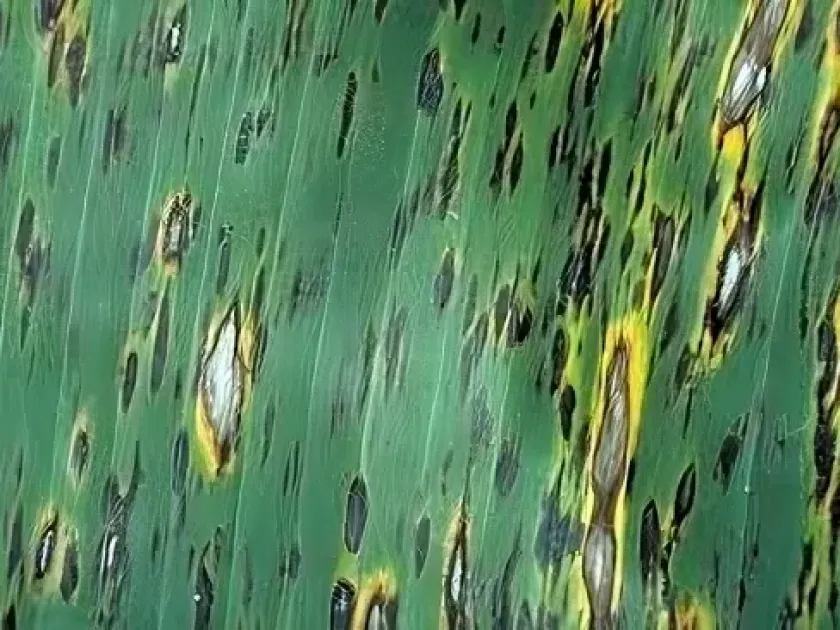
Initial symptoms are characterized by minute, pale yellow or brown spots appearing on the lower leaf surface. As the infection progresses, these spots elongate along the leaf veins.
The spots darken over time, turning dark brown or black, often with a distinct chlorotic halo. The necrotic centers of these spots eventually become quite visible and can coalesce.
A severe infection results in extensive leaf necrosis, causing the leaves to dry out and collapse prematurely. This reduces the functional photosynthetic area of the banana plant drastically.
Infection starts on the older leaves and moves upward. If left unchecked, the disease can infect the entire canopy, severely stressing the plant during its critical fruit-filling stage.
Under conditions of high humidity, a characteristic velvety dark fungal growth, consisting of conidiophores and conidia, appears on the spots, especially on the underside of the leaf.
Pathogen
The causative agent of Eumusae leaf spot is the fungus Pseudocercospora eumusae, which is classified as an ascomycete. This pathogen is known for its high virulence and ability to cause significant damage to banana plantations globally.
The fungus specifically attacks members of the Musa genus. Both dessert bananas and plantains are susceptible to the infection, which can occur at any growth stage of the plant.
Pseudocercospora eumusae produces conidia that are disseminated primarily by wind and splashing raindrops. These spores land on healthy leaves, initiating new infection cycles if conditions are favorable.
The pathogen persists in necrotic leaf tissues on the soil surface. These infected residues serve as the primary inoculum source for subsequent outbreaks within the plantation.
Molecular studies indicate that this pathogen can outcompete other fungi causing similar leaf spots, making it a dominant and aggressive threat in regions where it becomes established.
Conditions for development
The development of Pseudocercospora eumusae is heavily favored by warm temperatures, typically between 24 and 28 degrees Celsius, which are optimal for spore germination.
High relative humidity is essential for the disease to spread. Frequent rainfall, mist, or heavy dew provides the necessary free water on leaf surfaces for the spores to germinate.
Dense plantation spacing limits airflow and increases the humidity levels within the canopy, creating a perfect microclimate for the rapid multiplication of the pathogen.
The presence of water droplets on leaves for several hours is a critical requirement for the penetration of the fungus into the stomata of the leaf tissue.
Poor plantation management, specifically the accumulation of dead foliage, maintains a high level of humidity and spore load near the base of the plants.
Why it matters
The primary impact of Eumusae leaf spot is the reduction of the leaf area available for photosynthesis. This leads to a significant reduction in plant vigor and overall biomass production.
Fruit yield is heavily compromised, with bunches becoming smaller and fruit filling being delayed. In many cases, the fruit quality does not meet the standards required for international export.
The disease causes early ripening of the fruit on the plant, which negatively affects the post-harvest storage and transport life, leading to major economic losses for producers.
Chronic infection weakens the plant's structural integrity and its resilience against other biotic and abiotic stressors, such as wind damage or secondary pest attacks.
Global banana production costs are significantly increased due to the need for intensive fungicide spraying programs required to keep the disease under an economic threshold.
Protection
Sanitation is a cornerstone of management. Removing and destroying heavily infected leaves significantly lowers the amount of inoculum available to spread the disease.
Proper spacing and canopy management are vital to ensure adequate air circulation. This reduces humidity in the lower levels of the plantation and hinders spore germination.
Fungicide application is the most common commercial control method. It involves the use of both contact and systemic fungicides applied on a strict schedule based on disease monitoring.
Resistance management is crucial, which involves rotating different fungicide modes of action to prevent the fungus from developing chemical resistance.
Developing and deploying resistant banana varieties is the ultimate long-term goal. Breeding programs are actively focused on introducing genetic resistance to Pseudocercospora eumusae into popular cultivars.
Discussion
No discussions yet — be the first.