
Euepixylon
Euepixylon
The disease is caused by the fungus Euepixylon udum, a member of the Ascomycota division. It is a specialized wood-decay fungus that thrives on the breakdown of organic matter.
What the section contains
Euepixylon
While often saprotrophic, it can behave as a weak parasite, colonizing stressed or wounded tissues of various deciduous trees. It targets the bark and the underlying cambium layer.
The fungus produces stromatic structures that break through the bark to facilitate spore dispersal. These structures appear as small, coal-like raised bumps on the tree surface.
The mycelium grows within the woody tissues, degrading lignin and cellulose, which disrupts the tree's vascular system. This internal colonization leads to the gradual death of the affected branches.
Biological studies of Euepixylon highlight its role in forest ecosystems as a decomposer, although in managed orchards or parks, it becomes a significant phytopathological concern.
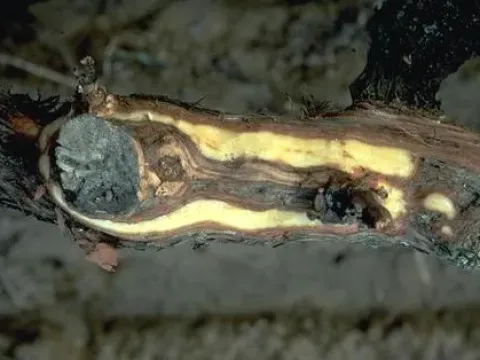
The primary symptom is the localized necrosis of the bark, which turns black and becomes brittle. Affected bark eventually detaches, exposing the decaying wood underneath.
Distinctive black, wart-like fruiting bodies (stromata) appear on the surface of the infected areas. These are clear indicators of the fungus reaching its reproductive stage.
Dieback of branches is a common symptom. Leaves on infected limbs show signs of premature yellowing and wilting, followed by rapid leaf drop as the branch loses its supply of nutrients.
If the bark is removed, the wood underneath often exhibits discoloration, such as dark staining or mottled patterns, indicating the extent of the fungal penetration.
On severely affected trees, longitudinal cracks can develop in the bark. These wounds further compromise the structural integrity of the branch and attract secondary pests.
High relative humidity is the primary catalyst for the development of Euepixylon. Frequent rainfall and prolonged dampness promote spore germination on the tree's surface.
Trees that are weakened by environmental stress, such as frost cracks, sunburn, or mechanical damage, are significantly more susceptible to infection by this pathogen.
Inadequate air circulation in dense plantations creates a stagnant, humid microclimate that allows the fungus to proliferate and spread effectively between adjacent trees.
Seasonal temperature fluctuations, especially during spring thaw, can cause bark splitting, which serves as the primary infection site for the fungal spores.
Poor orchard or park maintenance, including the presence of deadwood and untrimmed branches, provides a continuous reservoir of inoculum for the fungus to persist.
The main danger posed by Euepixylon is the gradual loss of tree vitality. Infected branches eventually cease to function, leading to a diminished canopy and reduced growth.
As the fungus degrades the wood, the structural integrity of the branches is compromised. This increases the likelihood of limb failure, especially during high winds or heavy snow.
In cases of young trees or severe infections, the disease can lead to the death of the entire plant due to the systematic blockage of nutrient transport channels.
Infected trees often become targets for wood-boring insects, which further accelerate the decay process and worsen the overall condition of the plant.
The spread of the disease can cause significant economic losses in fruit orchards and nursery stocks, necessitating the costly removal and destruction of the affected specimens.
Proactive management is the most effective approach. Regular sanitary pruning to remove any dead, diseased, or damaged branches is crucial to limiting the spread of the fungus.
Maintaining optimal tree vigor through proper irrigation and fertilization ensures the plant has a stronger immune system to resist fungal infections.
Mechanical damage should be avoided at all costs. When pruning or accidental wounds occur, they must be immediately treated with suitable wound dressings or fungicides.
Chemical control, including the application of broad-spectrum fungicides during the dormant season, can help reduce the spore load in the immediate environment of the tree.
- Regular monitoring of tree bark during early spring.
- Proper removal and disposal of infected plant debris.
- Ensuring correct planting distances to improve canopy airflow.
- Protecting trunks from frost and sun damage.