
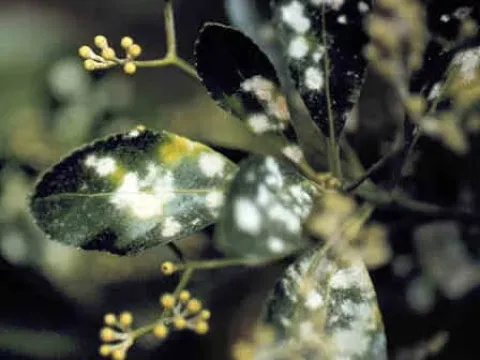
Euonymus powdery mildew
Erysiphe euonymi
The disease is caused by the fungus Erysiphe euonymi, an obligate parasite that specifically targets members of the Celastraceae family. The pathogen lives primarily on the surface of leaves and shoots.
What the section contains
Euonymus powdery mildew
It forms a white mycelium network that extracts nutrients from the host plant via haustoria. These structures penetrate the plant epidermis, causing stress and reducing photosynthetic efficiency.
The life cycle includes both asexual reproduction via conidia and sexual reproduction resulting in the formation of cleistothecia. These small black fruiting bodies survive the winter on debris.
The fungus is highly specialized, making it a persistent issue in ornamental landscaping. Its ability to produce massive amounts of spores ensures rapid spread in favorable conditions.
Understanding the biology of Erysiphe euonymi is essential for effective timing of fungicide applications and management of the host plant environment.
The first symptom is the emergence of white, flour-like patches on the leaves. These spots gradually expand and coalesce, eventually covering the entire surface of the foliage.
Infected shoots and young stems show signs of stunted growth, twisting, and curling. As the infection progresses, the white spots may appear on flower buds and immature fruits.
By late summer, tiny, pepper-like black dots, known as cleistothecia, appear scattered within the white mycelial mats. This signals that the pathogen is entering its dormant stage.
- White powdery coating on foliage.
- Leaf distortion and curling.
- Premature leaf senescence and drop.
Unlike some other fungal diseases, the external mycelium is visible to the naked eye, making the identification of powdery mildew straightforward for gardeners.
The development of the fungus is favored by warm days and cool, humid nights, often associated with fluctuating spring and summer temperatures. High humidity without excessive water saturation is ideal.
Poor air circulation, common in crowded or unpruned shrubs, creates a microclimate that traps moisture and facilitates spore germination. Shade-heavy environments also contribute to susceptibility.
Over-fertilization with nitrogen induces the development of lush, succulent, thin-walled tissues that are highly attractive to the pathogen's hyphae. This creates a perfect environment for infection.
Splashing water from overhead irrigation helps spread conidia from leaf to leaf, accelerating the spread of the infection throughout the entire shrub.
Extended drought periods can inhibit active growth but often trigger massive sporulation as soon as moisture becomes available again.
The primary damage is aesthetic, as the white coating destroys the ornamental value of the Euonymus plants. Persistent infection leads to a ragged and unsightly appearance.
Beyond aesthetics, the fungus saps plant energy, reducing vigor and growth rates. Severe cases lead to premature leaf drop, preventing the plant from storing energy for the winter.
Stunted growth and twig dieback change the natural architecture of the bush. In severe infestations, the plant's structural integrity can be compromised over time.
Weakened plants are significantly more susceptible to environmental stressors such as drought, frost, or other secondary pathogens and pests.
In nurseries, this disease causes significant economic loss as affected plants are often unsellable and require costly treatment or destruction.
Cultural control starts with planting in well-ventilated areas with adequate sunlight. Proper pruning to improve airflow inside the canopy is a critical preventive measure.
Avoid excessive nitrogen fertilizers; instead, balance nutrition with potassium and phosphorus to promote stronger cell walls. Monitor watering practices to ensure the foliage remains dry.
When chemical intervention is necessary, fungicides containing sulfur, or systemic options like triazoles, are effective. Follow label instructions for specific application intervals.
Sanitation is vital: remove and destroy all infected foliage and debris at the end of the season to reduce the amount of overwintering inoculum in the soil.
Regular monitoring allows for early detection, meaning you can treat the infection before it becomes widespread and difficult to manage.