
Epichloe baconii
Epichloe baconii
Epichloe baconii is a species of filamentous fungus belonging to the Clavicipitaceae family. It is recognized as an endophyte that forms a symbiotic relationship with its host grasses, often becoming pathogenic under specific conditions.
What the section contains
Epichloe baconii
The fungus colonizes the intercellular spaces of the host plant's stem. Its growth is systemic, meaning it can spread throughout the developing tillers, affecting the plant's physiological processes.
Reproduction involves the formation of a stroma, a dense mass of mycelium that wraps around the stem, which is a classic manifestation of the fungus's life cycle in grasses.
The pathogen utilizes the host's nutrient transport system to survive and thrive. It has evolved to synchronize its growth with the host's phenology, ensuring its survival across different seasons.
Environmental variables such as humidity and ambient temperature are crucial for the development of Epichloe baconii, influencing the transition from endophytic to pathogenic growth.
The primary symptom, widely known as "choke disease," occurs when the fungus prevents the emergence of the grass inflorescence by encasing the developing flower stalk.
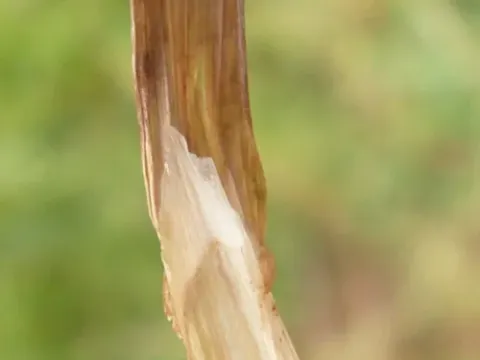
Visible signs include a white, spongy mycelial layer that eventually matures into a yellow or orange stroma covering the stem, effectively stifling the inflorescence.
Affected plants exhibit distorted, stunted growth, and often fail to produce seeds due to the mechanical blockage caused by the fungal stroma.
In addition to the physical blockage, infected plants may show chlorosis or premature senescence compared to healthy surrounding plants in the field.
Identification in the field is usually straightforward during the reproductive phase of the host, as the bright-colored stroma is highly distinctive against the green foliage.
The fungus causes significant seed yield losses by preventing the grass from flowering and producing viable seed, which is devastating for seed production fields.
It impacts the quality of forage, as infected plants may accumulate secondary metabolites that can be toxic or unpalatable to livestock, reducing overall feed value.
The presence of the pathogen results in decreased stand longevity, as infected plants often struggle to survive over successive growing seasons, leading to thinner pastures.
Economic damage is exacerbated by the reduction in biomass production, which directly impacts the output of hay or grazing land managed for agricultural purposes.
By infecting native grasses, the fungus creates a persistent source of inoculum that can easily spread to nearby managed or agricultural grass species.
Using pathogen-free seeds is the most effective preventive measure to avoid introducing the fungus into clean fields or nursery plots.
Implementing a strict sanitation program, including the removal and destruction of infected tillers, helps to reduce the local inoculum pressure significantly.
Management practices such as frequent mowing of pastures can effectively interrupt the fungal life cycle by removing the stems before the stroma completes its sporulation.
Maintaining proper spatial isolation between wild grass populations and agricultural crops is essential to prevent cross-contamination and the spread of fungal spores.
Agronomic practices that improve plant vigor and health can reduce the susceptibility of grasses to colonization by Epichloe baconii, keeping the disease impact to a minimum.