
Epichloe sylvatica
Epichloe sylvatica
The causal agent of the disease is the ascomycete fungus Epichloe sylvatica. It is a microscopic endophytic fungus that lives in symbiosis with grass tissues but shifts to a pathogenic phase under specific conditions.
What the section contains
Epichloe sylvatica
The fungus's life cycle includes both systemic colonization of plant tissues and the formation of a stroma that envelops the grass stems. The endophyte is transmitted both vertically through seeds and horizontally via ascospores.
The fungus penetrates deeply into the intercellular spaces of the host without damaging cells in the early stages, but during the reproductive phase, it actively utilizes plant resources to form spores.
Unlike many other pathogens, this species is specialized for forest and meadow grasses, adapting to their metabolism under shaded conditions or specific microclimates.
The biology of Epichloe sylvatica is complex due to the fungus's high adaptability to changes in the host plant's phenology, which complicates early diagnosis of the infection.
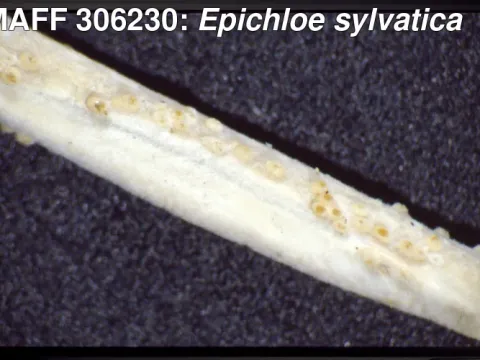
The primary symptom is the appearance of a characteristic white or yellowish "choke" or stroma on the grass stems during the flowering period. This formation tightly wraps around the stem.
Due to the development of the fungal choke, the affected grass tiller often becomes sterile or produces an underdeveloped spike. Plant growth may be stunted, and the plant itself becomes brittle.
Visually, the affected stem areas appear as rough, keratinized zones that stand out against healthy vegetation due to the intense spore coating.
Leaves of affected specimens are often deformed, twisted, or exhibit premature yellowing due to the disruption of nutrient transport.
- Presence of white stromal rings on the flower stalks.
- Failure of normal spike formation.
- Premature death of reproductive tillers.
- Discoloration of leaf blades during peak sporulation.
Disease development is closely linked to high air humidity and moderate temperatures, typical of forest edges and shaded meadows.
Sporulation and infection of healthy individuals occur most intensely during periods of prolonged rain, as water droplets facilitate the spread of spores to new tillers.
The presence of wild grass species in the agroecosystem serves as a permanent reservoir of infection, from which the fungus can spread to cultivated forage grasses.
Stand density plays a critical role: at high density, the infection spreads rapidly because physical contact between stems facilitates spore migration.
A temperature range of 15–22°C is optimal for mycelium development, which explains the peaks in disease incidence during the spring and summer seasons.
The primary damage lies in a sharp decrease in the seed productivity of affected grasses, which is critical for seed-producing farms.
The biomass of infected plants loses its nutritional value, becoming coarser and less digestible for livestock.
The presence of the fungus in the grass stand can lead to the premature loss of the grass component in meadow phytocenoses, reducing the longevity of grass mixtures.
In some cases, endophytes of this group may produce alkaloids that are potentially dangerous to livestock, necessitating the monitoring of hay and pasture composition.
Economic losses arise from decreased green mass yields and the need for expensive pasture renovation in cases of widespread infection.
Prevention begins with the careful selection of seed material, excluding the use of contaminated batches obtained from infected fields.
Timely mowing of the grass stand before the formation of the fungal stroma helps to reduce the inoculum level and prevent the dispersal of spores.
Maintaining an optimal mineral nutrition regime, especially potassium and phosphorus, increases the overall resistance of grasses to systemic endophytes.
When necessary, chemical treatment with systemic fungicides is conducted, although this method is limited for forage fields due to environmental requirements.
Sanitary measures, such as the destruction of wild reservoir grasses around the field perimeter, significantly reduce the risk of secondary infection in cultivated crops.