
Pomegranate cercospora leaf spot
Pseudocercospora punicae
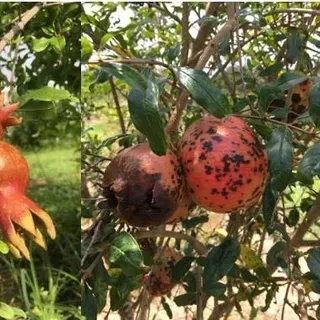
Description
Symptoms
Symptoms initially appear as small, circular, or irregular dark brown to reddish-brown spots on the leaves. These spots can grow significantly as the infection progresses.
In humid weather, a greyish to olive-brown velvety mold may form at the center of the lesions on the underside of the leaf, representing the pathogen's sporulation.
Severe infestations often result in premature yellowing and defoliation of the tree. This loss of foliage reduces the tree's ability to produce energy for fruit development.
On fruit, the fungus causes small, disfiguring spots. These spots can eventually lead to shallow pitting, which detracts from the marketability of the pomegranate fruit.
Lesions may also occur on twigs and branches, appearing as small, necrotic zones that can impact the overall health and vigor of the pomegranate shrub.
Pathogen
The disease is caused by the fungus Pseudocercospora punicae. This pathogen is a specialized fungus that exclusively targets pomegranate trees, affecting foliage and fruit quality.
The pathogen overwinters as mycelium and conidia within fallen leaves and infected woody tissues, surviving until the return of favorable conditions in the spring.
It reproduces through conidia, which are disseminated by wind, rain splashes, and contact. Once they land on a susceptible leaf surface, they germinate and penetrate the epidermal layer.
The fungus is highly adapted to the pomegranate host and can produce several generations of spores during a single growing season, leading to rapid disease progress.
Biological studies show that Pseudocercospora punicae activity is closely tied to host phenology, peaking during periods of high humidity and moderate temperatures.
Conditions for development
High relative humidity is the primary driver for the spread of this disease. Prolonged periods of rainfall or heavy dew significantly increase the risk of infection.
Temperatures ranging from +20°C to +28°C (68°F–82°F) provide the optimal environment for the germination of fungal spores and the development of the disease.
Poor air circulation within the canopy, often due to a lack of proper pruning, allows moisture to linger on leaves, providing a perfect incubation chamber for the fungus.
Overhead irrigation systems can inadvertently promote the disease by wetting the foliage, especially if the water does not dry quickly after application.
Plants under nutrient stress or those weakened by other pests are generally more susceptible to infection and exhibit more severe symptoms than healthy trees.
Why it matters
The primary harm is the reduction of photosynthetically active leaf area, which weakens the plant and stunts overall vegetative growth and twig development.
Significant defoliation can cause reduced flower bud initiation for the following season and may make the tree more sensitive to winter cold or drought stress.
Economic damage includes yield loss, lower fruit quality due to surface lesions, and the increased costs associated with repeated fungicide applications throughout the year.
Persistent infections can lead to a decline in plant vigor over multiple years, eventually making the tree unproductive or aesthetically unappealing in landscapes.
The accumulation of inoculum in the orchard environment makes it difficult to manage the disease without implementing a strict long-term sanitation program.
Protection
Effective management begins with strict sanitation: gathering and removing all fallen leaves and diseased prunings to reduce the amount of inoculum for the next season.
Proper pruning is essential to improve airflow throughout the canopy, which helps reduce the duration of leaf wetness and inhibits fungal development.
Chemical control involving copper-based fungicides or systemic triazoles is effective when applied preventatively or upon the initial detection of symptoms.
- Maintaining optimal soil fertility to boost plant natural defenses.
- Avoiding overhead irrigation to keep the foliage as dry as possible.
- Disinfecting pruning tools to prevent the mechanical spread of the fungus.
For best results, fungicides should be applied in a planned schedule, particularly before and during predicted rainy periods, following label instructions carefully.
Discussion
No discussions yet — be the first.