
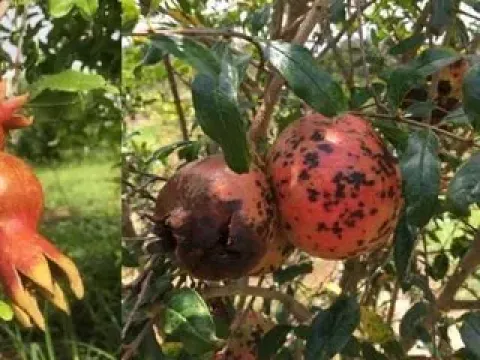
Pomegranate cercospora leaf spot
Pseudocercospora lythracearum
The causative agent of the disease is the fungus Pseudocercospora lythracearum. This pathogen invades the tissues of the pomegranate plant, specifically targeting the epidermis of leaves, shoots, and fruit, leading to necrotic lesions.
What the section contains
Pomegranate cercospora leaf spot
The fungus overwinters in fallen leaf litter, on infected twigs, and in mummified fruits left on the tree. The pathogen remains viable in the soil for extended periods, waiting for favorable conditions to trigger new infections.
The disease spreads primarily through wind currents, rain splashes, and can also be transported via garden tools or insects. Rapid proliferation typically occurs throughout the active growing season.
The biological lifecycle of Pseudocercospora lythracearum is closely linked to the host plant's vigor. Stressed trees, suffering from nutrient deficiencies or physical damage, are significantly more susceptible to pathogen entry.
Reproduction occurs via conidia, which establish secondary infection foci on healthy plant parts. If left unchecked, the fungus can rapidly colonize a large portion of the tree's canopy.
The initial signs of the disease appear as small angular spots on the leaves, which gradually develop a brown or dark tan color. These spots are often surrounded by a characteristic chlorotic halo, indicating the plant's stress response.
Under humid conditions, a dark velvety growth develops on the undersides of the leaves within the infected areas. This represents the fungal conidial spore mass, serving as a primary diagnostic feature.
As the disease progresses, the lesions coalesce, covering large sections of the leaf surface. This leads to premature yellowing and leaf drop, which significantly weakens the tree's overall condition.
Fruit symptoms manifest as dark, sunken spots that render the pomegranates unattractive and unsuitable for storage or fresh market. The overall quality and taste of the fruit are severely diminished.
When young shoots are infected, cankers may form, disrupting the transport of water and nutrients. In severe cases, dieback of branch tips occurs, leading to stunted growth and canopy deformation.
Disease development is promoted by warm, humid weather conditions. Prolonged rainfall, heavy dews, and persistent fog create the perfect microclimate for the fungus to thrive and infect plant tissue.
Poor airflow within the orchard, often caused by overly dense planting or lack of pruning, creates stagnant air pockets. These environments prevent leaves from drying, facilitating spore germination.
The optimal temperature range for Pseudocercospora lythracearum is between 20 and 28 degrees Celsius. Combined with high humidity, these temperatures accelerate the cycle of conidia formation and infection.
Trees that are weakened by improper fertilization, drought, or lack of maintenance are significantly more vulnerable to infection. A robust agrotechnical foundation is essential for preventing outbreaks.
Neglecting sanitation practices, such as failing to remove diseased plant debris, ensures a high inoculum load for the following season, leading to predictable annual outbreaks.
The primary impact of Cercospora leaf spot is the loss of leaf area, which disrupts photosynthesis. The tree is unable to store sufficient energy reserves to prepare for the dormant winter period.
Premature leaf drop negatively affects the formation of next year's flower buds, leading to significant yield reductions. Long-term exposure to the disease can lead to the overall decline of the tree.
Infected fruits are commercially non-viable due to cosmetic damage. Furthermore, the lesions on the skin provide entry points for secondary pathogens that cause rot during storage.
Repeated infection of young shoots leads to twig dieback and overall tree stress. If left unmanaged, the cumulative damage can result in the loss of young trees or severe stunting.
Commercial pomegranate producers face significant financial losses due to the cost of fungicide applications and the reduction in marketable yield quality caused by this pathogen.
Strict sanitation is the cornerstone of control: gathering and destroying fallen leaves, as well as pruning and disposing of infected twigs and mummified fruits, is essential to lower the inoculum.
Regular pruning is required to improve air circulation through the canopy. Increased airflow allows foliage to dry more quickly after rain, making the environment unfavorable for fungal growth.
If symptoms are detected, copper-based fungicides or systemic options like azoles or strobilurins should be applied. Treatment schedules must follow professional guidelines for maximum efficiency.
Application timing should correspond with the tree's growth stages and the weather pattern. Proactive early-season spraying helps establish a protective layer before the pathogen reaches high activity levels.
Maintaining a balanced nutrition program is vital for plant immunity. Avoid excessive nitrogen fertilizer, which produces succulent growth that is more easily penetrated by fungal hyphae.