
Grape anthracnose
Elsinoë necator
Grape anthracnose is caused by the fungus Elsinoë necator, which is highly contagious and affects all herbaceous parts of the vine including shoots, leaves, and berries.
What the section contains
Grape anthracnose
The fungus survives the winter period in the form of dormant mycelium within the lesions of infected canes and in mummified berries left on the trellis.
Primary infection occurs in spring when rainfall and splashing water disperse the spores (conidia) to the newly emerging green shoots and leaves.
The pathogen thrives in high humidity and is known for its ability to produce multiple cycles of spores throughout a single growing season under favorable conditions.
Once established, the fungus penetrates the plant tissues through stomata or mechanical injuries, initiating the disease cycle that can spread rapidly across the vineyard.
Initial symptoms include small, circular, reddish-brown spots on leaves, which gradually turn grey in the center and often fall out, leaving shot-hole perforations.
Shoot infections appear as dark, sunken lesions with raised margins that can girdle the shoot, causing it to wither and die during the active growing season.
Infected inflorescences may turn black and fail to bloom, leading to total yield loss at the very beginning of the fruit development phase.
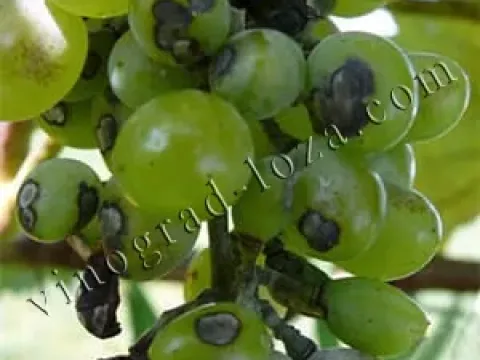
Berries develop circular lesions with a light grey center surrounded by a dark brown or reddish-purple halo, creating the distinct 'bird’s eye' appearance.
Severe infestations cause the berries to shrivel, crack, and become deformed, making the entire cluster commercially unusable and prone to secondary rot.
The development of anthracnose is directly linked to wet and humid weather, as splashing rain is the primary mechanism for spore transmission within the canopy.
Temperatures between 20°C and 25°C are optimal for spore germination and infection, allowing the fungus to colonize plant tissue quickly.
Poor site management, such as lack of proper pruning and canopy thinning, creates stagnant air pockets that keep the foliage wet for longer periods.
The incidence of the disease significantly increases following heavy storms or hail, which leave wounds on the vine tissue for the fungus to enter easily.
Frequent fog and high morning humidity are sufficient environmental cues to trigger the release and germination of fungal conidia in an unprotected vineyard.
Grape anthracnose is a devastating disease that can destroy most of the potential harvest if left unchecked during a wet season.
Beyond crop loss, the disease weakens the vine structure, as repeated shoot dieback stunts growth and limits the plant's ability to store energy for winter.
Weakened vines show reduced cold tolerance, which increases the risk of plant mortality during severe winter frosts, leading to long-term vineyard loss.
Fruit quality is severely compromised, and the presence of infected berries negatively impacts the must quality for winemaking purposes.
The cost of managing a chronic anthracnose infection is high, involving intensive fungicide programs and additional labor for manual removal of infected parts.
Cultural management is the first line of defense, which involves removing and destroying infected canes during the dormant pruning season to eliminate the inoculum source.
Maintaining an open canopy through proper trellising and thinning encourages faster drying of foliage after rain, thereby reducing the risk of fungal establishment.
Early-season applications of copper-based fungicides are standard practice to prevent the establishment of the fungus on young, vulnerable shoots.
Integrated pest management programs should include systemic fungicides during the growing season, particularly before and after periods of high rainfall.
- Planting resistant or less susceptible grape varieties where possible.
- Controlling insects that cause mechanical damage to berries and shoots.
- Ensuring good drainage to reduce localized humidity in the vineyard.