
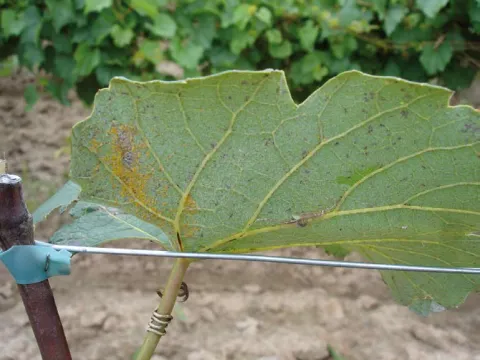
Grape rust
Neophysopella euvitis
Grape rust symptoms initially appear on the underside of the leaves as tiny, inconspicuous yellowish or light brown spots that soon develop into pustules.
What the section contains
Grape rust
As the infection progresses, these pustules evolve into characteristic rust-colored, powdery masses of spores that are easily visible to the naked eye.
Chlorosis and necrotic patches follow the initial infection, causing significant damage to the leaf tissue and hindering its overall physiological function.
Severe infestations lead to premature leaf yellowing and shedding, which can significantly defoliate the vines well before the harvest period.
The appearance of these rust-colored spots on the foliage is the primary diagnostic feature that distinguishes this disease from other leaf pathogens.
The pathogen responsible for this disease is Neophysopella euvitis, a specialized rust fungus that specifically targets members of the Vitis genus.
As an obligate parasite, this fungus relies entirely on the nutrients derived from living vine tissues to support its biological growth cycle.
Its life cycle involves the production of urediniospores, which are highly mobile and easily wind-dispersed, allowing the fungus to spread rapidly across vineyards.
The fungus can survive as dormant structures in fallen leaf debris, providing a reservoir of infection that can reactivate when environmental conditions become favorable.
Understanding the biology of Neophysopella euvitis is essential for developing targeted control strategies that interrupt its reproductive stages.
Grape rust thrives in environments characterized by high humidity, frequent rainfall, and moderate temperatures, which facilitate rapid spore germination.
Dew and fog create a thin film of moisture on leaf surfaces, providing the perfect conditions for the pathogen to penetrate the plant's stomata.
Poor canopy management, such as dense foliage and lack of proper pruning, increases humidity levels within the vine, creating a conducive microclimate for the disease.
Geographic regions with tropical or subtropical climates often experience more severe outbreaks, although the pathogen has been spreading to temperate areas.
Any factor that hinders airflow and keeps the vines constantly damp significantly elevates the risk of a widespread rust infection in the vineyard.
The disease significantly impairs photosynthesis by destroying chlorophyll, which directly limits the plant's ability to produce sugars and energy.
Grape quality is negatively impacted, as sugar accumulation in the berries is stunted, leading to poor fruit development and lower harvest quality.
Premature leaf drop weakens the vine's overall vigor, making it difficult for the plant to store adequate reserves for the dormant winter months.
Long-term consequences include reduced winter hardiness, making vines more susceptible to cold injury and decreasing their lifespan and total yield.
Repeated yearly infections can exhaust the vines, leading to significant economic losses for growers who must invest in restoration and increased chemical care.
Effective management begins with sanitation practices, specifically the collection and burning of all infected leaves to eliminate sources of overwintering inoculum.
Cultural practices such as proper pruning, thinning, and trellising are essential to improve canopy airflow, thereby reducing humidity and spore-friendly conditions.
Chemical control involving the timely application of copper-based or systemic fungicides is effective in curbing the spread of the rust fungus.
It is vital to monitor the vineyard closely during periods of high humidity and apply preventative treatments before symptoms become widespread across the plants.
- Choose resistant varieties if the region is prone to rust.
- Maintain proper weed control to improve vineyard aeration.
- Use a balanced nutrient program to support plant resilience.
- Apply fungicides in accordance with local integrated pest management guidelines.