
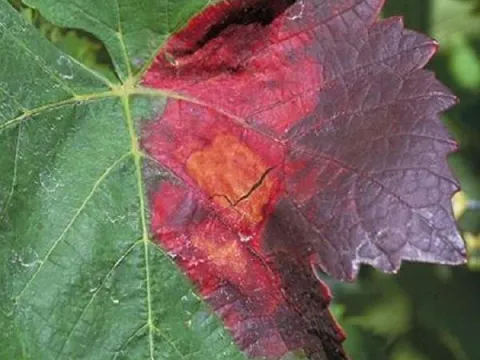
Grape red leaf blotch
Pseudopeziza tracheiphila
The disease is caused by the ascomycete fungus Pseudopeziza tracheiphila. It primarily colonizes the vascular system of the grapevine, specifically the xylem vessels.
What the section contains
Grape red leaf blotch
The pathogen overwinters as mycelium in infected fallen leaves on the vineyard floor. In the spring, these leaves produce apothecia, which release ascospores during periods of rain and high humidity.
Primary infection occurs when ascospores land on young, developing grapevine leaves. The fungus enters through the stomata and begins to colonize the interior leaf tissues.
Once inside, the fungal hyphae grow into the leaf veins, causing a blockage of water and nutrient transport. This systemic interference is the hallmark of the disease's biology.
After the infection cycle, the fungus produces new conidia on the leaf surface, which can lead to secondary infections if the environmental conditions remain favorable throughout the growing season.
The first symptoms appear in late spring or early summer as yellow (chlorotic) spots on the leaves. As the disease progresses, these spots change color depending on the grape variety.
In white grape varieties, the spots turn yellowish-red. In red grape varieties, they turn deep reddish-brown or purple, often outlined by a lighter or yellowish halo.
A diagnostic feature is the angular shape of the lesions, which are strictly limited by the leaf veins. The spots often look like mosaics or patches of dried, necrotic tissue.
As the infection intensifies, the affected leaf tissues dry out, become brittle, and may eventually tear. Severe infections lead to premature defoliation, which leaves the grape bunches exposed to the sun.
In advanced stages, the fungal colonization may spread to the petioles, potentially causing the entire leaf to wither and detach from the shoot prematurely.
Grape red leaf blotch thrives in temperate, wet conditions. Cool and rainy springs create the ideal environment for the release and germination of ascospores.
Vineyards located on light, sandy soils are often more susceptible, as these vines may experience periodic moisture stress, making them less resistant to fungal colonization.
The optimal temperature for the growth of Pseudopeziza tracheiphila is approximately 18–25 degrees Celsius. Extreme heat and drought can significantly suppress the spread of the pathogen.
Poor canopy management, leading to high humidity within the vine foliage, promotes the infection. Dense leaf clusters trap moisture, allowing the fungus to stay active on the leaf surface for longer periods.
Nutrient deficiencies, particularly the lack of potassium, can lower the vine's natural defense mechanisms, increasing the likelihood of an outbreak following exposure to the fungus.
The primary impact of the disease is a significant reduction in photosynthetic capacity due to premature leaf loss. This restricts the vine's ability to produce carbohydrates for fruit ripening.
Fruit quality is severely compromised; berries often fail to reach full sugar content, show uneven ripening, and have poor overall flavor profiles due to the disrupted vascular flow.
Weakened vines suffer from reduced vigor and poor wood maturation. This lack of maturity makes the vines highly susceptible to winter injury or frost damage during colder months.
If left unmanaged, the cumulative loss of vitality over several seasons can lead to a decline in overall vineyard productivity and a reduction in the lifespan of the grapevines.
In economic terms, chronic infections lead to increased costs for pesticide applications and potential loss of vineyard value, necessitating long-term management and replanting in severe cases.
Sanitation is the cornerstone of disease management. Removing and destroying fallen leaves during the dormant season effectively eliminates the primary inoculum source for the following spring.
Good viticultural practices are essential to minimize risk. Proper trellising, shoot positioning, and summer pruning ensure adequate airflow, which helps leaves dry quickly after rain.
Chemical control involves the application of fungicides during the early growth stages. Protective copper-based treatments are often effective if applied before the symptoms emerge.
- Apply fungicides preventively before flowering.
- Monitor weather patterns to time applications during rainy periods.
- Use systemic fungicides if necessary to protect the vascular system.
Maintaining a balanced nutritional program with sufficient potassium and magnesium strengthens the vine's cuticle and improves overall resilience against fungal leaf pathogens.