
Grape Cercospora leaf spot
Cercospora kyotensis
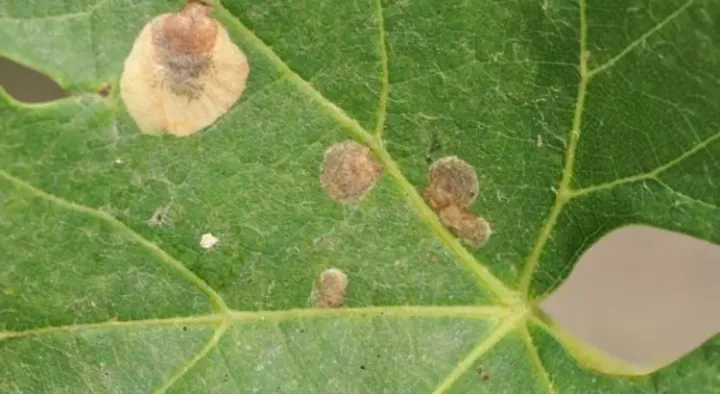
Description
Symptoms
Initial symptoms appear on the leaves as small, angular or circular spots that are brown in color and often surrounded by a dark margin.
In high humidity, a characteristic olive or gray-brown velvety growth develops on the underside of the leaf corresponding to the spots.
As the infection progresses, individual spots may coalesce, covering large portions of the leaf blade and leading to tissue necrosis.
Heavily infected leaves turn brown, become brittle, and undergo premature abscission, negatively impacting the plant's health.
Lesions can occasionally be observed on young shoots and petioles, appearing as elongated dark streaks rather than distinct spots.
Pathogen
The disease is caused by the fungus Cercospora vitis (synonym Cercospora kyotensis), which belongs to the class of Hyphomycetes.
The fungal mycelium invades plant tissues and develops conidiophores that emerge through the stomata, creating an olive-brown velvet-like layer.
Reproduction is asexual, involving conidia that are disseminated via wind, rain splashes, and insects throughout the growing season.
The pathogen overwinters as mycelium or conidia in infected plant debris, fallen leaves, and on the bark of dormant vines.
It primarily affects cultivated and wild grapevines, compromising the plant's assimilation capacity and overall photosynthetic efficiency.
Conditions for development
The development of Cercospora leaf spot is favored by warm weather and high relative humidity, typical of the second half of the summer.
Optimal temperatures for active sporulation of the fungus range between +20°C and +28°C (68°F–82°F).
Dense canopy growth with poor airflow creates an ideal microclimate for the rapid spread of the disease within the vineyard.
Frequent rainfall, prolonged periods of leaf wetness, and dew are essential factors for spore germination on host tissues.
Poor vineyard sanitation, especially leaving leaf litter on the ground, serves as a primary source for annual reinfection.
Why it matters
The primary damage is caused by premature defoliation, which prevents the vine from accumulating sufficient reserves for winter survival.
Reduction in the healthy leaf surface area slows down photosynthesis, leading to lower sugar accumulation and poorer fruit quality.
Stressed vines exhibit lower resistance to winter frost and are more prone to secondary infections from other pathogens.
Yields from severely affected vineyards consistently show a decline in both quantity and overall fruit development.
Chronic annual infections lead to progressive weakening of the vines, reducing their long-term productivity and lifespan.
Protection
Rigorous sanitation measures, such as removing and destroying fallen leaves during autumn, are essential for reducing inoculum.
Improving canopy management through timely shoot thinning and training promotes better air circulation and reduces leaf wetness.
Preventative applications of copper-based fungicides early in the season are highly effective in inhibiting initial fungal colonization.
During the growing season, if symptoms appear, systemic fungicides should be applied according to the specific regional pest management guidelines.
Maintaining vine vigor through proper fertilization and irrigation helps the plant develop natural resilience against fungal leaf diseases.
Discussion
No discussions yet — be the first.