
Grape physalospora
Physalospora baccae
The causative agent of this disease is the fungus Physalospora baccae, a member of the Ascomycota phylum that primarily targets developing grape berries.
What the section contains
Grape physalospora
The fungus survives the winter as mycelium and fruiting bodies (pycnidia) located on mummified berries left on the ground or stuck to the vines.
During spring and early summer, the pathogen produces spores that are spread by rain splashes and wind currents to the developing bunches.
The biology of the fungus is highly dependent on humidity, as the spores require free moisture on the berry surface to germinate effectively.
Physalospora baccae remains a latent threat that rapidly activates as soon as the berries reach the veraison stage and start accumulating sugars.
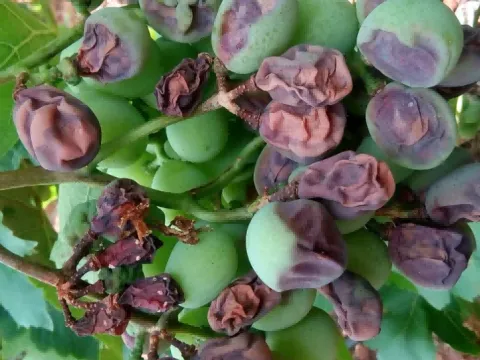
The symptoms of grape physalospora first appear as small, brownish-red circular spots on the surface of the grape berries.
These spots enlarge rapidly, leading to the softening of the berry tissue and a characteristic browning that eventually covers the entire fruit.
As the disease progresses, the infected berries shrivel and become mummified, taking on a dried-out appearance while hanging on the bunch.
Numerous tiny black pimples, which are the pycnidia of the fungus, emerge through the epidermis of the shriveled skin.
In humid conditions, the entire cluster can be affected, resulting in significant cluster rot and berry drop from the rachis.
Optimal conditions for infection include warm temperatures combined with high humidity during the ripening phase of the grapes.
Poor canopy management, leading to high humidity levels within the foliage, creates an ideal microclimate for the development of the fungus.
Frequent rainfall during the summer months is a primary driver for the wide dissemination of spores throughout the vineyard.
Poor ventilation, caused by excessive vegetative growth, prevents the berries from drying quickly after dew or rain, encouraging pathogen growth.
Vineyards located in low-lying areas with stagnant air are at a higher risk of experiencing outbreaks of physalospora compared to well-exposed sites.
The primary damage caused by physalospora is the significant reduction in yield quantity and quality due to berry decay.
Decayed berries become unsuitable for fresh market sale and negatively impact the quality of wine produced from the harvest.
Farmers face increased labor costs associated with removing infected berries during the harvest process to prevent contamination of healthy grapes.
Severe infestations reduce the photosynthetic area and overall vigor of the grapevine, potentially leading to weakened vine health in subsequent seasons.
The disease can lead to substantial financial losses, particularly in regions where environmental conditions favor fungal proliferation.
Management of grape physalospora relies on a combination of cultural practices and targeted chemical applications.
Sanitation is crucial; all mummified berries and plant debris should be removed and destroyed to reduce the primary inoculum load.
- Implement canopy management techniques like leaf pulling to ensure adequate air circulation.
- Apply preventative fungicides based on local monitoring and weather forecasts.
- Maintain proper vine spacing to reduce humidity levels within the canopy zone.
Early identification of the first signs of rot allows for rapid intervention and prevention of further spread throughout the vineyard.
Integrated Pest Management (IPM) strategies, including biological controls where available, can help sustain vineyard productivity while minimizing chemical reliance.