
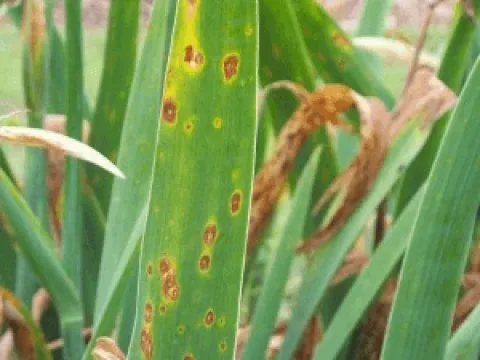
Didymellina leaf spot
Didymellina
Didymellina leaf spot is a fungal disease caused by pathogens of the genus Didymellina. The most notable species is Didymellina macrospora, which is particularly known for affecting Iris species extensively.
What the section contains
Didymellina leaf spot
The pathogen belongs to the Ascomycota group. It produces spores in specialized structures known as pseudothecia, which allow the fungus to survive under various environmental conditions until a host is available.
The fungus overwinters primarily in dead leaf tissue, plant debris, and occasionally within the rhizomes of infected perennials. This persistence makes it a recurring problem in gardens if sanitation is neglected.
Spores are dispersed by wind, rain splashes, and irrigation water. Once they land on a susceptible leaf surface under moist conditions, the spores germinate and penetrate the plant tissue to start the infection cycle.
The life cycle is characterized by multiple rounds of secondary infection during the growing season, which allows the disease to spread rapidly through dense plantings if conditions remain favourable.
Early symptoms appear as tiny, water-soaked spots on the leaves. These quickly enlarge and turn into light brown or tan lesions, often surrounded by a dark brown or reddish-purple border.
As the infection progresses, these lesions merge, covering large portions of the leaf surface. A characteristic gray or olive-green fuzzy growth may appear in the center of the spots, indicating active sporulation.
Infected leaves eventually yellow, wither, and die back from the tip downward. This premature senescence significantly reduces the plant's photosynthetic capacity, leading to overall weakness.
The infection can also affect flower stalks and buds, causing distortion and preventing the blooms from opening properly. This drastically reduces the aesthetic and commercial value of the plants.
If the infection reaches the rhizomes, necrotic tissues may develop, which can eventually lead to the rotting of the entire plant base, especially in poorly drained soils.
High humidity and moisture are the most critical factors for the development of Didymellina. The disease thrives in regions with frequent rainfall, heavy dew, or overhead irrigation.
Temperatures between 15°C and 25°C provide the optimal environment for fungal growth and spore germination. In such conditions, the disease can spread across a plantation within just a few days.
Poor air circulation, often caused by overcrowding, creates a microclimate with stagnant, humid air. This promotes the infection process by keeping leaf surfaces wet for prolonged periods.
Irrigation timing is crucial; watering in the late evening prevents the foliage from drying out overnight, which significantly increases the risk of spore colonization.
Plants under nutritional stress or those suffering from improper soil conditions are more susceptible to attack. Excessive nitrogen fertilization, which produces soft, succulent tissue, also invites the pathogen.
The primary impact of Didymellina leaf spot is the severe degradation of ornamental value. For commercial nurseries and gardeners, the unsightly foliage makes the plants effectively unsellable.
Because the disease causes the death of foliage, the plant loses its energy-producing leaves, which weakens the rhizome system and leads to reduced flowering in the following season.
Chronic infestations over several years can result in the decline of entire collections, making plants prone to further secondary infections or winter damage due to their weakened state.
The economic burden includes the recurring costs of fungicides, the labor involved in sanitation, and the potential loss of rare or expensive cultivars that may succumb to heavy infection.
In large-scale production, this disease can lead to significant crop loss if preventative measures are not strictly followed, requiring the destruction of all infected batches.
Sanitation is the most effective management strategy. All infected leaves should be removed and destroyed (burned or buried deep) at the end of the season to eliminate the primary inoculum source.
Planting density should be managed to ensure adequate airflow between specimens. Regular weeding and maintaining a clean growing space are essential to keep humidity levels under control.
Preventative applications of fungicides, particularly those containing copper or systemic azole compounds, are recommended if the disease has been a problem in previous years.
Always practice subsurface watering to keep foliage dry. Mulching the base of the plants helps create a barrier, preventing rain splashes from carrying spores from the soil onto the lower leaves.
Choosing resistant varieties is the best long-term approach. Monitoring the garden regularly allows for early detection, which makes it possible to contain the disease by removing only a few infected leaves.