
Didymosphenia
Didymosphenia geminata
Description
Symptoms
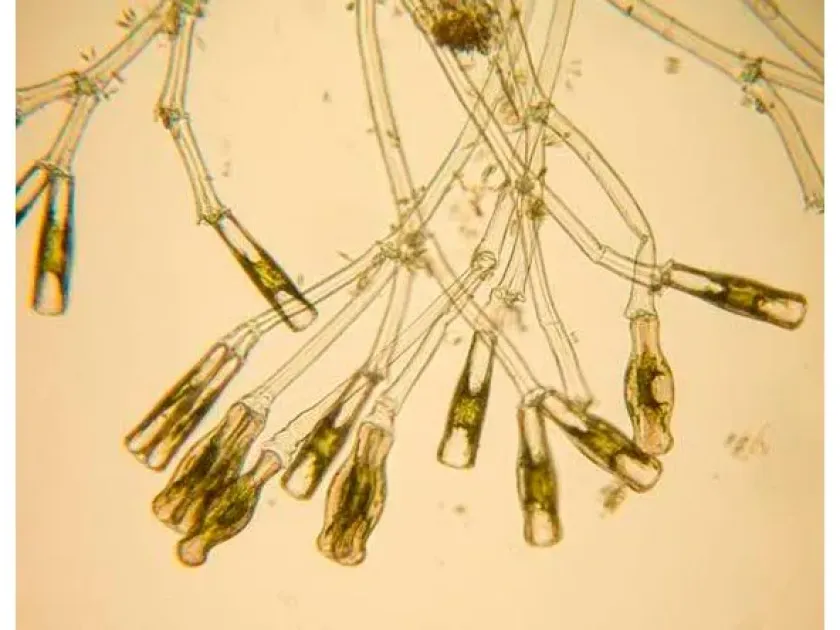
Didymosphenia geminata, commonly known as rock snot, is a freshwater diatom that creates massive, thick mats in various water bodies.
These colonies appear as brownish or white, cotton-like masses that coat stones, logs, and aquatic plants on the riverbeds.
During blooms, these mats can extend for many kilometers along the bottom, changing the appearance of the entire aquatic ecosystem.
The texture of these accumulations is coarse and fibrous, often resembling damp toilet paper or wet wool that sticks to the substrate.
Despite its slimy appearance, it is a sturdy structure that can withstand strong water currents in flowing rivers and streams.
Pathogen
The organism is a single-celled diatom with a silicon-based cell wall, which persists even after the living cell has died off.
It thrives by producing large amounts of extracellular polymeric substances, which form the tough matrix of the algal colony.
Didymosphenia is unique because it blooms in nutrient-poor environments, where other algal species typically struggle to survive.
Its ability to rapidly colonize new areas is largely dependent on human activities that transfer cells from one water system to another.
Biologically, it behaves as a highly invasive species that can permanently alter the ecological characteristics of its new habitat.
Conditions for development
Rock snot prefers cold, clear, and low-nutrient water conditions to maximize its growth and formation of dense mats.
The primary vector for its spread is human activity, specifically through contaminated fishing gear, boat hulls, and wading boots.
Stable water flow levels are essential for the formation of large blooms, as frequent floods can physically disrupt the mats.
Increased light exposure and moderate temperatures in mountainous regions provide the necessary energy for rapid cellular division.
Rocky or gravelly bottoms provide stable anchor points for the algae to attach and expand its reach downstream.
Why it matters
The dense mats of Didymosphenia destroy the habitats of macroinvertebrates, which form the food source for many native fish species.
By covering spawning grounds with thick slime, the algae prevents the successful development and survival of fish eggs.
Biodiversity loss occurs as the dominant algal growth crowds out other aquatic plant species essential for the river's balance.
Economic damage is significant, particularly for tourism and recreational fishing, as the river environment becomes degraded and unpleasant.
Agricultural operations can be hindered by the clogging of irrigation channels and intake pipes, restricting water availability for crops.
Protection
Strict biosecurity measures, such as the Check, Clean, and Dry method, are the most effective ways to stop the spread of this organism.
All fishing and recreational equipment must be thoroughly cleaned with soap or a disinfecting solution after use in any water body.
Drying gear completely for at least 48 hours is vital, as the diatom cells are highly sensitive to desiccation and dehydration.
Public awareness programs are crucial to educate users about the risks of inadvertently transporting the algae between watersheds.
Because there are no large-scale chemical treatments available, preventing the introduction into new rivers is the only viable management strategy.
Discussion
No discussions yet — be the first.