
Didymosphenia
Didymosphenia
Didymosphenia geminata, commonly known as Didymo or rock snot, is a microscopic, single-celled diatom that can form massive blooms in freshwater river systems across the globe.
What the section contains
Didymosphenia
The organism is characterized by its ability to secrete large amounts of extracellular polymeric substances (stalks), which form dense, mucilaginous mats covering the riverbed surface.
While not a classical pathogen of agricultural crops, it acts as a biological invasive species, fundamentally restructuring the habitat of freshwater streams and rivers.
Its biological adaptation to low-nutrient environments allows it to outcompete native algal flora, making it a highly resilient and difficult-to-manage aquatic threat.
The spread of the organism is largely driven by human activities, as its microscopic cells can easily attach to wet felt-soled boots, fishing gear, and boats, facilitating long-distance transport.
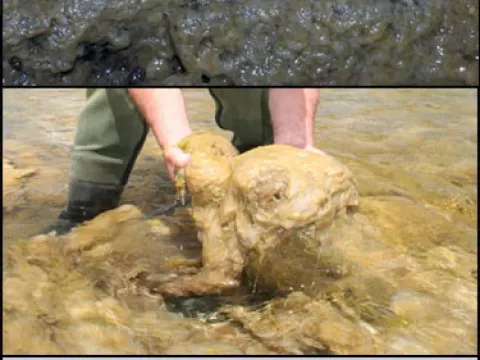
The most recognizable sign of Didymosphenia is the appearance of beige, white, or brownish mats on the riverbed that feel like wet cotton or fibrous tissue.
In high-flow areas, these mats can elongate into long, streamy stalks that look like frayed threads or flags waving in the water current.
A simple visual inspection of the riverbed reveals an unnatural, thick coating over rocks and gravel, which contrasts sharply with the appearance of a clean, undisturbed stream.
When removed from the water and left to dry in the air, the colonies take on a papery or crusty texture, adhering firmly to the surface they inhabit.
A noticeable reduction in the abundance of aquatic insects and stone-clinging invertebrates is a strong indicator of an active Didymosphenia bloom in the area.
Didymo thrives in cold, clear, and nutrient-poor (oligotrophic) waters where phosphorus levels are remarkably low, creating an ecological niche it can dominate.
Stable river flows without frequent scouring floods allow the mucilaginous stalks to accumulate over time, building up dense layers that cover large sections of the riverbed.
High dissolved oxygen levels in running water provide the necessary conditions for the organism's intense metabolic activity and rapid colony expansion.
Optimal growth usually occurs within specific temperature ranges typical of mountain streams and northern temperate regions, where it faces little competition from other species.
Human-mediated movement of equipment between watersheds is the primary condition enabling the colonization of previously pristine river environments.
The primary damage caused by Didymosphenia geminata is the physical alteration of the riverbed, which destroys the habitat required by macroinvertebrates.
As the primary food source for many fish species disappears, local fish populations often face significant declines, impacting both biodiversity and commercial fishing.
The thick mats clog the spaces between rocks where many salmonid species lay their eggs, leading to reduced spawning success and high mortality rates for fish larvae.
Significant economic and recreational losses occur as rivers lose their aesthetic appeal and become difficult to navigate for anglers and tourism operators.
Additionally, large-scale blooms can affect water chemistry and infrastructure, potentially interfering with the operation of water intake structures and filtration systems.
Preventative hygiene is the most effective management tool; individuals must clean, drain, and dry all gear thoroughly before moving between different water bodies.
Disinfection using 5% salt solutions, 1% quaternary ammonium compounds, or hot water (above 60°C) is highly effective at killing the cells of the alga on equipment.
Ensuring that all fishing waders, nets, and boat hulls are completely dry for at least 48 hours is a critical strategy to ensure the total death of the organism.
Public awareness programs are essential, as educating the community about the risks and proper decontamination techniques is the best way to prevent further spread.
Early detection and monitoring allow for the rapid implementation of restrictions on high-risk areas to protect vulnerable ecosystems from invasion.