
Didymella stem rot of cabbage
Didymella nigricans
Description
Symptoms
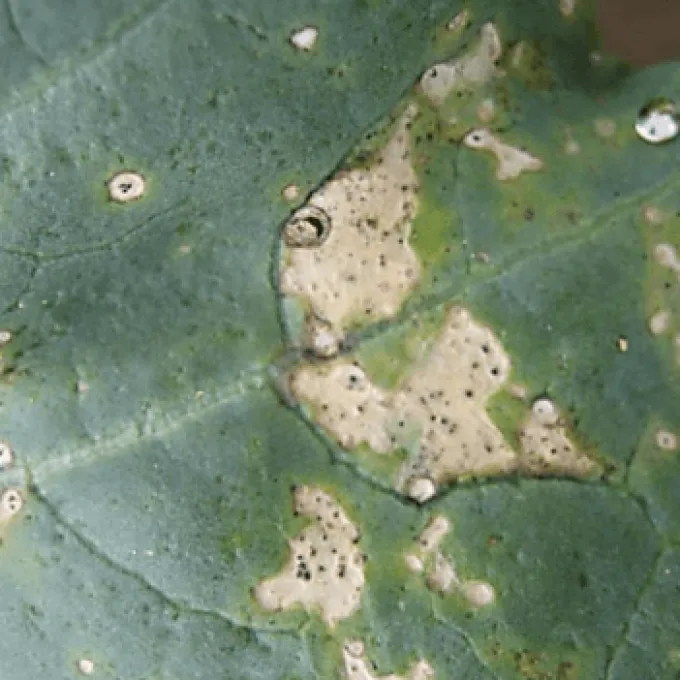
Early symptoms appear as small, circular, or irregular spots on leaves. Initially light-colored, these spots gradually turn brown or gray as the infection progresses.
A diagnostic feature of this disease is the presence of tiny, black, dot-like fruiting bodies (pycnidia) embedded within the center of the necrotic spots.
On stems and petioles, the lesions may elongate and become dark brown, often leading to tissue shriveling or longitudinal cracking of the stem surface.
In humid conditions, a fine, grayish mold may be visible on the surface of the lesions, representing the mass production of conidia by the fungus.
Post-harvest symptoms include the development of depressed, dark, and often moist lesions on cabbage heads, frequently followed by secondary soft rot infections.
Pathogen
The causative agent of this disease is the fungus Didymella nigricans. It is an ascomycete that primarily attacks plants of the Brassicaceae family, including cabbage, cauliflower, and rutabaga.
The pathogen survives in soil and crop debris as pycnidia or perithecia. These reproductive structures can remain viable for several seasons, ensuring the pathogen's persistence in agricultural land.
The life cycle of the fungus is characterized by the production of both sexual and asexual spores, which allows it to adapt quickly to varying environmental conditions.
Dissemination typically occurs through water splashes, wind, or agricultural equipment, which carry the spores from infected debris to healthy plant tissues.
Upon germination, the fungus enters the host through stomata or wounds, initiating the colonization of internal tissues and the eventual expression of disease symptoms.
Conditions for development
High humidity, typically exceeding 80%, is the primary environmental factor facilitating the development and spread of Didymella stem rot.
The fungus thrives within a temperature range of 18 to 24 degrees Celsius, making temperate and rainy climates particularly conducive to epidemics.
Dense plant spacing, which restricts airflow and maintains prolonged leaf wetness, provides the perfect environment for the pathogen to establish itself.
Presence of cruciferous weeds in or near the field serves as a significant inoculum reservoir, bridging the gaps between successive cabbage crops.
Plants weakened by nutrient deficiencies, insect damage, or physiological stress are significantly more susceptible to infection compared to healthy, well-nourished plants.
Why it matters
The primary economic impact of Didymella is the loss of harvest quality and shelf life. Infected heads are often unsalable and unsuitable for long-term storage.
Severe infestations can lead to premature senescence of leaves, which reduces the photosynthetic capacity of the plant and limits the final head weight.
The disease facilitates the entry of secondary bacterial pathogens, which rapidly degrade the cabbage tissue and create a foul-smelling, unmarketable product.
Infection cycles during the growing season can lead to significant yield losses if weather conditions are persistently wet and cool.
Farmers face financial pressure not only from the direct reduction in sellable yield but also from the increased costs associated with prophylactic fungicide applications.
Protection
The most effective management strategy is a strict crop rotation program, ensuring that cabbage is not planted in the same soil for at least three years.
Sanitation practices, such as the complete removal and destruction of crop residues post-harvest, are critical to reducing the primary inoculum level in the soil.
Sourcing high-quality, disease-free, or treated seeds helps prevent the introduction of the pathogen into clean fields at the very start of the season.
Fungicide applications are recommended as a supplemental measure, particularly during periods of wet weather when the risk of spore dispersal is at its peak.
- Maintain adequate plant spacing to promote airflow.
- Control cruciferous weeds within and around fields.
- Utilize drip irrigation to keep foliage dry.
- Monitor crops regularly for early detection of necrotic spots.
Discussion
No discussions yet — be the first.