
Didymella leaf spot
Didymella bellidis
Description
Symptoms
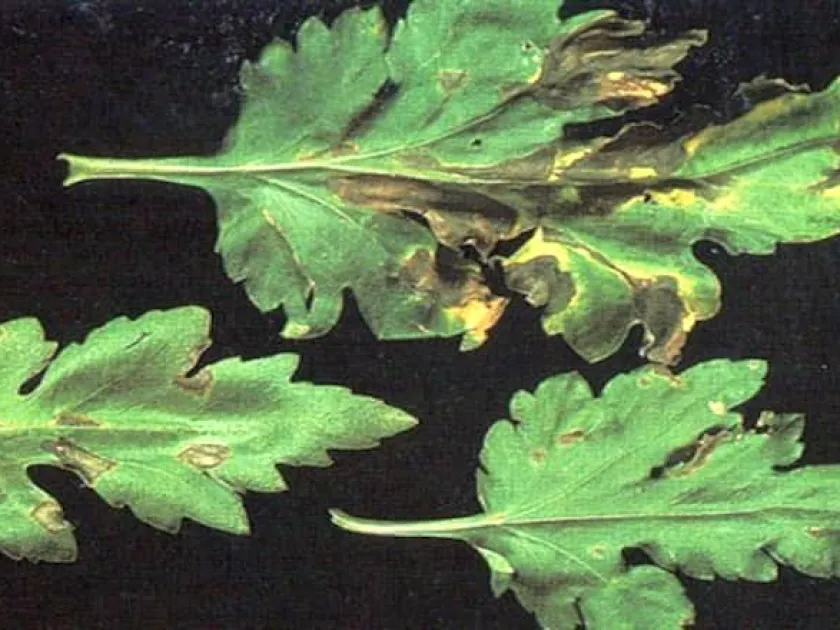
Early symptoms appear as small, dark brown or reddish-brown spots on the leaves, often starting at the margins or tips of the leaf blades.
As the infection progresses, these spots expand, often developing distinct concentric rings and potentially a lighter center, signaling tissue necrosis.
Under conditions of high humidity, tiny black dots representing the fungal pycnidia become visible within the necrotic zones of the leaves.
Severely affected plants exhibit widespread chlorosis, premature yellowing of the foliage, and subsequent drying of entire leaves.
In cases of heavy infestation, the stems may also show lesions, leading to the collapse or wilting of the flower stalks and reduced overall plant vigor.
Pathogen
The disease is caused by the fungus Didymella bellidis, which acts as a pathogen primarily targeting various species of daisies within the Asteraceae family.
This fungus reproduces through the formation of pycnidia, small flask-shaped structures that release spores to facilitate the spread of the infection.
The pathogen is capable of surviving harsh conditions by remaining dormant as mycelium or as reproductive structures on infected plant debris.
It typically infects the foliage and stems of the host plant, exploiting moisture films on the surface to initiate germination and tissue penetration.
Biological studies categorize this as an ascomycete pathogen that is well-adapted to moderate climates, frequently appearing in greenhouses and outdoor beds alike.
Conditions for development
The development of Didymella bellidis is heavily favored by prolonged periods of wet, humid weather and limited air circulation around the plants.
Dense planting configurations that prevent leaves from drying quickly after rainfall create an optimal microclimate for spore germination and colonization.
Temperature plays a crucial role, with the fungus showing maximum activity in the range of 15°C to 22°C, which is typical for the spring and early summer.
Overhead irrigation significantly exacerbates the issue by splashing spores from infected lower leaves to healthy foliage throughout the canopy.
Plants weakened by inadequate nutritional support or extreme environmental stress are significantly more susceptible to successful colonization by the fungus.
Why it matters
The disease causes significant damage to the aesthetic appeal of daisies, making them unsuitable for floral displays or professional landscaping.
By killing leaf tissue, the fungus reduces the plant's capacity for photosynthesis, leading to stunted growth and poor flower production.
If left unmanaged, the infection can cause systemic weakness, predisposing the daisies to secondary infections or winter kill.
The persistence of the pathogen in soil and debris creates a cycle of re-infection, severely limiting the success of future plantings in the same location.
Economic damage is most pronounced in nursery settings, where the spread of the disease can lead to the loss of large batches of marketable stock.
Protection
Effective management begins with stringent sanitation practices, including the removal and destruction of all fallen leaves and infected plant parts.
Improving airflow through proper spacing is essential to reduce the duration of leaf wetness and create a less hospitable environment for the fungus.
Fungicide applications, particularly those containing copper or systemic active ingredients, are effective if applied during the early onset of symptoms.
Cultural practices such as drip irrigation should be preferred to keep foliage dry and minimize the physical transport of fungal spores.
- Regular monitoring of foliage during wet weather
- Sanitizing pruning tools between plants
- Applying preventive fungicides in high-risk seasons
- Promoting strong plant growth through balanced fertilization
Discussion
No discussions yet — be the first.