
Didymella leaf spot
Didymella eucalyptica
Description
Symptoms
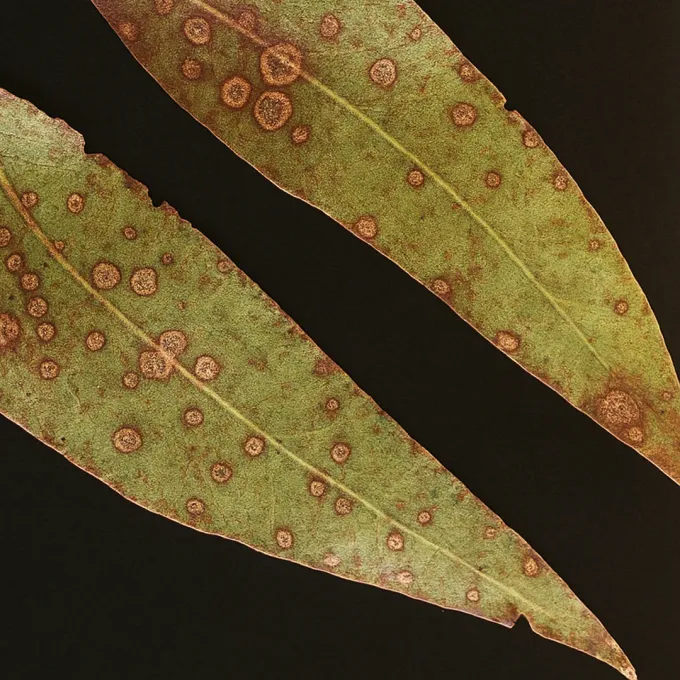
Initial symptoms include the appearance of small, yellow to light-brown spots on the leaves. As the lesion matures, it often develops a distinct, darker margin.
The presence of minute, black structures called pycnidia within the lesions is a diagnostic indicator for Didymella eucalyptica.
As the infection progresses, individual lesions can merge, leading to large necrotic areas on the foliage. This often triggers premature leaf abscission.
In cases of severe infection, young shoots may develop stem lesions, which can lead to girdling and the subsequent death of the shoot tip.
- small chlorotic spots;
- black pycnidia in lesion centers;
- progressive leaf necrosis;
- premature leaf drop;
- twig dieback.
Pathogen
The disease is caused by the ascomycete fungus Didymella eucalyptica. This specialized pathogen primarily targets various species of the Eucalyptus genus across multiple regions.
The fungus completes its life cycle by producing ascospores, which are dispersed by wind and rain splashes. These spores require moisture to initiate infection on susceptible leaf surfaces.
The pathogen survives between seasons in infected leaf debris and twigs. During the growing season, it continues to spread through the production of asexual conidia.
Hyphae penetrate the leaf epidermis, colonizing the tissue and secreting enzymes that lead to cell wall degradation and tissue necrosis.
High humidity and mild temperatures facilitate the rapid colonization of host tissues, making this fungus a significant concern for eucalyptus cultivation.
Conditions for development
Prolonged periods of high humidity and rainfall are the primary drivers of disease outbreaks. The pathogen thrives when foliage remains wet for extended periods.
Optimal temperatures for spore germination and mycelial growth range between 18°C and 25°C. Hot, dry weather conditions tend to inhibit the spread of the disease.
Poor air circulation within dense plantations or nurseries provides an ideal microclimate for the fungus to establish and propagate rapidly.
Young, rapidly growing trees and those subjected to nutrient deficiencies or environmental stress are significantly more susceptible to successful infection.
Accumulation of infected leaf litter under the trees creates a primary inoculum source that triggers new infections at the start of the spring season.
Why it matters
In nursery settings, this disease causes significant damage by defoliating young plants, which reduces their photosynthetic capacity and stunts their growth.
Severe defoliation weakens the host, making it more vulnerable to secondary pests and environmental stresses, potentially leading to tree mortality.
The aesthetic value of eucalyptus in landscape and ornamental settings is severely compromised by the unsightly spots and premature leaf loss.
In forestry plantations, the disease can reduce biomass production, leading to economic losses in timber yield over the long term.
Constant disease pressure forces producers to invest in protective measures and monitoring, which increases the overall cost of plant maintenance.
Protection
Sanitation is the cornerstone of control; raking and burning infected leaf litter effectively reduces the inoculum level in the plantation environment.
Proper spacing and regular pruning are essential to improve canopy ventilation, which reduces the duration of leaf wetness and hinders fungal growth.
Application of copper-based or systemic fungicides can be effective when applied preventively or at the very first signs of infection in intensive nursery settings.
Selecting and breeding eucalyptus genotypes that exhibit natural resistance to the pathogen is the most sustainable long-term solution.
Implementing regular monitoring programs allows for early detection of the disease, enabling targeted treatments rather than broad-spectrum chemical applications.
Discussion
No discussions yet — be the first.