
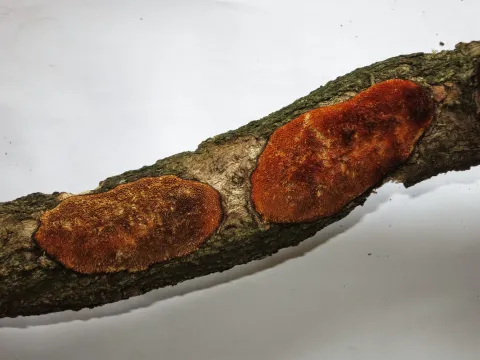
Dichotomy blight
Dichotomus campestris
The causative agent of the disease is the fungal organism Dichotomus campestris, which acts as a specialized plant parasite. The pathogen is characterized by the production of resistant resting spores that persist in the soil for several years.
What the section contains
Dichotomy blight
The mycelium colonizes the vascular tissues of the host plant, effectively disrupting the transport of water and essential nutrients. This systemic colonization is the primary reason for the severe symptoms observed in infected specimens.
Transmission occurs through the dispersal of conidia by wind, rain splashes, and movement of farm equipment. Once in contact with susceptible tissue, the pathogen initiates infection within a few hours under suitable humidity.
The biology of Dichotomus campestris is closely linked to specific physiological stages of the host plant. It exploits the host's weakened immunity to rapidly colonize the internal tissues.
Laboratory diagnosis is essential for confirming the presence of this pathogen. Isolation techniques involve using selective culture media to differentiate it from other soil-borne fungi.
The most visible sign of the disease is the abnormal dichotomy (branching) of the main stem, where the growth point splits into two distinct segments. This morphological anomaly is clearly distinguishable in infected fields.
Foliage often exhibits distinct chlorosis, accompanied by necrotic spots that may spread to the entire leaf blade. In advanced stages, the plant displays signs of severe wilting despite adequate moisture.
A fine, white-colored fungal growth can often be observed in the nodes and crotches of the stem. This growth represents the reproductive phase of the fungus, producing conidia for further spread.
Root systems exhibit stunted growth and localized rotting in the primary root zone. This loss of functional root tissue leads to severe nutrient deficiency and reduced plant vigor.
- Stem bifurcation at growth points
- Chlorotic and necrotic patches on leaves
- Premature senescence and leaf drop
- Structural fragility of the main stem
High humidity and temperatures ranging between 18 and 24 degrees Celsius are the primary triggers for disease development. These conditions are ideal for the rapid germination of the pathogen's spores.
Poor soil drainage and waterlogging significantly increase the susceptibility of plants to Dichotomus campestris infection. Over-saturated soil environments promote the survival of the fungus.
The absence of crop rotation allows the pathogen concentration in the soil to reach threshold levels that cause devastating outbreaks. Continuous cropping is the most common cause of infestation.
High nitrogen levels stimulate lush, succulent growth that is more susceptible to fungal penetration. Proper fertilizer management is necessary to maintain balanced plant development.
Dense plant stands hinder air circulation, creating a humid microclimate within the canopy. This microclimate is perfectly suited for the continuous sporulation and spread of the disease.
The primary harm caused by Dichotomy blight is the drastic reduction in marketable crop yield. Infected plants often produce undersized, non-viable seeds, rendering the crop economically worthless.
The structural damage caused by stem branching makes the plants highly susceptible to lodging during windy weather. This results in significant mechanical losses during the harvest period.
Quality reduction is a major concern, as the fungus may produce secondary metabolites that affect the nutritional value of the produce. This limits the potential for storage and distribution.
Infected fields serve as primary sources of inoculum for surrounding healthy areas, creating a cycle of infestation. This necessitates costly containment measures to protect the overall farm health.
The disease limits the effective use of land, as fields contaminated with Dichotomus campestris require long periods of fallow or specific rotation to reduce the pathogen population.
Adhering to a strict crop rotation schedule is the most effective way to manage the disease. Rotating away from susceptible crops for at least three seasons is generally recommended to starve the fungus.
Deep tillage should be practiced to bury crop residues deep within the soil profile. This exposure to microbial activity at lower soil layers helps to accelerate the decomposition of infected matter.
The application of systemic fungicides at the early stages of disease appearance is crucial for preventing widespread damage. It is essential to follow the manufacturer's guidelines for dosage and timing.
The selection of disease-resistant varieties is the best long-term strategy for minimizing losses. Ongoing breeding programs focus on strengthening the natural defensive barriers of modern crop varieties.
Strict weed control is mandatory, as many weed species can serve as symptomless carriers of Dichotomus campestris. Maintaining field sanitation prevents the reintroduction of the pathogen into the crop.