
Dictyosporiosis
Dictyosporiaceae
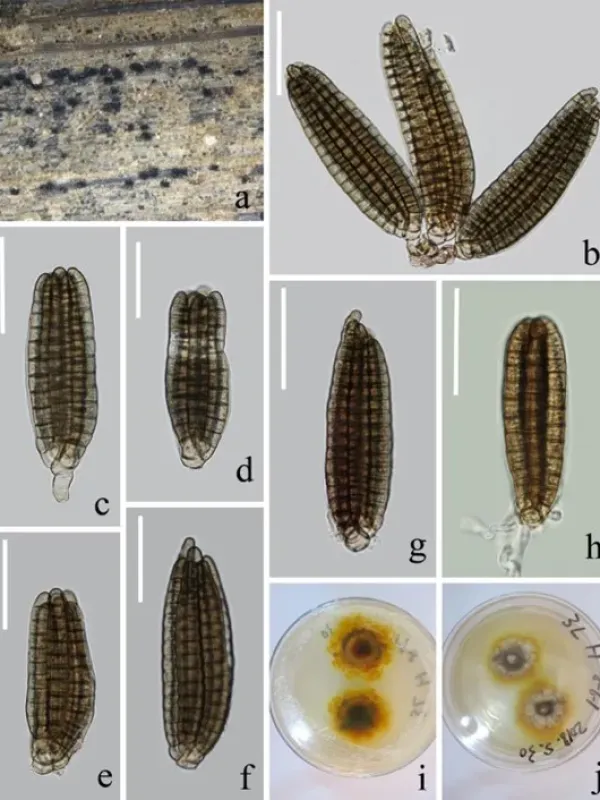
Description
Symptoms
The primary symptom of Dictyosporiosis is the emergence of localized necrotic spots on leaves, stems, and fruits. These spots are usually brown, grey, or dark black, reflecting the melanin content in the fungal spores.
Under humid conditions, a velvety, dark-colored coating may appear on the lesions, which is a visual sign of active sporulation of the fungus. Over time, the affected plant tissue may become brittle and crack.
As the infection progresses, small spots often coalesce, leading to extensive chlorosis, necrosis, and premature wilting of plant organs. Severe infections can lead to significant defoliation and deformities in fruits.
Symptoms are not always uniform and depend heavily on the host species and the plant's overall health. Frequently, the disease is observed on crops already suffering from stress or competition with weeds.
Diagnostic efforts are often complicated by the fact that the disease may remain latent during dry periods, only manifesting visible symptoms when moisture levels allow the mycelium to break the host's surface.
Pathogen
The disease is caused by fungi belonging to the Dictyosporiaceae family. These are microscopic fungi characterized by the formation of unique multicellular conidia, often featuring finger-like or star-shaped structures.
These pathogens are primarily saprotrophic, meaning they typically feed on dead organic matter. However, they can act as opportunistic parasites, attacking weakened plants when environmental conditions become favorable for their proliferation.
Taxonomically, these fungi belong to the Ascomycota division. Their life cycle is deeply integrated into the process of decomposition, allowing them to survive in soil or plant debris for extended periods.
The biology of the fungus involves the development of septate mycelium that penetrates host tissues. Spore dispersal occurs primarily through air currents and water splashes, facilitating the spread of the disease within fields.
Identification of the specific pathogen is challenging due to the morphological similarity between various dark-pigmented hyphomycetes, often requiring microscopic observation of the conidial structure to confirm the presence of Dictyosporiaceae.
Conditions for development
High humidity and the presence of liquid water on plant surfaces are the primary drivers of Dictyosporiosis outbreaks. The pathogen requires a thin layer of moisture for spore germination and tissue invasion.
Moderate temperatures ranging from 15°C to 25°C are considered optimal for fungal growth. Fluctuating weather patterns with intermittent rain provide the best environment for rapid disease development.
Crop residues left on the soil surface are the most significant reservoir for the pathogen. The fungus overwinters on old stalks, leaves, and other debris, serving as a primary source of inoculum for the next season.
Dense planting patterns that restrict airflow create a microclimate with stagnant humidity, which is highly conducive to the spread of fungal spores. Proper spacing is essential to mitigate these risks.
Plant injury caused by insect pests or mechanical damage provides easy access for the fungus to penetrate plant tissues, significantly increasing the severity of the infection compared to healthy, intact plants.
Why it matters
The harmful impact of the disease is linked to the reduction of the leaf surface area, which impairs photosynthesis and leads to significant yield losses and lower product quality.
Affected fruits suffer from reduced marketability and poor storage life. The enzymes secreted by the fungus degrade the cell walls of the host, leading to rot and structural weakness in the harvested produce.
When the infection attacks stems, the transport of water and nutrients is hindered, leading to stunted growth, wilting, and in severe cases, plant mortality, which disrupts the entire crop stand.
Economic damage involves the cost of fungicides, increased labor for disease management, and lower prices for diseased produce. In some cases, farmers may lose the entire value of the affected lot.
The infection can also predispose crops to secondary infections by other, more aggressive pathogens, creating a complex and difficult-to-manage sanitary situation within the field.
Protection
The cornerstone of control is effective crop rotation, which prevents the build-up of fungal populations in the soil and breaks the host-pathogen life cycle over several growing seasons.
Deep tillage and proper incorporation of crop residues help to destroy the overwintering structures of the fungus, forcing it to compete with beneficial soil organisms that accelerate decomposition.
Integrated management practices, including the use of resistant varieties, proper fertilization to boost plant immunity, and timely weed removal, are essential for reducing the disease pressure.
Chemical control with broad-spectrum fungicides, such as triazoles or strobilurins, is recommended when environmental conditions are expected to favor high disease incidence, especially during vulnerable growth stages.
- Implementing proper field sanitation protocols.
- Using certified disease-free seeds.
- Optimizing planting density for better airflow.
- Monitoring pest populations to reduce tissue damage.
Discussion
No discussions yet — be the first.