
Dichotomopilus funicola
Dichotomopilus funicola
Description
Pathogen
Dichotomopilus funicola is a microscopic fungus belonging to the order Sordariales. Formerly classified within the genus Chaetomium, it has been reclassified into a distinct genus based on modern molecular research.
This organism typically acts as a saprotroph, feeding on decaying organic matter, but under specific environmental conditions, it can exhibit pathogenic behavior on various crops.
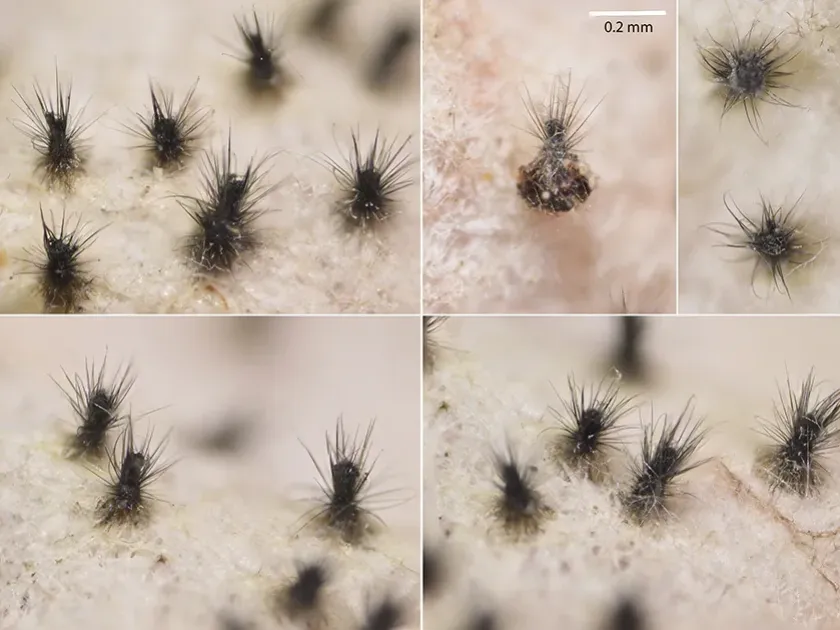
The fungus produces perithecia, which are fruiting bodies featuring characteristic hair-like appendages, serving as a critical diagnostic marker for laboratory identification.
Reproduction is facilitated through ascospores, which are efficiently dispersed by air currents, rain splashes, or insects to colonize new susceptible substrates.
The fungus is highly efficient at degrading cellulose, which contributes to its biological ability to damage both vegetative plant tissues and harvested agricultural products.
Conditions for development
Optimal development of the fungus occurs in high humidity conditions, typically exceeding 85%, combined with moderate temperatures ranging from 20 to 28 degrees Celsius.
The presence of free moisture (surface water) on plant parts significantly accelerates spore germination and the subsequent penetration of hyphae into the host tissue.
Dense crop stands that restrict airflow create a microclimate with high humidity, which serves as a primary hub for fungal spread across the field.
Poor agricultural practices, such as inadequate incorporation of crop residues into the soil, provide a perfect substrate for the pathogen to overwinter and accumulate.
Inadequate ventilation and moisture control in storage facilities are major factors promoting rapid colonization and grain spoilage by this fungus.
Why it matters
The primary impact of the infection is the degradation of seed quality, leading to reduced germination rates and weakened seedling vigor at the beginning of the season.
The fungus releases metabolic byproducts that can inhibit plant growth, causing malformations, necrosis, or total failure of the seedlings during establishment.
When infecting vegetative stages, it compromises the overall grain quality, reducing its nutritional and technological value for food and feed processing industries.
During storage, the fungus causes severe rotting, discoloration, and moldy growth on grains and fruits, often rendering the harvest entirely unsalable.
Economic losses result from direct yield reductions, the costs of chemical control, and the need to discard batches that fail safety and quality inspections.
Protection
Crop rotation is the primary cultural practice to interrupt the infection cycle and decrease the inoculum load present in the field soil.
Deep plowing remains a critical measure for ensuring the efficient burial and decomposition of infected plant debris, which reduces the sources of primary infection.
The use of certified, high-quality seeds treated with appropriate fungicides is essential to protect emerging seedlings from early-stage infections.
Strict management of storage facilities, focusing on maintaining low grain moisture levels and effective ventilation, is vital for preventing storage rot.
- Applying systemic or contact fungicides during the growing season when environmental conditions favor fungal development.
- Harvesting crops during dry weather to minimize the risk of moisture-induced infection on grains.
- Systematic cleaning and disinfection of storage facilities and machinery to remove dormant fungal spores before each season.
Discussion
No discussions yet — be the first.