
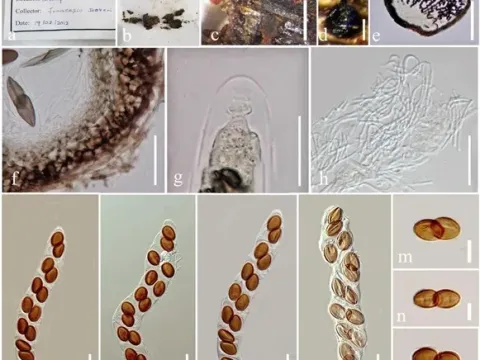
Delitschia
Delitschia
Delitschia is a genus of ascomycetous fungi belonging to the order Pleosporales. While these fungi are predominantly saprotrophic, living on decaying organic matter, some species exhibit phytopathogenic potential, causing degradation in the tissues of higher plants.
What the section contains
Delitschia
Biologically, the pathogen is characterized by the formation of perithecia, which are fruiting bodies embedded within the substrate. The spores typically possess a dark pigmentation and a distinctive septum, enabling them to survive in harsh environmental conditions for extended periods.
The fungus develops its mycelium within the intercellular spaces of plant tissue, secreting specific enzymes to break down complex organic compounds. This mechanism allows the pathogen to colonize weakened or damaged parts of agricultural crops successfully.
Dissemination occurs through ascospores, which are released into the environment and dispersed by air currents or water droplets. The life cycle of the fungus is closely dependent on the presence of moisture and suitable organic substrates for sustenance.
Unlike highly specialized pathogens, Delitschia often acts as an opportunistic parasite, targeting plants with compromised immune systems or those already damaged by environmental stress or insect activity.
Initial symptoms of infection appear as chlorotic spots that eventually transition into necrotic areas of irregular shape. The surface of the infected tissue is frequently covered with fungal sporulation.
Microscopic examination of affected plant parts reveals tiny black dots; these are the perithecia (fruiting bodies), which slightly protrude from the leaf or stem epidermis.
Under conditions of high humidity, a characteristic mycelial mat may form around infection sites, indicating active fungal growth and spore production.
Severe infestations lead to premature wilting of leaves and the death of shoots, visually resembling advanced blight or rot processes.
Disease progression is often marked by the discoloration of plant tissues, turning them dark brown or black due to the oxidation of cells caused by fungal metabolites.
Prolonged high humidity and moisture levels in both soil and air are the primary drivers of infection. The fungus is most active in the moderate temperature ranges typical of spring and autumn seasons.
Accumulation of large quantities of plant debris on the soil surface provides an ideal environment for the pathogen to overwinter and multiply.
Overcrowded plantings and poor ventilation within the crop canopy significantly increase the risk of rapid spore dissemination throughout the field.
Mechanical injuries or damage from pests create entry points, allowing the pathogen to penetrate deeply into the plant's internal structures.
Failure to follow proper crop rotation and ineffective weed control contribute to a high inoculum load in the soil, exacerbating the disease situation.
Delitschia causes significant damage by disrupting photosynthesis and transpiration, leading to substantial yield losses and a decline in product quality.
Infection of vegetative parts weakens the plant, reducing its resistance to secondary diseases and adverse environmental stressors.
In cases where reproductive organs are infected, seed viability is compromised, which poses a critical threat to nurseries and seed-production farms.
Economic losses include the costs associated with fungicide applications, reduced crop volume, and the need for additional agronomic interventions.
The long-term persistence of the pathogen in the soil makes it challenging to cultivate sensitive crops on infested land without prior sterilization or disinfection.
The primary control strategy involves practicing strict crop rotation with non-host species to break the pathogen's life cycle.
Preventive measures must include thorough clearing and deep plowing of crop residues, which act as the main reservoir for the infection.
Preventive fungicide spraying is recommended during periods of high risk when environmental conditions favor spore germination and spread.
Selecting resistant or tolerant plant varieties is the most sustainable approach to minimizing infection risk, even in fields with a history of fungal presence.
- Ensuring optimal plant spacing for better airflow.
- Applying balanced phosphorus-potassium fertilizers to boost natural plant immunity.
- Regular monitoring of crop health to identify early symptoms.
- Effective weed management to eliminate alternative hosts.