
Delphinella needle cast
Delphinella abietis
Description
Symptoms
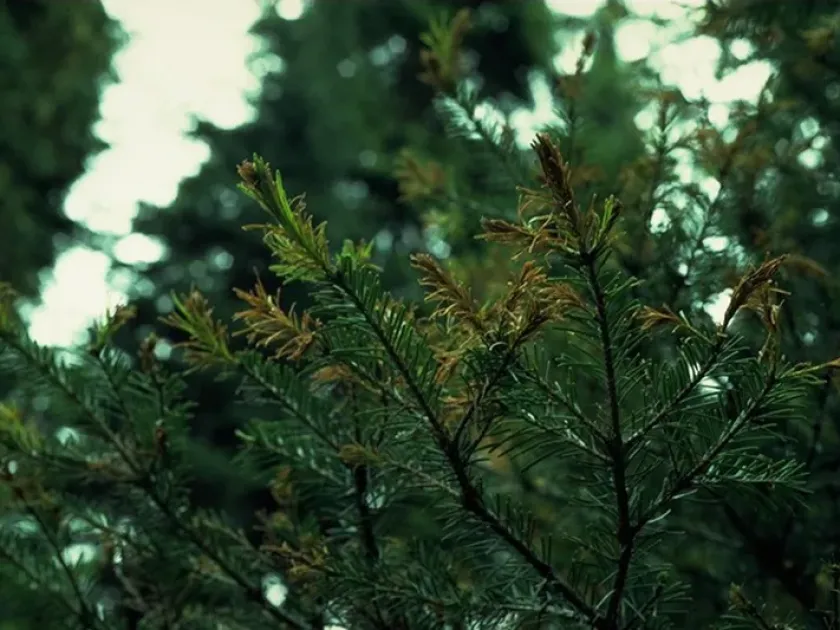
The first symptom is a noticeable chlorosis followed by browning of the needles, usually starting from the bottom of the tree.
Tiny black spots, representing the fungal fruiting bodies, appear on the surface of the needles and are a diagnostic feature.
Needle shedding occurs prematurely, resulting in thin, sparse foliage and a sickly appearance of the entire tree canopy.
In severe cases, the fungus spreads to new shoots, causing them to twist and dry out, which leads to stunted growth.
The progression of the disease often results in the death of individual branches, gradually impacting the tree's overall structure.
Pathogen
The disease is caused by the fungus Delphinella abietis, a member of the ascomycetes group that specifically targets fir species.
The fungus develops its reproductive structures, known as apothecia, on the infected needles during the wet seasons.
The pathogen overwinters primarily in the fallen needles, surviving as mycelium until it is ready to produce new spores.
In spring, spores are released and dispersed by splashing rain and wind, which facilitates the spread to healthy branches.
It acts as a typical pathogen that thrives when the host plant is physiologically stressed or growing in suboptimal environments.
Conditions for development
High humidity and consistent rainfall, particularly during the spring bud break, are essential for the fungal infection process.
Dense planting schemes restrict airflow within the canopy, maintaining moisture levels that are perfect for spore germination.
Trees subjected to environmental stress, such as drought or nutrient deficiency, demonstrate a significantly higher vulnerability to infection.
Poor site selection, where the drainage is inadequate and the air is stagnant, often leads to severe outbreaks of the disease.
Temperature fluctuations that affect the tree's growth cycle can also lower its resistance to pathogen invasion.
Why it matters
The primary damage is the loss of photosynthetic tissue, which significantly stunts the tree's development and vigor.
From an aesthetic perspective, infected trees lose their commercial and ornamental value in nurseries and landscapes.
Long-term infestation drains the tree's metabolic resources, often leading to susceptibility to secondary pests and bark beetles.
Young plants are particularly at risk and may die off completely if the infection is not managed during the initial stages.
Repeated yearly infections lead to chronic decline, eventually resulting in the irreversible mortality of the specimen.
Protection
The most crucial cultural practice is sanitation, which involves collecting and destroying fallen needles to reduce inoculum.
Thinning out branches is recommended to improve air circulation and sunlight penetration throughout the crown of the tree.
Chemical control involving copper-based fungicides or systemic treatments is effective if applied early in the spring.
Ensuring proper irrigation and fertilization is vital, as a healthy tree is naturally better equipped to fight off fungal infections.
Regular inspections of the foliage, especially in moist weather, are necessary to catch and treat the disease as early as possible.
Discussion
No discussions yet — be the first.