
Delphinium rust
Puccinia delphinii
Description
Symptoms
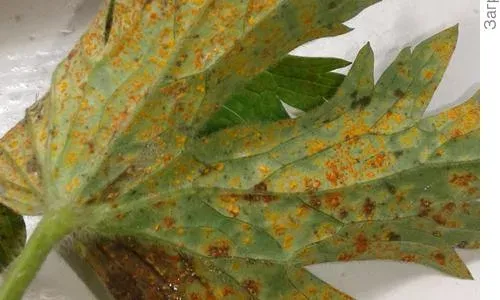
Initial symptoms are characterized by the appearance of small, pale-yellow or chlorotic spots on the upper surfaces of the leaves.
As the disease progresses, small, powdery, rust-colored pustules (uredinia) erupt through the epidermis, primarily on the undersides of the leaves.
These pustules eventually release a mass of spores, leading to premature yellowing, withering, and necrosis of the infected leaf tissue.
Severe infestations cause leaves to curl, become distorted, and drop prematurely, which significantly compromises the aesthetic appeal of the plant.
In highly favorable conditions, these rusty spots can cover the entire foliage, making the plant look sickly and stunted compared to healthy specimens.
Pathogen
The causative agent of this disease is Puccinia delphinii, a highly specialized fungal pathogen that acts as an obligate parasite on its host plants.
The life cycle of this fungus involves several spore stages, allowing it to complete its reproductive cycle efficiently within a single growing season.
As a rust disease, it specializes in attacking the aerial parts of the Delphinium, specifically focusing its energy on the leaves and petioles of the host.
The infection spreads primarily through wind-borne spores that can travel significant distances, landing on healthy plant tissues to initiate new infection sites.
The pathogen utilizes haustoria to penetrate the cell walls of the plant, effectively siphoning nutrients and water to fuel its own growth and development.
Conditions for development
Delphinium rust thrives in conditions characterized by high relative humidity and moderate temperatures, typically during the spring and early summer.
Overcrowded plantings that lack adequate airflow create a stagnant microclimate, which is highly conducive to the germination and spread of fungal spores.
Frequent rainfall or overhead irrigation methods that keep the foliage wet for extended periods significantly increase the risk of infection.
Plants that are stressed due to improper soil drainage or nutrient imbalances are generally more susceptible to successful colonization by the fungus.
Late summer periods with cool nights and morning dew provide optimal conditions for secondary infection cycles throughout the garden.
Why it matters
The primary damage is caused by the disruption of the photosynthetic process, as the fungus actively destroys the chlorophyll-containing leaf tissue.
As the leaves become exhausted and damaged, the plant loses its ability to produce necessary energy, leading to a general decline in overall plant vigor.
The visual impact is detrimental to garden aesthetics, as the rust appearance and subsequent leaf loss make the Delphiniums look unattractive and weak.
Ongoing infection weakens the plant's ability to store food for the winter, often resulting in poor survival rates during the cold season.
Persistent presence of the fungus can cause a long-term buildup of inoculum in the soil, jeopardizing future plantings in the same location.
Protection
Sanitation is the most effective preventative measure; all infected plant debris must be carefully removed and destroyed at the end of the season to reduce inoculum levels.
Proper spacing during planting is essential to ensure good air circulation, which helps keep the foliage dry and inhibits fungal growth.
Chemical control involving systemic fungicides belonging to the triazole or strobilurin classes can be effective when applied early in the infection cycle.
It is recommended to implement a balanced fertilization program, avoiding excessive nitrogen that promotes succulent growth susceptible to fungal entry.
- Practice good hygiene by removing fallen leaves.
- Apply fungicides at the first sign of symptoms.
- Avoid overhead watering to keep foliage dry.
- Select resistant cultivars whenever possible.
Discussion
No discussions yet — be the first.