
Cyphelium
Cyphelium
Cyphelium is a genus of lichenized fungi belonging to the family Caliciaceae. These organisms are typically found on the bark of older trees, where they establish themselves as epiphytes rather than aggressive pathogens.
What the section contains
Cyphelium
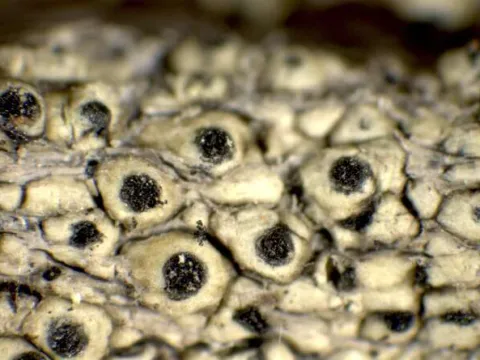
The fungus is characterized by the production of apothecia, which contain a loose mass of spores (the mazaedium). This spore mass creates the distinctive dusty or soot-like appearance on the bark surface.
Biologically, the fungus maintains a symbiotic relationship with algae. This adaptation allows the organism to survive on substrates that are relatively poor in nutrients, such as bark surfaces.
The mycelium of Cyphelium colonizes the outer, non-living layers of the bark. Because it does not invade the cambium or vascular tissues, it is generally considered harmless to the tree's physiological functions.
Reproduction is primarily via spores, which are disseminated by wind. Once they land in a suitable moisture-retaining crack in the bark, they germinate and begin developing their thallus.
The primary symptom of Cyphelium presence is the development of dark, soot-colored spots or patches on the trunk and thick branches. These are the fruiting bodies of the fungus.
When examined closely, these patches look like a dark, powdery coating. Unlike black sooty mold, this fungus is more firmly integrated into the bark structure.
The affected bark often appears roughened or slightly lifted. This is because the growth of the fungal colony can cause the small scales of the bark to peel slightly away from the wood.
The symptoms are most visible during moist seasons. Humidity allows the apothecia to swell and release spores, making the dark color of the colony appear more intense.
Heavy colonization by Cyphelium is often an indicator that the tree is in a state of decline or simply of advanced age, where the bark has accumulated sufficient fissures for colonization.
Development is heavily reliant on moisture. The genus thrives in sheltered environments where humidity remains high and the bark surface does not dry out rapidly.
Shaded areas within dense forests provide the optimal microclimate for the growth of these lichenized fungi. Reduced airflow and lower light intensity allow the fungus to expand its range on the tree.
The age of the host plant is a critical factor. Older trees with thick, deeply fissured, and partially weathered bark provide the necessary niche for the fungus to establish its colony.
Environmental cleanliness is also a factor, although some species in the genus show a remarkable ability to survive in environments with slight pollution compared to other sensitive lichens.
The absence of regular maintenance, such as manual bark cleaning, allows the colony to grow undisturbed over many years, eventually covering large portions of the trunk.
The direct harm caused by Cyphelium to the tree is negligible. It does not extract water or minerals from the tree's living vascular system, making it an occupant rather than a parasite.
However, the existence of dense fungal coverage can create favorable micro-habitats for other organisms, including potential insect pests that might bore into the wood under the protection of the lichen layer.
In ornamental and landscape management, the aesthetic impact is the primary concern. A tree covered in dark, soot-like growths is often perceived as unhealthy or poorly maintained.
By trapping moisture against the bark, long-term coverage may potentially accelerate the natural decomposition of outer bark layers, creating openings for other, more aggressive pathogens.
The presence of large colonies is a diagnostic sign of ecological stagnation in the tree, which might warrant a general check-up of the tree's health and soil quality.
Control is usually not necessary for individual tree health but may be performed for aesthetic reasons or as part of a general site management plan. Improving environmental conditions is key.
Mechanical cleaning of the bark using stiff-bristled brushes is the most effective way to remove the lichen. This should be done during moist weather to prevent damage to the underlying living bark.
Pruning of lower or excessively dense branches to increase sunlight and air circulation will naturally dry out the bark, making the environment hostile for lichen expansion.
Ensuring trees are properly watered and fertilized helps maintain a robust bark structure, which is less prone to the deep cracking that facilitates initial fungal settlement.
- Regular inspection of bark condition.
- Cleaning the trunk manually in early spring.
- Thinning of canopy for better aeration.