
Cypress canker
Seiridium cardinale
Description
Symptoms
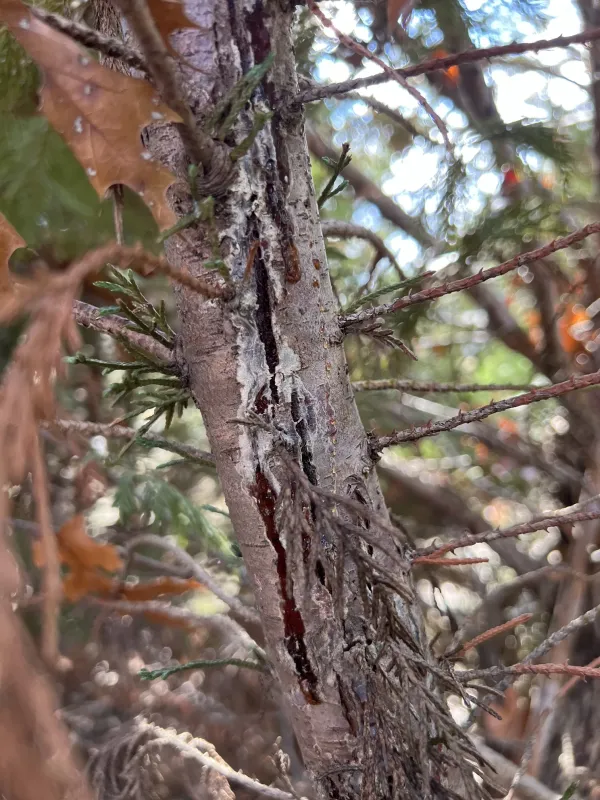
The primary symptom of cypress canker is the formation of deep fissures and sunken lesions on the bark of stems and branches. These cankers indicate where the fungus has colonized the cambium and phloem layers of the tree.
As the disease progresses, the needles on the affected branches change color from vibrant green to yellow, then turn brown and eventually wither. This localized dieback often serves as an early warning sign for tree owners.
Excessive resin exudation (bleeding) is a classic symptom of Seiridium cardinale infection. Resin flows from the cankers and solidifies, forming noticeable streaks or drops on the bark, which is a defensive but often ineffective response of the host.
In humid conditions, small black pycnidia, which are the fruiting bodies of the fungus, appear on the dead bark near the canker margins. These structures are responsible for the production and dispersal of fungal spores.
The overall growth pattern of infected trees often becomes distorted. "Flagging" of the canopy, where one or more branches turn brown while the rest of the tree remains green, is a common visual indicator of systemic infection.
Pathogen
The causative agent of this disease is Seiridium cardinale, a pathogenic fungus that primarily affects members of the Cupressaceae family. It is particularly devastating to species such as Cupressus sempervirens and Cupressus macrocarpa.
The fungus acts as a necrotrophic parasite, gaining entry into the plant through pruning wounds, frost cracks, or mechanical damage. Once inside, the mycelium spreads rapidly through the conductive tissues, disrupting the transport of water and nutrients.
Reproduction occurs through conidia, which are easily disseminated by rain splashes, wind, or human activity during routine maintenance. The pathogen is highly infectious and can colonize new hosts throughout the year.
Seiridium cardinale exhibits high persistence in infected woody tissue. Even after a branch has died, the fungus remains viable and can continue to produce spores that pose a risk to nearby healthy trees for several years.
The biology of the pathogen is highly opportunistic. It thrives when the host's physiological defenses are weakened by environmental stress, poor nutrition, or lack of proper horticultural care.
Conditions for development
Cypress canker development is strongly influenced by climate. The disease reaches peak activity in warm, temperate regions with high moisture levels. Temperatures between 20°C and 25°C are optimal for fungal growth.
Poor site selection, such as planting in areas with stagnant air or high humidity, creates a conducive environment for spore germination. Dense canopy structures prevent rapid drying, allowing water to linger and facilitate fungal spread.
Environmental stress factors, including drought or extreme cold, make the trees more susceptible to infection. Frost damage, in particular, creates micro-cracks in the bark that allow the pathogen to penetrate deeply into the trunk.
The fungus spreads most effectively during wet seasons. Rain acts as the primary vector for washing spores from upper branches to lower parts of the tree or to adjacent plants in the landscape.
Human management practices are major variables in disease spread. Poor pruning techniques, especially those that leave large, unsealed wounds, significantly increase the risk of an outbreak in landscaped areas.
Why it matters
Cypress canker is one of the most destructive diseases for landscape conifers. The damage is often irreversible once the cankers surround the main trunk (girdling), which leads to the death of the entire tree.
The aesthetic value of affected plants is rapidly lost. Once the crown begins to thin and die back, the tree loses its shape and decorative function, requiring costly intervention or removal of the specimen.
Economic damage in the nursery industry is severe, as infected batches must be destroyed to prevent a wider outbreak. The presence of the disease can force nurseries to cease the cultivation of certain susceptible species.
Landscape-scale damage can lead to the loss of entire avenues or hedges of cypress. Because the infection is invisible in its early stages, it often goes untreated until the damage is extensive, making recovery impossible.
Beyond the loss of individual trees, there are ongoing costs associated with managing the infection: purchasing fungicides, labor for intensive pruning, and the inevitable cost of replacing mature, dead trees.
Protection
Strict sanitation is the most effective control measure. All infected branches must be pruned at least 15-20 cm below the visible canker, into healthy tissue. Tools must be disinfected with alcohol or copper-based solutions after every single cut.
Preventive spraying with copper fungicides (e.g., Bordeaux mixture) should be applied during the spring and autumn to protect healthy tissues from fungal spores. These treatments act as a surface barrier against infection.
Optimizing plant vigor is essential for natural resistance. This includes proper irrigation schedules to avoid drought stress and applying balanced fertilizers to ensure the tree maintains structural integrity and healthy bark.
For high-value trees, systemic fungicides may be used as part of a therapeutic program. These systemic treatments can help slow down the progression of the fungus, though they are rarely curative once the trunk is deeply infected.
In cases of severe infestation, removal and burning of the entire tree are necessary to eliminate the inoculum source. This is the only way to safeguard neighboring trees from the persistent spread of the fungal pathogen.
Discussion
No discussions yet — be the first.