
Cyphelium sessile
Cyphelium sessile
Description
Symptoms
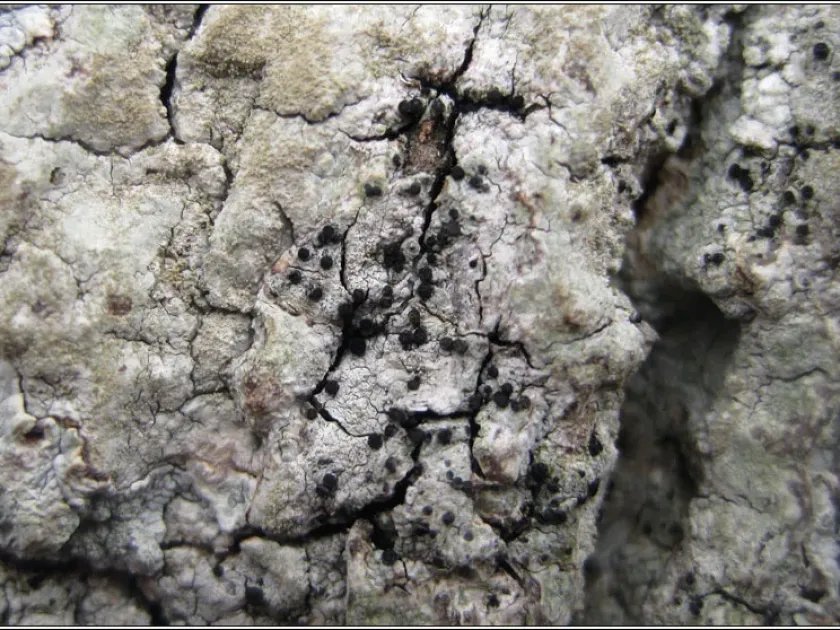
The main visible signs of Cyphelium sessile are the tiny, coal-black apothecia that form on the surface of the lichen host. These appear as small, scattered, dark spots.
As the fungus colonizes the lichen, the host thallus may show signs of discoloration or tissue degradation, indicating the parasitic nature of the relationship.
Under a magnifying lens, the fungal structures look like small cups or discs. They are often densely distributed across the surface of the host organism.
The appearance of these black structures can make the lichen look dirty or diseased, though this is a standard stage in the lifecycle of this lichenicolous species.
The signs are most prominent in mature, humid forest ecosystems where lichens are abundant and provide a stable substrate for the fungus to develop.
Pathogen
Cyphelium sessile is a lichenicolous fungus, meaning it lives in association with and often parasitizes lichens. It belongs to the family Caliciaceae and is typically found on the thalli of specific lichen species.
This fungus is not an agricultural pathogen and does not infect crop plants, fruits, or vegetables. Its lifecycle is entirely confined to the specialized environment provided by the bark of old-growth trees and their resident lichen populations.
The fungus produces small, black, cup-shaped fruiting bodies called apothecia. These structures are the primary diagnostic feature used to identify the presence of the fungus in a colony of lichens.
Biologically, it acts as a commensal or parasite, obtaining nutrients from the lichen tissues to support its own reproductive phase. It does not pose a threat to the trees themselves.
Dissemination occurs via airborne spores, which travel between host lichens on neighboring trees during humid weather conditions.
Conditions for development
The primary condition for the development of Cyphelium sessile is the presence of suitable host lichens, particularly those in the genus Pertusaria.
Environmental factors such as high humidity, shade, and low pollution levels are essential for the survival and spread of this fungus in the wild.
It is known to be an indicator species for clean air. Its absence or presence can help researchers assess the atmospheric quality of a specific forest area.
Long periods of moisture allow for the optimal maturation of spores, facilitating the infection of new host colonies nearby.
The texture and age of the tree bark contribute to the microclimate needed for this fungus to establish a stable and enduring population.
Why it matters
There is no economic harm associated with Cyphelium sessile. It has no negative impact on agricultural production, silviculture, or human health.
Because it only consumes lichens, which are not considered pests or economically valuable crops, it is not a target for fungicide or pesticide application.
The presence of this fungus is considered a natural component of forest biodiversity, contributing to the complex interactions between organisms in forest ecosystems.
No protection or control measures are required, as it is a natural part of the mycobiota found on tree trunks in undisturbed forest environments.
In summary, the fungus is entirely benign to human interests and does not require any agricultural intervention or management strategies.
Discussion
No discussions yet — be the first.