
Description
Symptoms
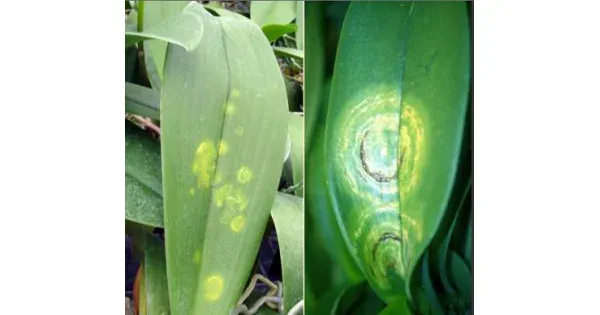
Initial symptoms typically appear as chlorotic streaks or mosaic patterns on the leaves. As the disease progresses, these areas often become more pronounced, showing light green or yellow mottling.
Necrotic lesions frequently develop in affected areas. These spots turn dark, sunken, and eventually dry out, causing leaves to become brittle and weaken the plant's overall photosynthetic capacity.
Floral symptoms include petal deformation, irregular spotting, and broken color patterns. Flowers may open prematurely, appear stunted, or fail to develop properly, significantly reducing their aesthetic value.
Chronic infection results in severe stunting and general decline. Pseudobulbs become shriveled, the root system fails to thrive, and new vegetative growth appears weak or distorted.
It is crucial to note that symptoms can be highly variable and influenced by the orchid host, growing conditions, and the specific strain of the virus, making visual diagnosis difficult.
Pathogen
The causative agent of the disease is the Cymbidium mosaic virus (CymMV). It is widely considered the most prevalent and economically destructive virus affecting a vast range of orchid species globally.
The virus consists of rigid, rod-shaped particles that spread primarily through mechanical transmission. Unlike many other plant viruses, it lacks a specific biological vector like aphids or thrips to facilitate its spread.
Infected orchids serve as the primary reservoir for the virus. Many plants remain asymptomatic carriers for long periods, unknowingly spreading the infection to healthy specimens during standard maintenance.
The virus exhibits high stability and can remain infectious on cutting tools, surfaces, and even within dried plant tissues for significant amounts of time, complicating containment efforts in greenhouses.
While it affects many orchid genera, it is particularly severe in Cattleya orchids. In these plants, the infection manifests as dramatic changes in vigor, flowering quality, and overall plant structure.
Conditions for development
Mechanical transmission via contaminated tools is the most common route of infection. Using unsterilized knives or shears to trim or divide infected plants is the fastest way to transmit the virus.
Transplanting and repotting activities are high-risk situations. If gloves, pots, or workspace surfaces are not thoroughly sanitized between plants, the virus spreads rapidly across the entire collection.
High plant density and humid greenhouse conditions encourage contact between foliage. Even without specific insect vectors, any tissue damage caused by insects or handling provides a point of entry for the virus.
The virus remains active in the sap of contaminated plants even under suboptimal growing conditions. It does not dissipate or weaken, ensuring that once a plant is infected, it remains a persistent threat.
Agrotechnical negligence, such as poor ventilation or excessive handling, increases the probability of mechanical spread. The resilience of the virus means it survives in soil particles and old media.
Why it matters
The primary harm caused by CymMV is the irreversible loss of ornamental value. Infected orchids are effectively ruined for commercial sale or exhibition purposes due to chronic physiological damage.
The virus disrupts normal plant metabolism, leading to stunted development and reduced flowering. This represents a substantial economic burden for orchid nurseries and a major disappointment for collectors.
Plants infected with the virus show reduced resistance to environmental stress. Their weakened immune status makes them highly susceptible to secondary attacks by fungi, bacteria, and pests.
Because there is no known cure for plant viruses, the economic impact often involves the total loss of infected stock. The cost of diagnostic testing and the disposal of valuable germplasm is significant.
Since the virus is systemic, it infects all tissues, including the rhizome and apical meristem. Once a plant is infected, there is no way to eliminate the pathogen, necessitating the destruction of the specimen.
Protection
Strict phytosanitary practices are the only effective line of defense. All tools must be sterilized between plants using heat or powerful chemical disinfectants to prevent cross-contamination.
Mandatory use of single-use gloves during repotting or trimming is highly recommended. Washing hands thoroughly after handling each plant is a fundamental step in virus prevention.
Quarantine all new acquisitions for several months before introducing them to the main collection. Early detection through ELISA or PCR diagnostic testing is the gold standard for managing outbreaks.
If a plant tests positive for the virus, it must be culled and disposed of immediately. There is no treatment, and isolating the plant is rarely sufficient to prevent long-term risks to other orchids.
Maintaining optimal growing conditions helps keep plants vigorous, which can sometimes delay the onset of severe symptoms, but growers should emphasize prevention and biosecurity over all other measures.
Pathogens and affected parts
Affects crops · 1
Discussion
No discussions yet — be the first.