
Cryptosporiopsis
Cryptosporiopsis
Cryptosporiopsis is a genus of fungi belonging to the order Helotiales. These pathogens are known to cause significant damage to various fruit crops by inducing fruit rot and necrotic lesions on bark and branches.
What the section contains
Cryptosporiopsis
The fungus survives the winter primarily in infected plant tissues, such as mummified fruits or cankers on branches. These serve as a reservoir for conidia, which initiate primary infections when favorable weather conditions return in the spring.
The pathogen utilizes enzymatic activities to break down the host plant's cellular structure. This process results in the rapid development of soft, water-soaked lesions that eventually lead to total tissue decay.
Reproduction occurs through the formation of pycnidia, small fruiting bodies that emerge through the epidermis of the host. Millions of spores are disseminated via wind and water splashes to surrounding healthy tissues.
This fungus exhibits high adaptability, allowing it to infect various hosts in the Rosaceae family. Its ability to transition between parasitic and saprophytic life cycles makes it a persistent challenge in commercial horticulture.
Early symptoms appear as small, slightly depressed brown spots on the fruit surface. These spots expand in diameter over time as the internal tissue of the fruit begins to break down.
The affected fruit tissue exhibits a soft, pulpy, and sometimes spongy texture. A distinctive white or reddish margin often develops between the healthy and infected sections of the fruit.
In humid conditions, visible fruiting bodies (pycnidia) appear as small, dark, protruding dots on the surface of the lesions. These are the source of secondary inoculum that spreads the disease throughout the orchard.
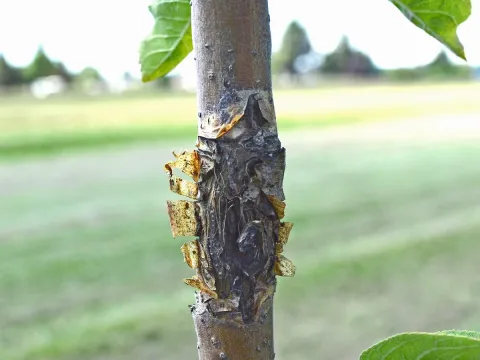
When the pathogen affects branches, it creates necrotic cankers characterized by longitudinal cracking of the bark. These cankers can eventually girdle the branch, leading to foliage yellowing and limb dieback.
As the infection progresses on fruit, it leads to full-scale mummification. The infected fruit turns dark, hard, and shriveled, often remaining attached to the branches as a persistent source of fungal inoculum.
The development of Cryptosporiopsis is strongly correlated with high humidity and prolonged wet periods. Rain and heavy dew provide the film of water necessary for spore germination and tissue invasion.
Temperature plays a crucial role, with moderate ranges (typically 15°C to 25°C) being ideal for rapid fungal proliferation. Hot and arid climates naturally suppress the expansion of the disease.
Poor orchard ventilation due to dense canopy structures promotes disease severity. Air stagnation keeps the leaf and fruit surfaces moist for longer periods, facilitating fungal entry.
Mechanical injuries are primary entry points for the pathogen. Damage caused by hail, insects, or improper harvesting practices exposes internal fruit tissue to infection, drastically increasing the disease incidence.
Orchards located in low-lying areas with poor air circulation are more susceptible to infection, as these sites accumulate moisture and mist for extended durations during the ripening season.
The primary economic impact is the direct loss of harvest volume and market value. Infected fruit is aesthetically unappealing and prone to rapid decay, rendering it unsuitable for sale.
This pathogen is particularly problematic during post-harvest storage. Infected fruits, if not strictly sorted, can infect healthy neighboring fruits in cold storage through contact, leading to mass spoilage.
Beyond immediate crop losses, the pathogen weakens the overall tree structure. Recurring bark cankers reduce the photosynthetic capacity and vitality of the tree, resulting in long-term yield reduction.
The management costs significantly increase due to the necessity of frequent fungicide applications and extra labor for pruning and removing infected plant materials.
Persistent infections can lead to the death of entire branches, forcing the grower to perform corrective pruning that alters the canopy shape and reduces the tree's productive surface area.
Sanitary practices are essential for management. Growers should prioritize the systematic removal and destruction of all infected branches and mummified fruit to eliminate the inoculum source.
Proper canopy management is critical to improve airflow and reduce humidity within the orchard. Regular pruning encourages quicker drying of fruit surfaces after rainfall.
A proactive fungicide program, particularly during the critical bloom and fruit-set stages, is necessary in high-risk environments. Applications should be timed according to local weather forecasts and infection pressure.
Integrated Pest Management (IPM) is essential to minimize injuries to the fruit skin caused by insects. Controlling primary pests helps prevent secondary fungal infections like Cryptosporiopsis.
- Maintain low temperatures (near 0°C) during post-harvest storage to inhibit fungus growth.
- Sanitize all pruning tools and harvesting equipment between orchard blocks.
- Monitor tree vigor and address soil nutrition to improve the tree's natural defense response.