
Crystal brain fungus
Myxarium nucleatum
Description
Symptoms
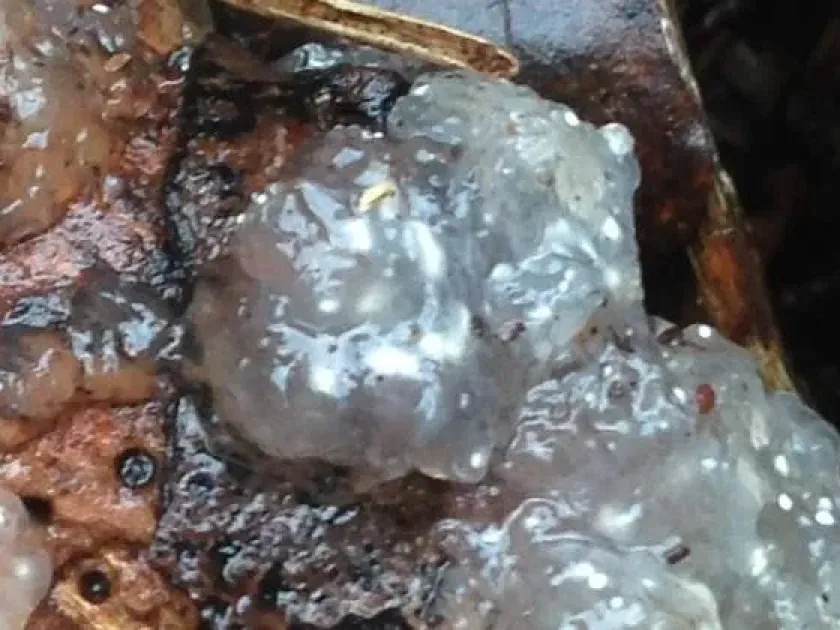
The primary sign of the fungus's presence is the appearance of small, translucent, or whitish gelatinous growths on the surface of tree bark. These clusters often exhibit irregular, rounded, or lobed shapes.
Upon closer inspection, small white dots can be observed within the fungal mass—these are the "nuclei" that visually distinguish Myxarium nucleatum from other jelly fungi, such as Tremella mesenterica.
The fungus is most frequently identified on the branches and trunks of hardwood trees, including oak, beech, and hornbeam. During dry weather, the fruiting bodies can shrink significantly, becoming almost invisible crusts on the bark surface.
When humidity rises or after rainfall, the fungal colonies "revive," reabsorbing moisture and expanding up to several centimeters in size. These state changes serve as a diagnostic criterion for identifying this species.
On affected areas of wood, there may be visible discoloration of the bark or slight softening of the underlying tissues, which indicates the onset of the biodegradation process of the wood fibers.
Pathogen
The crystal brain fungus, scientifically known as Myxarium nucleatum, is a species of fungus within the Exidiaceae family. It is not considered a primary plant pathogen in agricultural crops but rather a saprotrophic fungus that thrives on decaying or weakened wood.
Biologically, this species belongs to the group of jelly fungi. Its fruiting body possesses a characteristic gelatinous consistency, which allows it to thrive in high-humidity conditions by efficiently absorbing moisture from the surrounding environment.
A distinctive feature of this pathogen is the presence of dense, whitish inclusions within its jelly-like fruiting body. These "nuclei" provide the common name for the fungus and serve as a critical morphological marker for field identification.
Myxarium nucleatum feeds on wood components, specifically breaking down cellulose and lignin. Unlike parasitic pathogens, it rarely attacks healthy tissues of living trees, preferring dead substrates, although it may colonize deep wounds on trunks.
The life cycle of the fungus is closely linked to spore production, which typically occurs during cool and damp periods of the year. Spores are dispersed by air currents, settling on suitable wood surfaces to begin the colonization process.
Conditions for development
High humidity levels are essential for the active growth and formation of fruiting bodies of this fungus. It is most commonly found in shaded forest areas where moisture is retained within the bark pores for extended periods.
While temperature plays a secondary role, the fungus exhibits maximum activity during the autumn-winter season and early spring. Cool air prevents rapid water evaporation, which is highly favorable for its metabolic processes.
The presence of damaged or dead bark is a key factor for substrate colonization. The fungus more easily colonizes wood that has been stressed by environmental factors, such as temperature fluctuations or physical damage.
Another condition for development is the absence of direct sunlight. Ultraviolet radiation and low moisture levels on open sites are detrimental to the vegetative body of this fungus, as it consists almost entirely of water.
In orchards and gardens, dense plantings and poor crown ventilation favor the development of Myxarium nucleatum. Moisture accumulation in branch crotches creates an ideal microclimate for saprotrophic colony formation.
Why it matters
From an agronomic and forestry perspective, the crystal brain fungus does not pose a direct threat to healthy fruit trees. It is a natural component of forest ecosystems that breaks down dead wood into humus-rich soil components.
However, mass presence of the fungus on trunks indicates a poor state of the tree. It acts as a signal for the gardener that the wood has begun to die, potentially due to the activity of other parasitic fungi or pests.
The indirect harm lies in the accelerated degradation of structural branches that have already lost their protective bark integrity. This can lead to a loss of the tree's structural stability and may necessitate sanitary pruning.
In wood colonized by the fungus, there is an increased likelihood of secondary infection by more aggressive pathogens. Thus, it serves as an indicator that the tree requires attention and an overall health assessment.
Since the species does not cause significant economic loss to harvests or the death of healthy crops, its classification as a dangerous pest in agricultural systems is unnecessary.
Protection
Specific chemical control measures for Myxarium nucleatum are generally unnecessary. Because the fungus is a saprotroph, management revolves around overall orchard health and proper tree maintenance practices.
- Performing regular sanitary pruning to remove dead or diseased branches.
- Cleaning and disinfecting trunk wounds using horticultural antiseptics.
- Promptly removing dead wood from the orchard to prevent spore accumulation.
- Ensuring proper crown ventilation through correct formative pruning.
- Maintaining the tree's overall immune system through adequate irrigation and fertilization.
If a tree is in a condition where saprotrophs are actively thriving, it is advisable to evaluate the feasibility of its preservation. In some cases, radical pruning or removal of the specimen is more effective than attempting treatment.
The use of fungicides is only justified if dangerous parasitic fungi or symptoms of bacterial canker are identified alongside the saprotrophs. In all other cases, mechanical cleaning of the bark surface is sufficient.
Discussion
No discussions yet — be the first.