
Cryptosporiopsis coryli
Cryptosporiopsis coryli
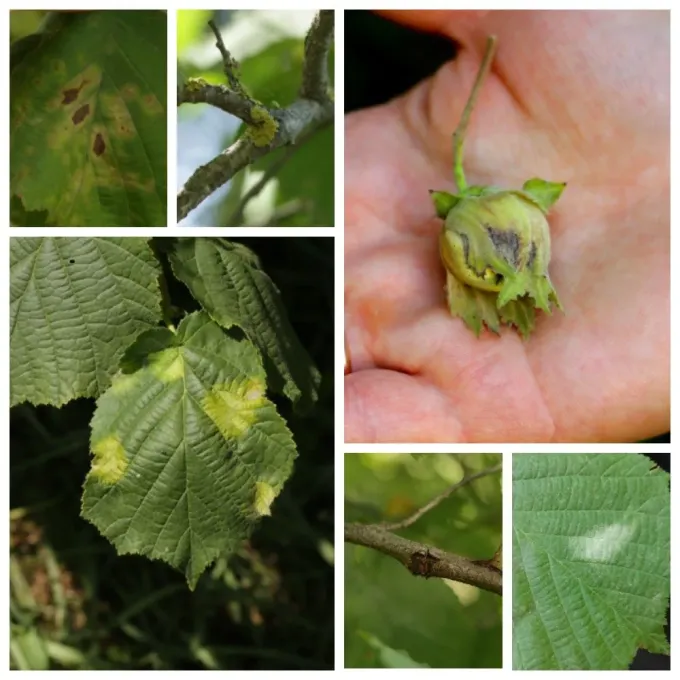
Description
Symptoms
Symptoms initially manifest as small, brown, or dark-colored lesions on the bark of shoots. Over time, these spots expand, often becoming sunken or depressed into the wood.
The presence of tiny black pimple-like structures on the dead bark surface is a diagnostic sign of pycnidia development, confirming the fungal nature of the necrosis.
As the infection progresses, the foliage above the necrotic zone begins to yellow, wither, and eventually die. If a branch is girdled by the fungus, the entire distal part of the branch will dry out.
Cracking of the bark in affected areas is common as the tissue dies and shrinks. This creates a rough appearance and further weakens the structural integrity of the affected limb.
In humid conditions, a faint fungal growth might be visible on the surface of the lesions, though this is not always present in drier, warmer weather.
Pathogen
The causal agent of this disease is the fungus Cryptosporiopsis coryli. It is a known pathogen that specifically targets species of the Corylus genus, including both wild hazelnuts and cultivated filberts.
The fungus functions as a parasite, infecting the bark of branches and causing localized necrosis. It persists within the infected woody tissues, maintaining its viability throughout the colder seasons.
Reproduction occurs through conidia, which are produced in fruiting bodies known as pycnidia. These spores are easily disseminated by wind, rain splashes, and handling by personnel or tools.
Once the spores land on susceptible bark—often entering through wounds—the fungus develops a mycelium that invades the cortical layers and disrupts vascular function.
The biological cycle is closely tied to environmental humidity, which allows the fungus to continue its expansion and create new infection sites on the host plant.
Conditions for development
High humidity and frequent rainfall are the primary environmental drivers for the development and spread of Cryptosporiopsis coryli. Moisture is critical for spore germination.
Orchards with poor ventilation or overly dense planting patterns suffer the most. When air circulation is restricted, bark remains wet for longer periods, favoring infection.
Optimal temperatures for the fungal growth range between 15°C and 22°C. During cool, wet spring seasons, the pathogen exhibits its highest rate of activity.
Physical trauma to the trees, whether from pest activity, harsh weather, or improper pruning, provides easy entry points for fungal spores to colonize the bark.
Nutritional imbalances, particularly those weakening the tree's vigor, can render the host more susceptible to the fungal invasion by lowering natural resistance levels.
Why it matters
The disease causes significant damage by killing productive branches, which directly results in reduced nut yields over consecutive years.
In cases of severe infestation, the cumulative effect of branch death can compromise the overall health and longevity of the entire tree or bush.
The necrosis also creates entry sites for other secondary opportunistic pathogens and wood-boring insects, further complicating the plant's recovery.
Economic losses are compounded by the need for intensive pruning, disposal of infected material, and the recurring costs of fungicidal treatments required to keep the orchard healthy.
Left unchecked, the disease can spread throughout a plantation, turning a healthy orchard into a chronic source of infection that requires drastic intervention.
Protection
Sanitation is the most important control measure. All infected branches must be pruned well below the site of the lesion and destroyed, preferably by burning, to eliminate the inoculum.
Strict disinfection of pruning tools between every single plant is mandatory to prevent the artificial spread of the pathogen throughout the orchard.
Preventative applications of copper-based fungicides in the early spring, before bud break, provide a protective layer that helps suppress the germination of overwintering spores.
Maintaining proper orchard architecture through thinning and pruning improves light penetration and air circulation, creating an environment unfavorable for the fungus.
- Regular monitoring of tree health
- Balanced nitrogen and potassium fertilization
- Protection of trees from mechanical bark injuries
- Prompt removal and disposal of dead wood
- Monitoring for and controlling wood-boring insects
Discussion
No discussions yet — be the first.