
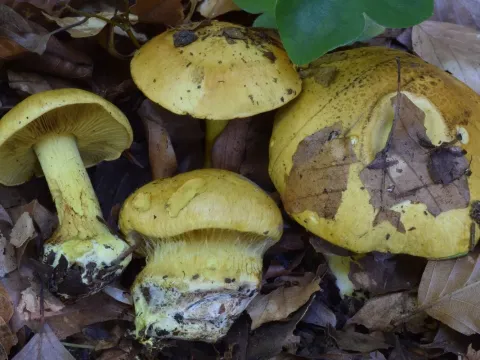
Splendid webcap
Cortinarius splendens
The Splendid webcap (Cortinarius splendens) is a mushroom belonging to the Cortinariaceae family. In agronomic terms, it is not a plant pathogen but a symbiotic fungus that forms mycorrhizal relationships with tree roots.
What the section contains
Splendid webcap
The fungus functions by creating an ectomycorrhizal association, which provides essential minerals to its host plants, such as spruce or beech, in exchange for sugars.
Its presence is typical for healthy forest ecosystems where it helps maintain the vigor of woody vegetation. It is not classified as a disease agent for agricultural crops.
The morphology of the fungus is characterized by a bright yellow cap and a bulbous stipe, which are standard identification markers for this species.
Although it is a fascinating subject of study for forest mycologists, it poses no infection risk to crops or garden plants.
Development of the Splendid webcap requires specific forest conditions, including high humidity and rich humus soils. It thrives in shaded areas where soil moisture is relatively stable.
The species prefers moderate temperatures, typically between 12 and 20 degrees Celsius. Excessive drought or soil compaction can limit its fruit body production.
It is predominantly found in coniferous or mixed forests, where the host trees provide the necessary metabolic conditions for the fungus to establish its mycelium.
Soil pH plays a significant role, as the fungus favors slightly acidic conditions typical of forest floor environments.
Spore dispersal occurs primarily via wind, allowing the fungus to colonize new areas if the ecological conditions and suitable host trees are present.
The primary concern regarding the Splendid webcap is its severe toxicity to humans and animals. It contains the toxin orellanine, which causes irreparable kidney damage if ingested.
The mushroom does not cause plant diseases, rot, or decay. Therefore, it is not considered a threat to agricultural productivity or plant health.
In forest nursery settings, it is generally ignored unless there is a risk of ingestion by workers or stray livestock, due to its poisonous nature.
There is no evidence to suggest that it negatively impacts the yield or physiological state of tree saplings in nurseries; in fact, its mycorrhizal role is usually beneficial.
As a result, no economic damage is associated with this species in commercial agriculture or forestry operations.
Since the Splendid webcap is a natural component of forest soils and not a plant disease, no specific control measures are necessary to manage its population.
In areas adjacent to agricultural lands or in public access zones near forestry operations, physical removal of fruit bodies can be used to prevent accidental consumption.
Prevention focuses on education and safety awareness, ensuring that workers are able to identify the mushroom and avoid ingestion.
Maintaining soil quality and forest integrity is sufficient to keep the ecosystem, including the fungus, in balance without needing chemical interventions.
- Regular site inspections to identify toxic mushroom species.
- Safety training for personnel working near wooded areas.
- Restriction of livestock access to areas with high fungal density.