
Spongipellis
Spongipellis
Description
Symptoms
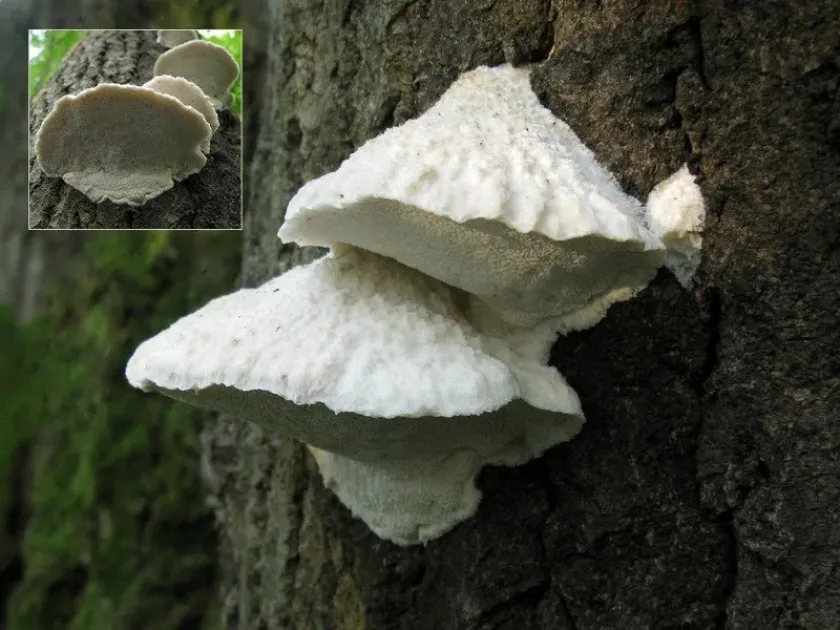
The most visible sign of an infection is the emergence of pale, porous, or fibrous fruiting bodies appearing on trunks or large branches.
Wood in the affected area undergoes structural changes, becoming soft, loose, and bleached, which is a classic manifestation of white rot caused by Spongipellis.
Infected trees exhibit symptoms such as premature leaf drop, canopy thinning, and general physiological weakness as the vascular system becomes compromised.
Internally, the wood loses its integrity and develops a spongy consistency; fibers become brittle and easily separable, often accompanied by a distinct fungal odor.
Advanced stages of the disease lead to bark sloughing in areas where the mycelium is most active, exposing the hollowed or degraded interior of the tree.
Pathogen
The disease is caused by fungi of the Spongipellis genus, which belong to the class of Agaricomycetes. These are wood-destroying fungi responsible for causing white rot in woody plant tissues.
This fungus behaves as a facultative parasite, often acting as a saprotroph that colonizes already weakened or damaged sections of tree trunks and branches.
The infection typically enters the tree through mechanical injuries to the bark, pruning cuts, or frost cracks, where the mycelium begins its active development within the heartwood.
The fungus produces characteristic sponge-like or fibrous fruiting bodies on the bark surface, which are key diagnostic features for identifying the pathogen.
The life cycle involves the spread of basidiospores through the air, which find their way to vulnerable spots on trees, starting new infection cycles in favorable conditions.
Conditions for development
The development of Spongipellis is heavily reliant on high-humidity conditions, which are essential for spore germination and active mycelial growth inside the wood.
The pathogen thrives in poorly managed orchards or landscapes where pruning cuts remain unprotected and mechanical damage to trunks is left untreated.
The optimal temperature range for the growth of these fungi is between +18 and +25 degrees Celsius, making the summer season a critical period for infection.
Trees suffering from environmental stress, drought, or pest infestations are significantly more susceptible to successful colonization by fungal spores.
Dense, poorly ventilated plantings create a conducive microclimate that promotes spore retention and increases the likelihood of cross-infection among nearby trees.
Why it matters
The primary danger posed by Spongipellis is the degradation of the wood structure, which leads to a critical loss of mechanical strength and stability.
Affected trees are prone to windthrow or the sudden collapse of large limbs, creating serious safety hazards in both residential and public areas.
As the fungus destroys the heartwood, the tree’s ability to transport water and essential nutrients is severely hampered, resulting in branch dieback and reduced vigor.
In fruit-bearing species, the infection leads to a substantial decline in yield and fruit quality, as the tree redirects energy to combat the rot.
Without intervention, the rot progresses until the tree can no longer support its own weight, eventually leading to the total death of the specimen.
Protection
Effective management begins with proper cultural practices, including regular sanitary pruning to remove damaged parts, followed by prompt disinfection of all cuts.
All fresh wounds and mechanical injuries to the tree trunk must be sealed with professional pruning sealants or antiseptic pastes to block fungal entry points.
Maintaining high plant vigor through balanced fertilization and adequate hydration helps the tree build natural defenses against fungal infections.
If fruiting bodies are detected, they must be removed carefully along with the adjacent decayed wood and destroyed by burning to prevent further spore dispersal.
- Sterilizing pruning tools after each use.
- Sealing bark wounds promptly.
- Removing and destroying infected wood.
- Improving air circulation in the canopy.
Discussion
No discussions yet — be the first.